Extraction games have quickly become one of the go-to genres when you’re playing with a squad. We’ve had ARC Raiders, where you’re constantly wondering whether the other raiders you meet are actually friendly or just waiting for the right moment to stab you in the back. Then there’s R.E.P.O., where teamwork is everything as you awkwardly carry valuable objects around and pray nobody drops them. And of course, Lethal Company, where grabbing valuable scrap can quite literally come at a deadly price.
So, when I got the opportunity to grab a few of my best friends and drag them into a world built around dreams, I was more than ready to see what kind of chaos we could get ourselves into.
The question is, though: can dreams really be that dangerous?
There was only one way to find out, as we jumped into STF Games’ latest release, Somnius.
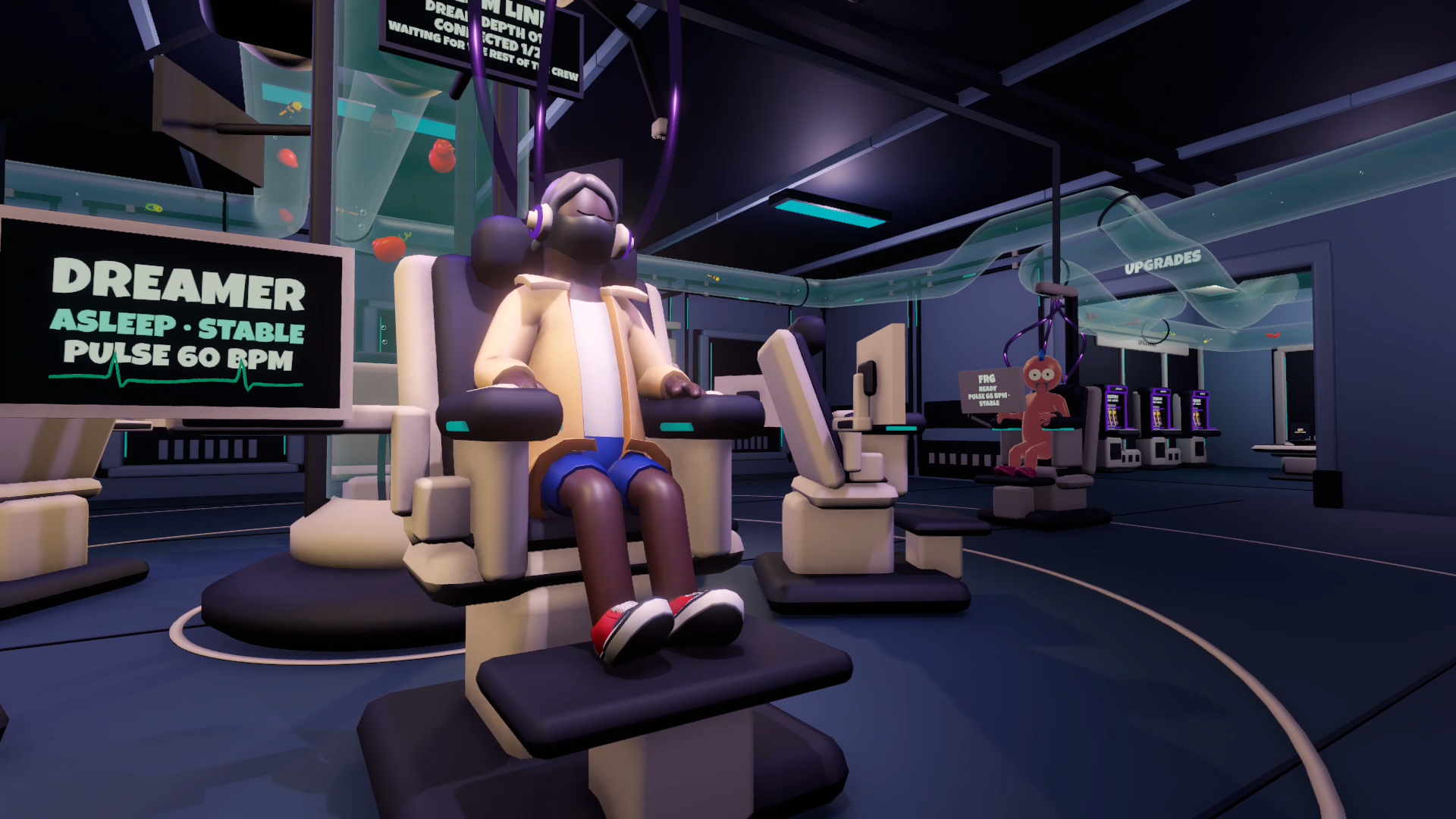
I SEE A DREAMER over there by the water
You play as part of a team sent directly into a dreamer’s mind, but there’s one slight problem: their dream is collapsing around you.
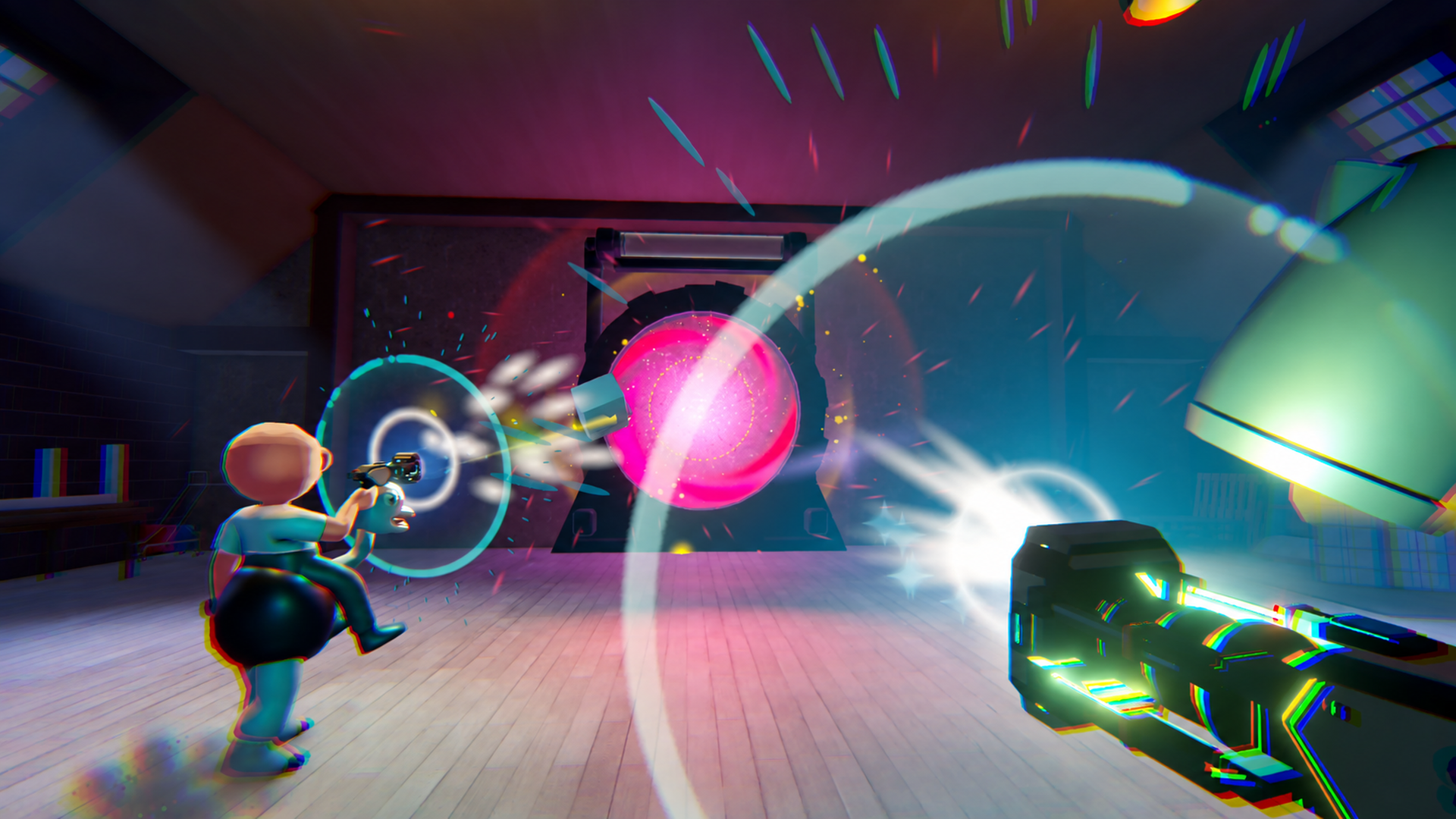
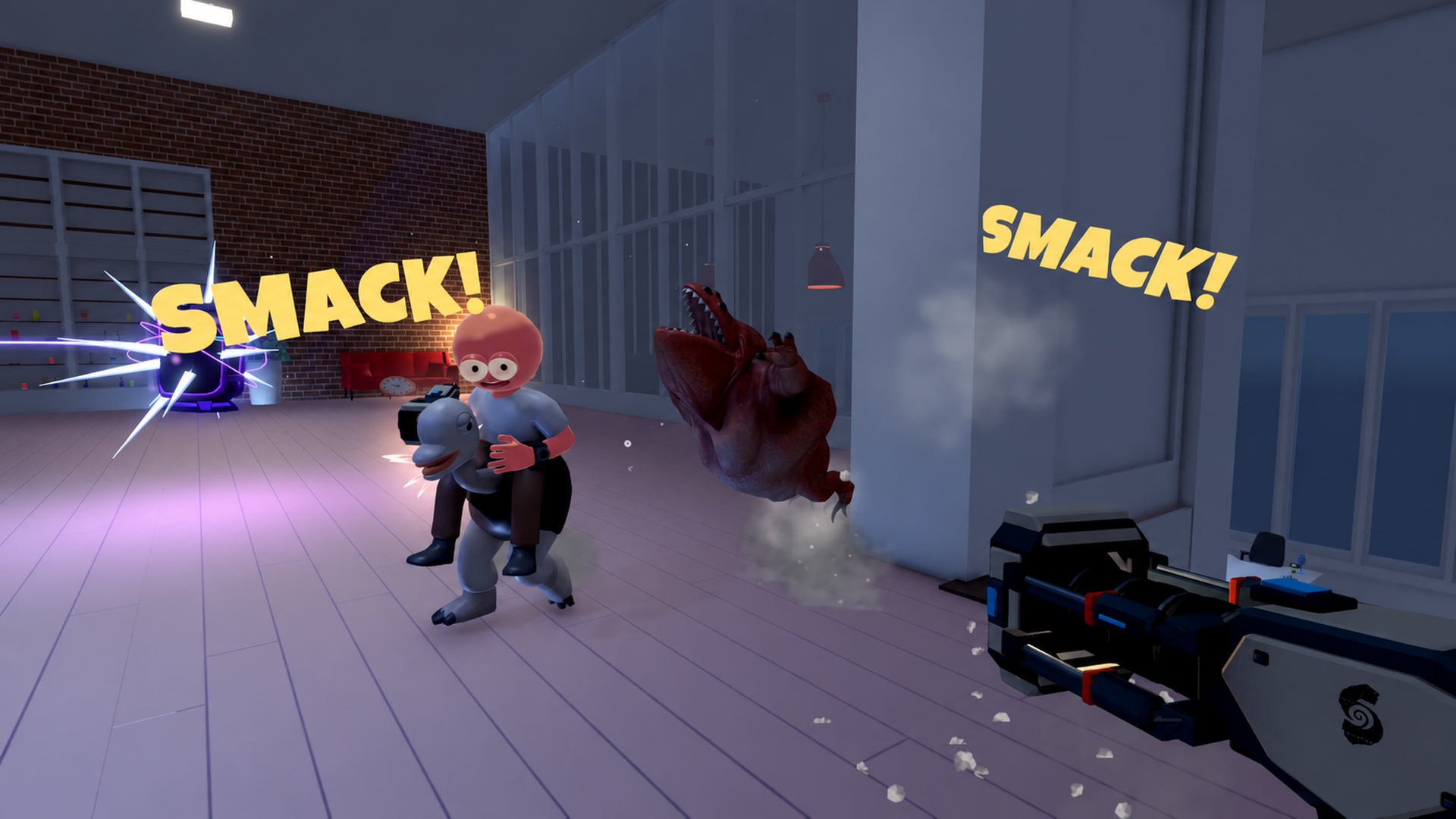
Your job is to fight your way through the dream, clearing out anything that stands between you and your escape. Armed with your trusty vacuum, you can suck up objects scattered throughout the environment and launch them straight at the enemies blocking your path. Pretty much anything you can get your hands on can become a weapon.
But you can’t hang around forever. Time is constantly ticking away, and the only way your team can escape safely is by bringing the dreamer back with you.
To reach them, you’ll need to explore the dream and destroy the cursed objects keeping their door sealed. Once you finally get inside, it’s time to wake them up and get the hell out of there.
And if the dreamer starts screaming when you grab them, don’t worry…
They just haven’t realised it’s time to wake up yet.
I dreamed a dream the other night
To start a run, you first need to sit in one of the six chairs surrounding the dreamer. Once everyone is ready, you’re thrown straight into the dream, and from that moment you have just three minutes to clear the cursed objects and rescue the dreamer before time runs out.
Thankfully, there are ways to give yourself a bit more breathing room. At the start of each run, I’d recommend vacuuming up as many objects as you can and launching them into the portal. Depending on the size and rarity of what you throw in, you can earn extra time on the clock, which can make a massive difference later on.
From there, you and your team need to explore the different paths within the dream and hunt down the cursed objects keeping the dreamer trapped. You need to clear three of them before the dreamer’s door finally opens.
You’ll also want to keep a close eye on the watch on your wrist. Not only does it show how much time you have left, but it also doubles as your map, helping point you in the right direction when you’re trying to track down the next cursed object.
Of course, it’s never that simple.
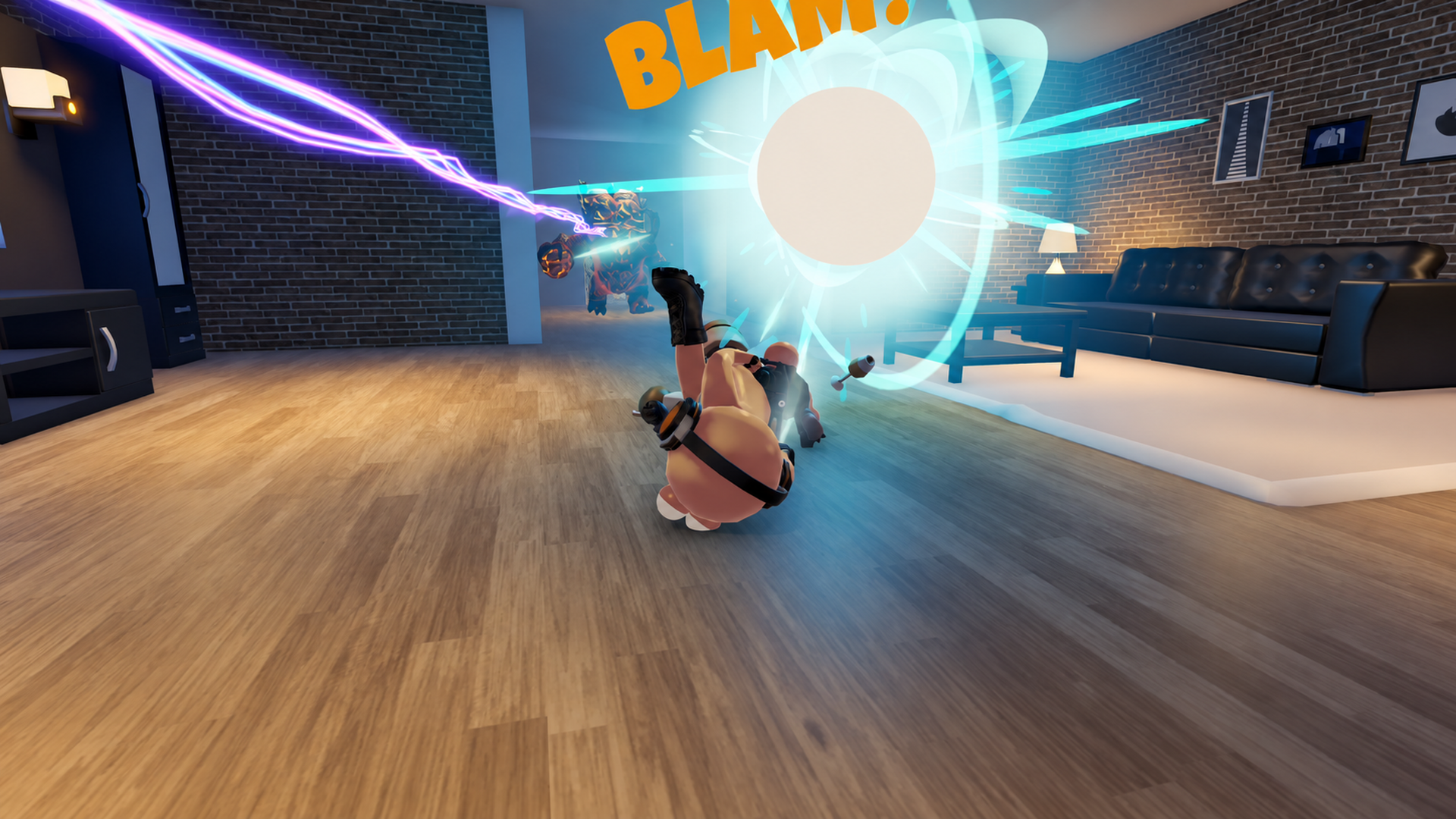
Each cursed area is normally packed with enemies. Some are more of a nuisance than anything else, while others can absolutely destroy you if you’re not paying attention. One of the worst is a fire demon that charges around the place and occasionally launches itself at you with what I can only describe as a Disney Stitch-style roll, setting you on fire in the process.
If your health starts getting low, there are also certain areas that can help you recover. One example is the cinema, where you can use the popcorn machine to restore 10 HP. You can use it multiple times too, which can be a lifesaver if your team is struggling.
Somnius is played entirely in first person and supports up to six players, with built-in voice chat that actually works incredibly well. Communication becomes pretty important, especially when everyone has split up, the clock is disappearing and somebody is screaming because they’ve found something horrible.
At the end of each run, you’ll normally earn a coin, but there are also extra ways to pick them up while exploring. If you find the bowling alley, for example, getting a strike rewards you with one. There’s also a room in the space-themed area where you can sit in an asteroid-shooting chair and destroy 100 asteroids for another coin.
These coins can then be used on the slot machine to earn upgrades for that life.
Landing cherries gives you Vitality, which can be upgraded three times and adds 20 extra health on top of your starting 100 HP.
Clovers give you Regeneration, allowing you to recover 1 HP every two seconds.
Sevens give you Impact, increasing the damage dealt by launched props by 10% with each upgrade.
And bananas give you Endurance, which increases your stamina by 10%.
If you’re feeling lucky, you can also take your coins over to the roulette table and gamble them. Pick the right colour and you’ll double your coin. Pick red and it lands on black, though, and that coin is gone.
There is a risk to all of these upgrades as well. If you die during a run, everything you’ve earned through the slot machine is reset, so staying alive becomes even more important the further you progress.
Luckily, death doesn’t always mean the end for your teammates. If one of your friends gets completely destroyed, you can actually vacuum them up, drag what’s left of them back to the portal and revive them at the revive station.
The downside is that bringing someone back costs 30 seconds from your remaining time, so you need to decide whether saving them is actually worth risking the entire run.
Coins can also be spent on Mystery Capsules/Dream Capsules, which unlock different cosmetic items and clothing options for your character. These can be equipped at the Dreamer’s Cocoon, which is also where you can change your character’s colour and customise how they look between runs.
DREAM, DREAM, DREAM, dream, dream, dream
Visually, Somnius goes for a bright, cartoonish style that instantly reminded me of something like Rick and Morty. It gives the game a lot of personality, especially because each dream can take you somewhere completely different.
One minute you could be exploring a space-themed area, and the next you’re running through a hospital, office or gym. There are also cinema and bowling sections, home environments and even a fantasy-style castle that feels like a mix of Dungeons & Dragons and something you might stumble across in R.E.P.O.
That variety helps keep each run feeling fresh, as you never really know what type of dream you’re going to end up inside.
The enemies are just as varied.
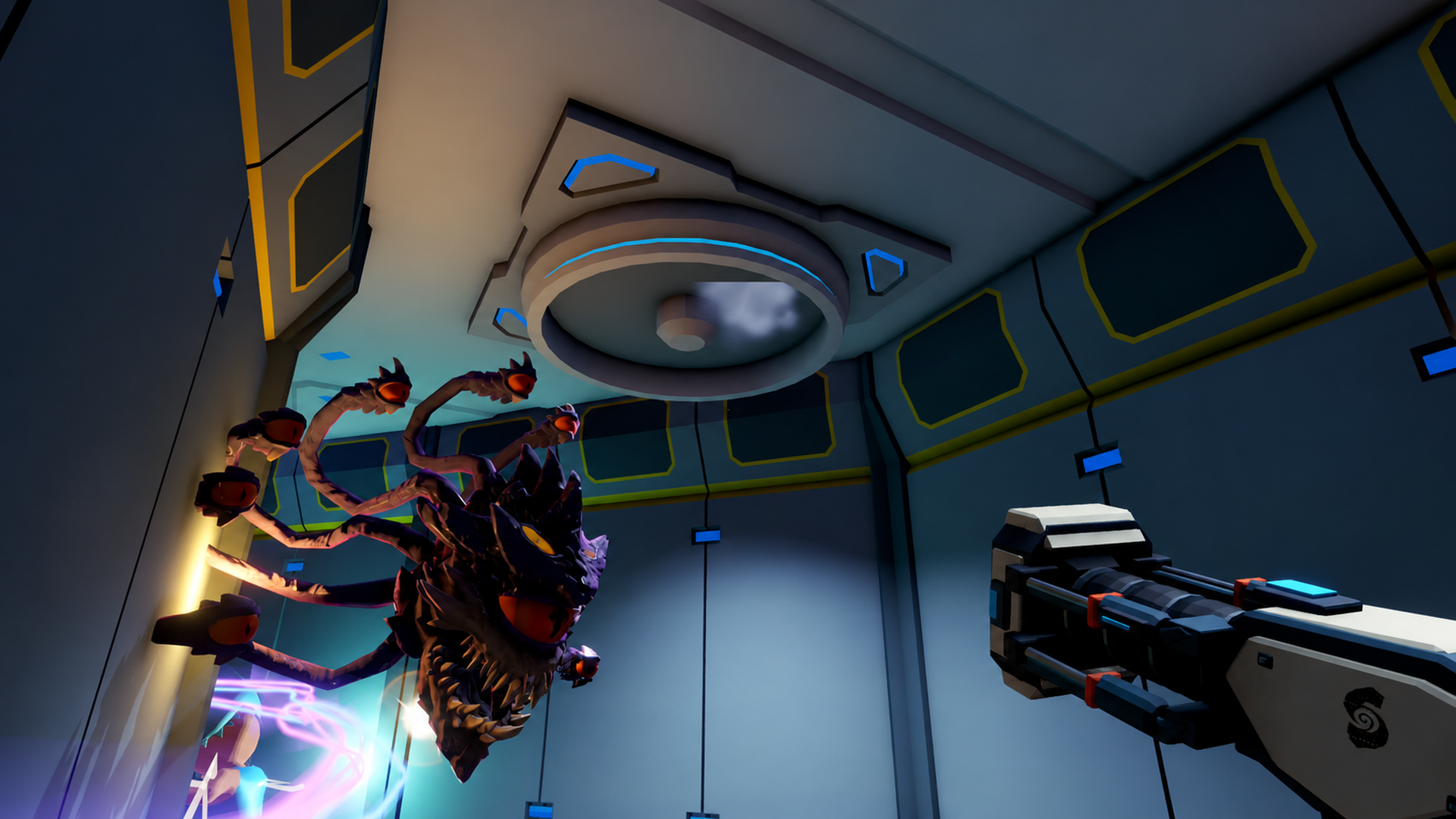
You’ve got smaller demon-like creatures, with each colour having its own attack style. The yellow ones will happily punch you if you get too close, the red versions act more like fire demons, while the blue ones use ice-based attacks.
Then there’s a wizard who looks like someone decided to combine Dumbledore with Doctor Strange, which is about as strange as it sounds.
There’s also a huge rock monster that you can knock down temporarily, but you can’t actually destroy it, meaning sometimes the best option is simply to get out of its way and keep moving.
One of the stranger enemies looks like it has walked straight out of DOOM. It has one massive eye and can fire a laser at you from a distance, but once you finally take it down, it explodes into a group of bats, because apparently killing it once wasn’t enough.
And then you have this weird alien creature that can actually attach itself to your vacuum. When that happens, you’ll need to use whatever objects you have around you to blow it apart before vacuuming up what’s left of its body.
The enemy designs are weird, colourful and completely unpredictable, which suits the whole dream setting perfectly.
GO TO SLEEP CRAZY LADY
When it comes to the sound design, the first thing worth mentioning is the built-in voice chat. Like I said earlier, it works incredibly well. I never really had any issues with stuttering, cutting out or people sounding robotic, which is always a win in a co-op game like this.
Distance also matters, so if your friends wander too far away, you won’t be able to hear them. It sounds like a small detail, but it actually adds quite a bit to the experience, especially when the team splits up and suddenly you realise you’re on your own.
The enemies all have their own sounds too, which helps you work out what might be nearby before you even see it. Some are louder and more aggressive, while others have stranger noises that immediately put you on edge. After a few runs, you start recognising certain sounds and instantly know what kind of trouble is heading your way.
But the real bread and butter of the audio has to be the music.
It’s incredibly calm and relaxing, which is almost funny considering how chaotic the game can get. There’s a relaxation area in the game where you can just sit back and listen to it, and I’m not even joking, the music is so dreamy and peaceful that I could genuinely feel myself starting to get tired.
For a game about diving into dreams, the soundtrack absolutely nails that feeling.
GOOD NIGHT GOOD LUCK
After spending time inside Somnius, I came away impressed with how much fun it can be when you’ve got the right group of people with you.
At its core, it takes a simple extraction-style idea and throws it into a setting that lets the developers get as weird as they want. One run you’re fighting through a hospital, the next you’re launching random objects at demons in a fantasy castle, then suddenly you’re bowling for an extra coin or blasting asteroids in space.
That unpredictability is a big part of what makes the first few hours so enjoyable.
The three-minute timer sounds brutal at first, but once you learn how to extend it, where to look for cursed objects and how each enemy behaves, everything starts to click. Add in the upgrades, hidden ways to earn coins and different cosmetics, and there’s plenty to mess around with.
The downside is that Somnius does eventually start to feel quite rinse and repeat. You’re essentially jumping into another dream, clearing three cursed objects, rescuing the dreamer and doing it all over again. Even with the different environments and enemy types, after a few hours I could definitely feel myself starting to get a little bored.
For me, this is the kind of game that works best in shorter sessions rather than something I’d sit and play for hours on end.
That said, Somnius is still at its best when you’re playing with friends. The built-in voice chat, the panic when everyone gets separated and the absolute chaos of trying to rescue somebody while the clock is disappearing can create some genuinely funny moments.
Visually, it has plenty of personality, the enemy designs are wonderfully strange, and the soundtrack manages to be surprisingly relaxing when the game isn’t trying to kill you.
Somnius might not have enough variety to keep you hooked for hours at a time, but with the right group of mates, there’s still plenty of fun to be had.
So, are dreams really that dangerous?
Apparently, yes.
Especially when your friends are the ones responsible for waking you up.
Multiple keys for Somnius was provided for review purposes.
Positives
✅ Chaotic Co-op Fun – Great fun with friends, especially when everyone starts panicking as the timer runs down.
✅ Strong Voice Chat – The built-in voice chat works really well, and the distance-based audio adds to the co-op experience.
✅ Varied Dream Worlds – There’s a good mix of environments, from hospitals and offices to space areas and fantasy-style castles.
✅ Creative Enemies – The weird and varied enemy designs help give each run more personality.
✅ Satisfying Vacuum Combat – Launching objects at enemies is simple, fun and can create some hilarious moments.
✅ Dreamy Soundtrack – The music fits the theme perfectly and can be surprisingly relaxing.
✅ Extra Activities – Bowling, asteroid shooting, gambling and cosmetic capsules give you a bit more to do outside the main objective.
Negatives
❌ Repetitive Loop – The gameplay can start to feel rinse and repeat after a few hours.
❌ Same Main Objective – Most runs boil down to clearing three cursed objects and rescuing the dreamer.
❌ Variety Wears Thin – Once you’ve seen the same areas and enemies a few times, some of the surprise starts to disappear.
❌ Best in Short Bursts – It feels better suited to shorter sessions rather than long gaming marathons.
❌ Punishing Deaths – Losing all your upgrades after dying can be frustrating, especially after building up a strong character.

Co-owner of Indie Critical. I’m passionate about highlighting independent voices in film, games, and culture. I focus on honest, thoughtful reviews and love helping great indie projects get the recognition they deserve. When I’m not writing or editing, I’m probably diving into the latest hidden gem or discovering the next big thing in the indie scene.
Written by

Lewis Langton