Hello, I’m IndieRac and welcome to another IndieCritical review! Playing as an adorable little cat exploring a mysterious dream world sounds like the perfect recipe for a cosy adventure, doesn’t it? Well, Inky’s Sleep has other ideas, and it doesn’t take long before that comforting first impression goes straight out of the window.
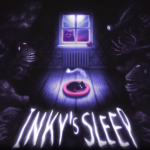
Developed and published by Tom Larick, Inky’s Sleep is a 2D horror adventure that combines exploration, unusual puzzles and encounters with otherworldly creatures. What initially appears to be a charming journey through a cat’s dreams quickly takes a darker turn, drawing players into a strange world where appearances can be deceiving and danger could be lurking just around the corner.
There’s something wonderfully unsettling about seeing such an innocent little character thrown into a world that feels anything but welcoming. With its eerie environments, mysterious encounters, and dreamlike atmosphere, Inky’s Sleep proves that even the cutest adventures can hide something sinister beneath the surface.
is this all a dream?
Have you ever had one of those dreams where everything seems perfectly normal, only for things to take a rather disturbing turn? Well, that’s pretty much what our little feline friend Inky has found himself caught up in, and judging by some of the creatures lurking around, I wouldn’t blame him for never wanting to sleep again.
Inky’s Sleep follows a small black cat as he ventures through a bizarre dream world filled with unusual characters, unsettling environments and creatures that look like they’ve crawled straight out of someone’s worst nightmare. However, rather than giving players a detailed introduction to the world or explaining why Inky is there, the game leaves you to make sense of things yourself.
What caught my attention was the way the story unfolds. There’s very little conventional dialogue, and although Inky encounters other characters along the way, their conversations take place in a strange, almost creature-like language. Apparently, Inky understands every word of it, which is wonderful for him, but I haven’t the faintest idea what anyone is saying.
Instead, you’re left studying the images and animations during cutscenes, trying to work out what’s being communicated. It’s certainly different, and I quite like the idea of having to interpret events rather than simply being told everything.
That said, I found myself wishing there were subtitles or at least some indication of what was being discussed. I appreciate that the developers want players to experience the story through Inky’s perspective, but there’s a difference between creating mystery and leaving your audience completely baffled.
Nevertheless, the lack of explanation does make the world rather intriguing. I wanted to keep exploring, partly because I was curious about the strange characters and partly because I wanted to understand what was happening to this poor little cat.
There’s also a rather interesting contrast between Inky himself and the world surrounding him. He’s adorable, seemingly innocent and completely out of place among some genuinely unpleasant-looking creatures. That difference gives the darker moments more impact than they might otherwise have.
So far, the story has left me with considerably more questions than answers, but I’m interested enough to keep searching for them. Whether everything eventually falls into place remains to be seen, although I do wish Inky would consider bringing a translator along for the journey.
Gameplay
If you’re someone who enjoys charging into battle, swinging weapons around and dealing with anything unfortunate enough to get in your way, Inky’s Sleep might require a little adjustment. This isn’t that sort of horror game. Instead, it takes a slower approach, concentrating on exploration, environmental puzzles and the occasional encounter with something you’d probably rather avoid.
The opening certainly caught me off guard, although perhaps not for the reasons the developer intended.
After a very brief introductory sequence, I was dropped straight into the game without so much as a basic explanation of what I was supposed to be doing. There were no objectives, no tutorial and absolutely nothing pointing me in the right direction. I spent those first moments wandering around, wondering whether I’d somehow missed an instruction.
Eventually, an opening appeared in the wall, giving me somewhere to go and allowing the side-scrolling adventure to properly begin.
Now, I enjoy figuring things out for myself. There’s something satisfying about discovering a solution without having the game hold your hand every step of the way. However, throwing players into an unfamiliar environment without any real direction can be a little frustrating, especially when you’re still trying to understand the controls.
Thankfully, once I started making progress, I found myself enjoying the exploration considerably more.
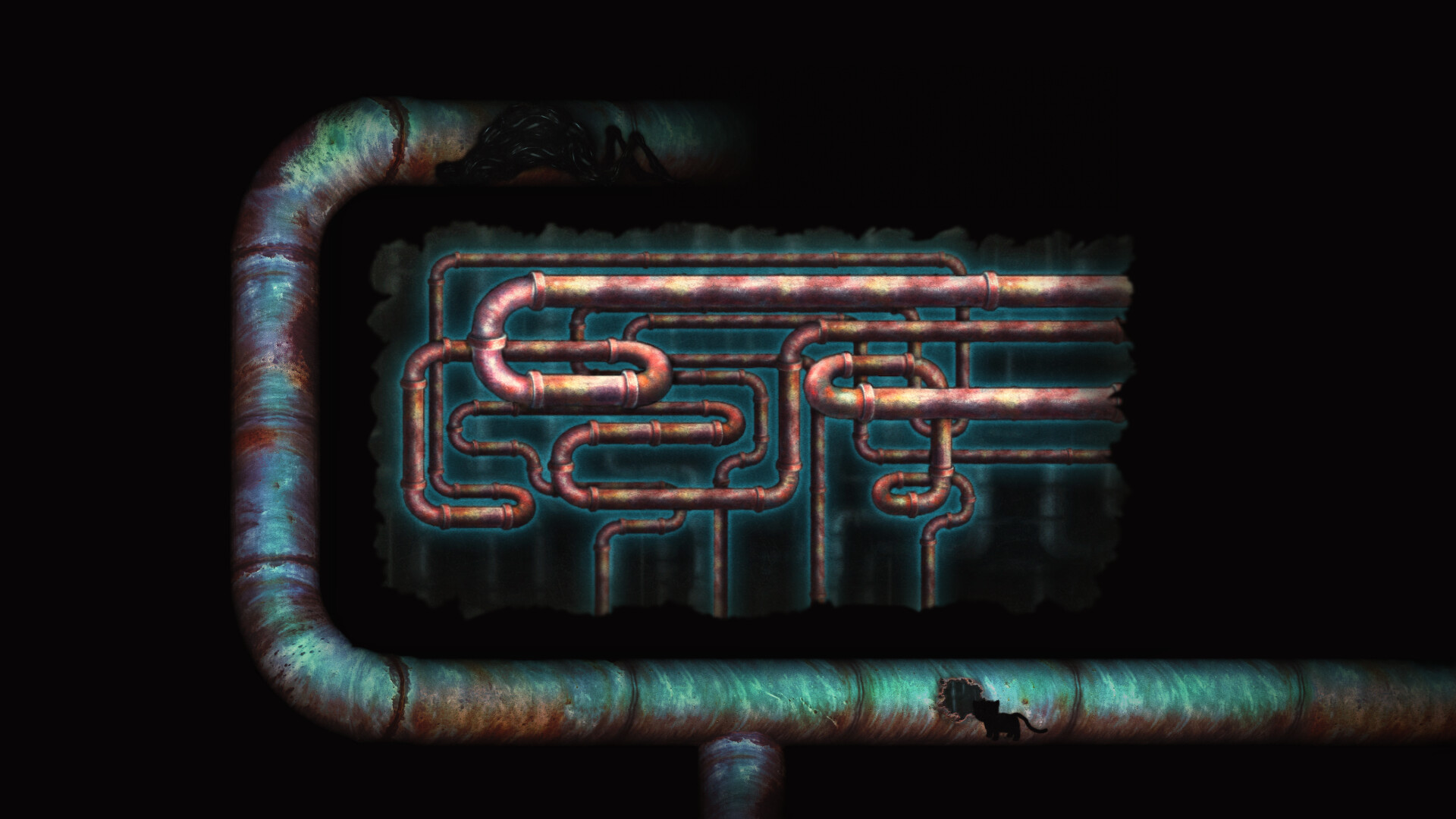
One of the more interesting aspects of Inky’s Sleep is its approach to puzzles. Rather than filling the adventure with endless fetch quests, the game incorporates unusual glyph-based puzzles and environmental challenges that feel appropriate for such a peculiar setting.
These require you to pay attention to what’s around you, examine unfamiliar symbols and experiment until you begin to understand what the game expects.
Unfortunately, there’s a catch. The game doesn’t provide much in the way of hints, meaning you’re occasionally left scratching your head as you try to work out what you’re supposed to do next.
Personally, I don’t mind a challenging puzzle, especially when finally solving it gives you that wonderful feeling of being considerably more intelligent than you actually are. However, I can understand how the lack of guidance might become irritating for someone who simply wants to make progress.
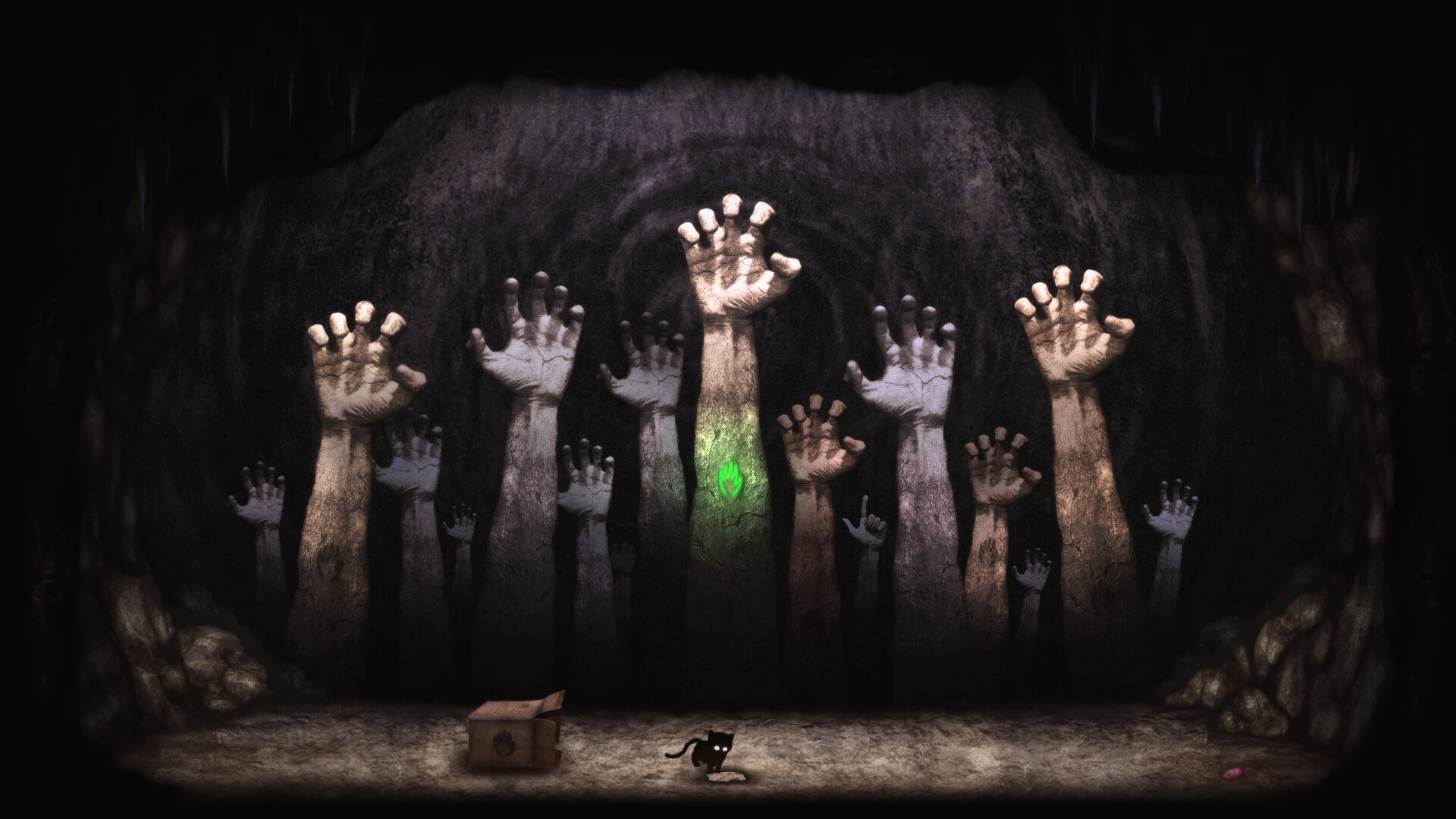
As for the horror itself, Inky’s Sleep doesn’t rely on bombarding players with jump scares. Instead, much of its tension comes from the atmosphere and the knowledge that something unpleasant could be waiting further ahead.
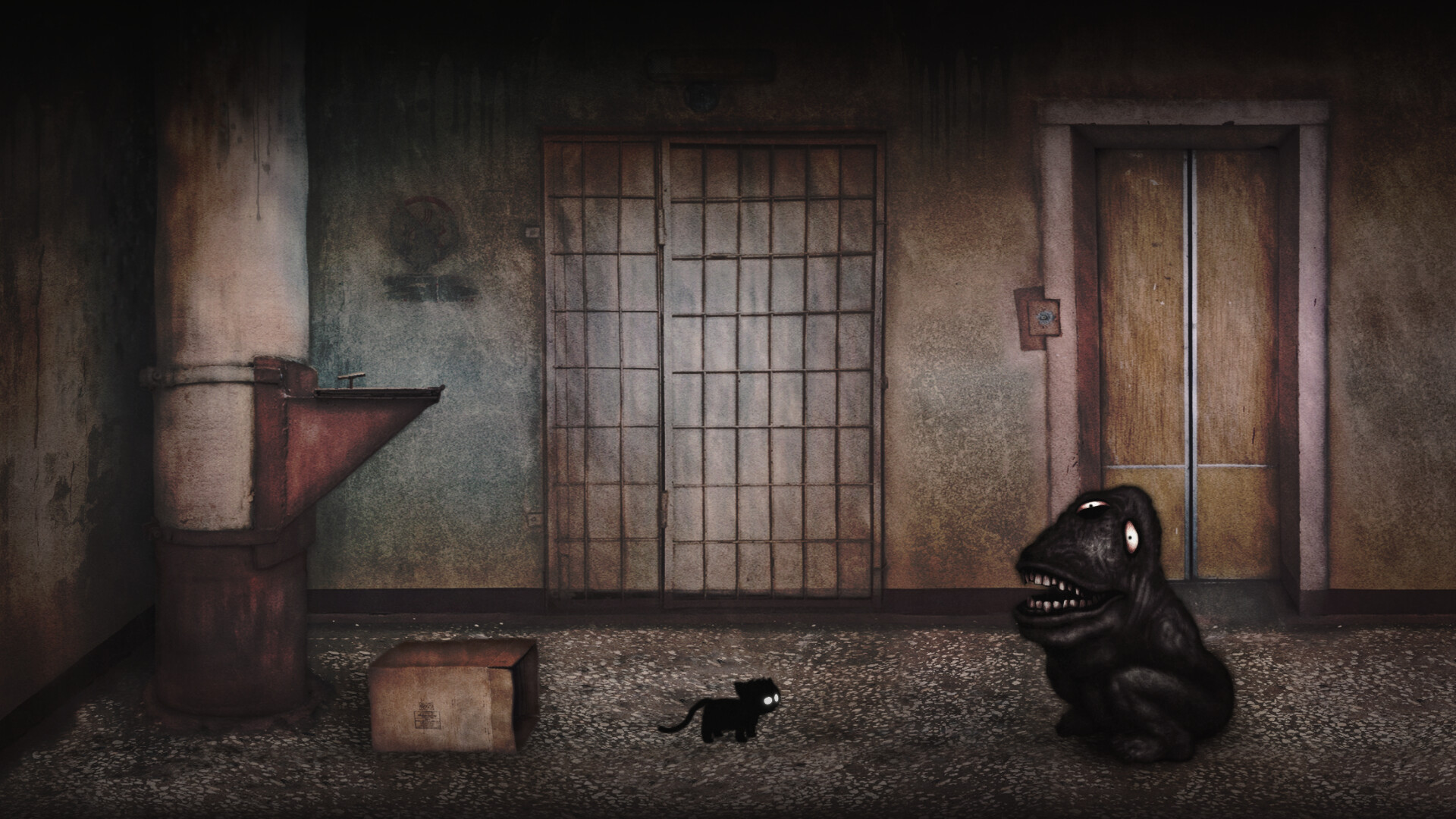
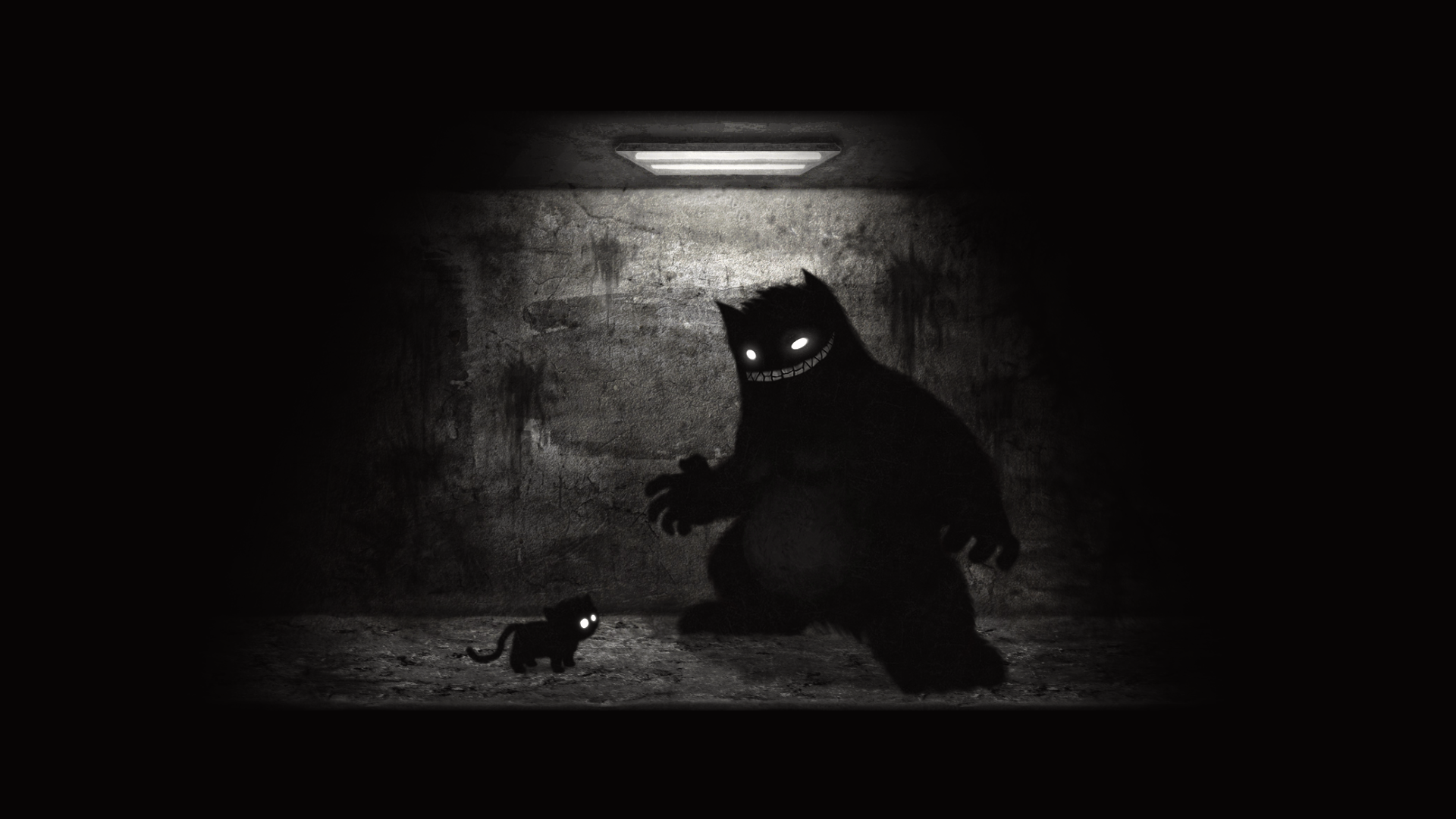
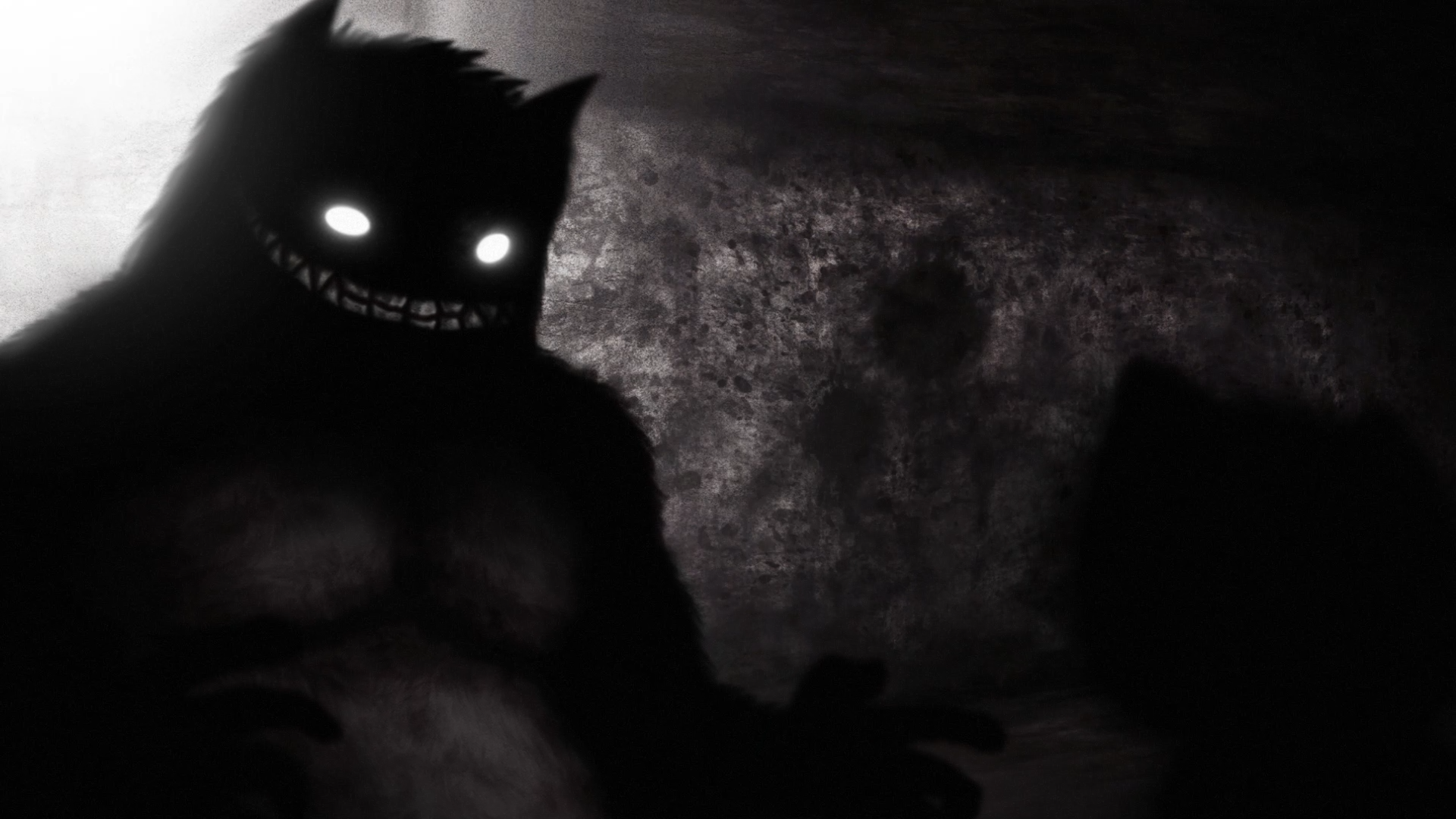
The creatures are particularly effective because of how much they clash with Inky’s adorable appearance. One moment, you’re guiding this sweet little cat through a strange but almost charming environment, and the next, you’re confronted by something that makes you question what on earth he’s been dreaming about.
I much prefer this approach to horror when it’s handled well. Constant jump scares can become predictable, whereas an unsettling atmosphere allows the tension to build naturally.
Admittedly, the slower pace won’t suit everyone. There are stretches where you’re simply exploring or trying to work out a puzzle, and players hoping for frequent action may find themselves getting impatient. For me, though, that slower approach makes sense given the game’s setting.
Controls
Now, this is where I started having a few problems.
One of the first things I usually do when starting a new game is check the settings, particularly the controls and audio options. Unfortunately, Inky’s Sleep doesn’t make that particularly straightforward.
From what I experienced, there’s no conventional settings screen when launching the game, nor is there an obvious way to configure your keyboard or controller layout before starting. You essentially press a button and off you go.
Although the game supports controllers, it appears to have been designed with keyboard players primarily in mind. The directional prompts, for example, are represented by arrow keys rather than controller inputs, regardless of which device you’re using.
On a keyboard, movement can be handled using the arrow keys or the familiar W, A, S and D layout, with X also used as an input. Controller players, meanwhile, can move Inky using the left analogue stick.
Using a controller wasn’t particularly difficult once I’d worked things out, but the lack of proper button prompts made the experience more confusing than it needed to be.
Pressing B brings up a menu, although calling it straightforward would be rather generous. Instead of clearly labelled options, you’re presented with a collection of symbols, leaving you to guess what each one does.
My personal favourite was an icon resembling a cat’s ear with what looked like a Wi-Fi signal coming out of it.
Naturally, I assumed it had something to do with hearing, perhaps an ability or a gameplay mechanic. Nope. It’s the volume setting.
I understand that the developer may have wanted to keep everything visually consistent with the game’s unusual presentation, and I can appreciate that. However, basic settings shouldn’t feel like another puzzle that needs solving.
A simple explanation of each icon, proper controller prompts and the ability to configure inputs would go a long way towards improving the experience.
It’s particularly frustrating because these issues have very little to do with the actual gameplay. The exploration is interesting, the puzzles have some clever ideas behind them, and the atmosphere gives the adventure its own personality. Yet something as simple as navigating a menu can occasionally become more troublesome than it has any right to be.
visuals
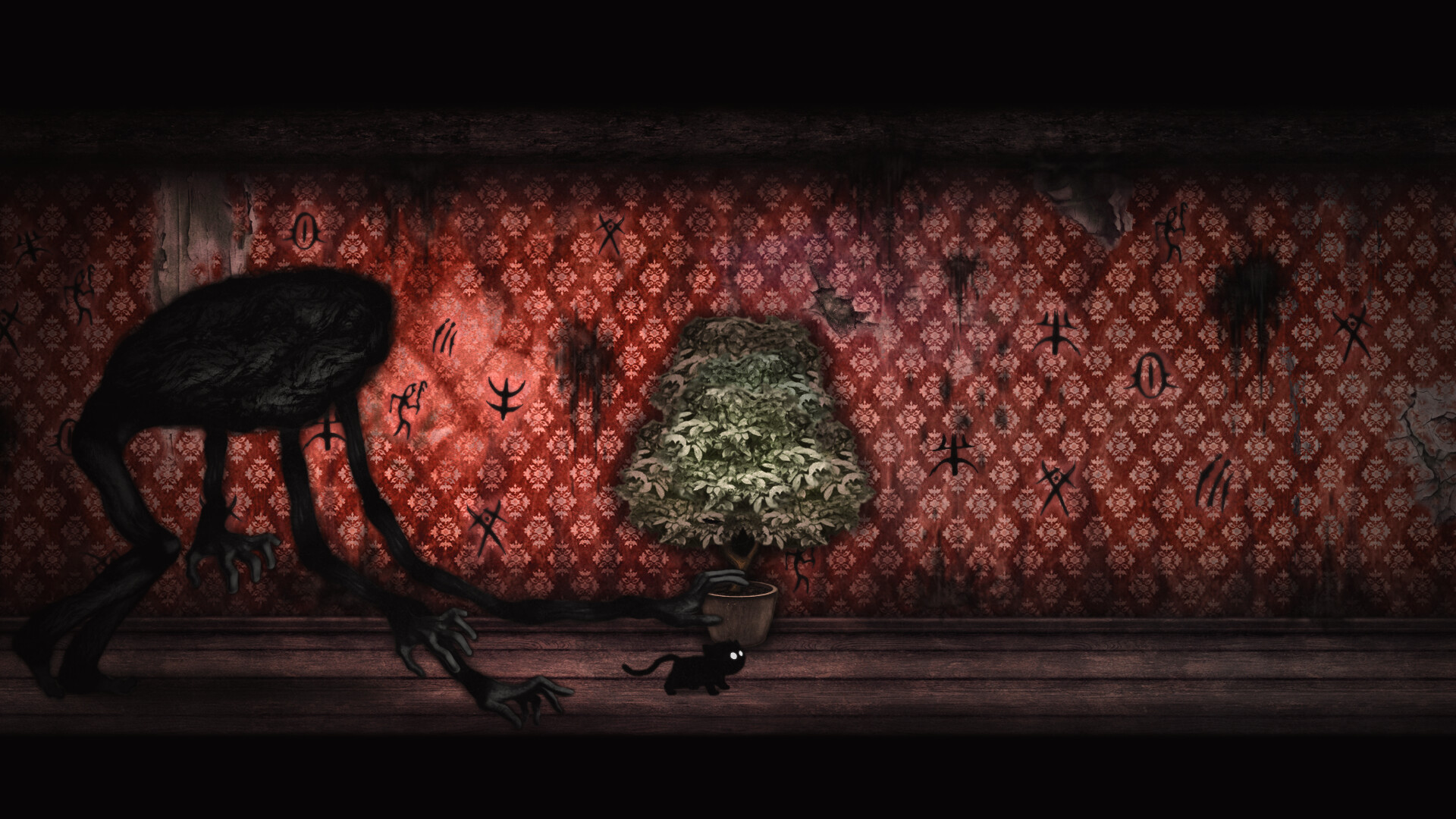
One of the first things that impressed me about Inky’s Sleep was its visual presentation. There’s something rather wonderful about a game that can make you smile at its adorable characters one minute, only to leave you wondering what on earth you’ve stumbled into the next.
The dream world is wonderfully imaginative, taking everyday objects and transforming them into something completely unexpected. One moment, you’re chasing a living ball of yarn, which seems like a perfectly reasonable activity for a cat, and the next, you’re discovering entire dimensions hidden inside ordinary cardboard boxes. Although, knowing cats, I suppose finding another universe inside a box isn’t entirely out of the question.
It’s these little touches that give the environments so much personality. Rather than sticking to one particular style or atmosphere, the game constantly plays with your expectations, mixing charming scenery with locations that feel increasingly bizarre and sometimes downright disturbing.
I particularly enjoyed how ordinary objects become part of the environment in unexpected ways. Things that wouldn’t normally deserve a second glance suddenly become something worth investigating, encouraging you to pay closer attention to your surroundings. It captures that peculiar logic dreams often have, where something completely ridiculous somehow makes perfect sense at the time.
Inky himself is an adorable little character, and his simple appearance works brilliantly against the unusual world surrounding him. There’s something quite amusing about controlling such an innocent-looking cat while wandering through places that seem determined to give him a lifetime of nightmares.
The environments also do a fantastic job of making you feel small and vulnerable. Familiar objects take on an entirely different presence when viewed from a cat’s perspective, while the stranger locations make it difficult to predict what you’ll encounter next.
What I appreciate most is that the game doesn’t need to fill every scene with grotesque imagery to make you uncomfortable. Sometimes it’s simply the unusual surroundings or the sudden appearance of something that looks completely out of place. That contrast between the charming and the unsettling is easily one of its strongest qualities.
For me, the visual direction is a major reason to keep exploring. Even when I wasn’t entirely sure where I was supposed to go, I remained curious about what bizarre creation the game would introduce next. Inky’s Sleep might be a relatively small indie production, but there’s plenty of imagination behind its presentation, and that creativity deserves recognition.
audio
A horror game doesn’t necessarily need loud noises, screaming monsters or a dramatic musical sting every thirty seconds to make you uncomfortable. Sometimes, the quieter moments are far more effective, and Inky’s Sleep understands that rather well.
The soundtrack, composed by Stewart Keller, is one of the elements that helps bring Inky’s unusual adventure to life. Rather than maintaining the same gloomy atmosphere throughout, the music shifts alongside the environments, capturing everything from curiosity and wonder to loneliness and unease.
I particularly enjoyed how naturally the soundtrack complements what’s happening on screen. During the more charming moments, the music allows you to appreciate the strange beauty of Inky’s dreams, while the darker sections take on a more unsettling character without suddenly blasting your ears off.
There’s a surprising amount of emotion in the music, too. Even without conventional dialogue explaining every situation, the soundtrack helps communicate the atmosphere of each location, giving certain scenes a sense of sadness or mystery that might otherwise have been lost.
The environmental audio also deserves some attention. Subtle background noises and moments of near silence help create the impression that Inky isn’t necessarily alone, even when there’s nothing immediately threatening on screen.
I quite like that approach because it encourages you to listen to your surroundings rather than simply react whenever something jumps out. The occasional creature encounter becomes considerably more uncomfortable when the game has already made you suspicious of every unfamiliar sound.
As mentioned in the story section, there’s also the unusual approach to character dialogue. Rather than traditional voice acting, characters communicate through a strange language that players aren’t expected to understand directly.
While I appreciate how this contributes to the game’s dreamlike atmosphere, I still think the lack of subtitles or clearer communication can make certain conversations difficult to follow. It’s an interesting creative decision, although one that won’t necessarily appeal to everyone.
Nevertheless, the sound design and music work exceptionally well together. Neither feels as though it’s competing for your attention, and the quieter moments are given enough room to make an impression.
For me, Stewart Keller’s soundtrack is one of the highlights of Inky’s Sleep. It adds character to an already imaginative adventure, helping turn what could have been a straightforward puzzle game into something far more atmospheric.
And considering some of the strange things poor Inky encounters during his dreams, I can’t help thinking somebody ought to find him a much more comfortable place to sleep.
FINAL THOUGHTS
Inky’s Sleep was a pleasant surprise, and despite a handful of issues, I thoroughly enjoyed the experience. It’s a charming little horror adventure that manages to be both comforting and unsettling, with enough interesting ideas to make it worth playing.
At roughly three hours long, the game doesn’t overstay its welcome. Some players may find it a little short, but I think the length suits the experience, especially considering its focus on exploration and puzzles.
My main criticisms concern the lack of guidance, confusing menu options and limited controller instructions. These could certainly be improved, particularly for players who aren’t familiar with puzzle adventures. However, they didn’t prevent me from enjoying what the game had to offer.
I’d happily recommend Inky’s Sleep to fans of Little Nightmares and anyone who appreciates a slower, more thoughtful approach to horror. It might not appeal to those looking for action or a straightforward story, but there’s plenty to enjoy if you’re willing to embrace its unusual nature.
Inky’s Sleep is an imaginative, enjoyable little adventure that deserves some attention. It has its flaws, but there’s clearly a lot of care behind its creation, and I’d love to see what Tom Larick comes up with next.
And really, who could say no to spending a few hours with such an adorable little cat?
I’d like to extend a huge thank you to the developers and publishers for giving me the opportunity to experience and review Inky’s Sleep
And, of course, a massive thank you to all of you for taking the time to read my review. Your continued support means a great deal to me and everyone here at IndieCritical. We hope to see you again for the next one!
A code for Inky’s Sleep was provided for review purposes.
Positives
✅ A Beautifully Twisted Dreamscape – Imaginative environments that balance charming visuals with unsettling horror.
✅ Clever Puzzle Design – Creative challenges that encourage exploration and reward logical thinking.
✅ An Atmospheric Soundtrack – Stewart Keller’s music perfectly complements the game’s changing moods.
✅ Charming Character Design – Inky’s adorable appearance makes the darker encounters even more effective.
✅ Short but Enjoyable – A roughly three-hour adventure that doesn’t overstay its welcome.
Negatives
❌ Lack of Direction – Minimal instructions can leave players unsure of how to progress.
❌ Confusing Menu Design – Unlabelled icons make even basic settings difficult to navigate.
❌ Limited Controller Guidance – Keyboard prompts remain visible when using a controller.
❌ Unclear Storytelling – The absence of subtitles makes conversations difficult to understand.
❌ Frustrating Puzzle Moments – Some puzzles provide too little information to work out their solutions.

Hi, I’m Racula, a passionate gamer and content creator with a love for horror, retro classics, indie gems and RPGs. I enjoy exploring unique gaming experiences, discovering hidden treasures and sharing my thoughts with fellow gamers. As part of the IndieCritical team, I’m excited to bring my passion for gaming to life through honest, engaging reviews that celebrate everything the gaming industry has to offer.
Written by

Racula
@IndieRac