Imagine turning up late for work, getting a telling-off from your boss and then finding yourself trapped underground in a broken-down mining machine. Suddenly, being late doesn’t seem like the worst part of your day, does it?
Developed and published by Snail Bite, GRINDWORM is an upcoming indie psychological survival horror game that puts players in control of an ageing mining rig deep beneath the earth. With limited oxygen, malfunctioning equipment and something sinister lurking underground, you’ll need to keep your machine running while searching for your missing crewmates.
I’ve always enjoyed horror games, especially those that make you feel uncomfortable without relying entirely on jump scares, so GRINDWORM immediately caught my attention. Its retro appearance reminded me of the older PC games I grew up playing, while the idea of being trapped inside a machine that could break down at any moment sounded like an interesting challenge.
After playing the demo, I can safely say that working underground has never been particularly appealing to me, and GRINDWORM certainly hasn’t changed my mind. However, it did provide an interesting experience that left me curious about what the full release will offer.
just another day at work
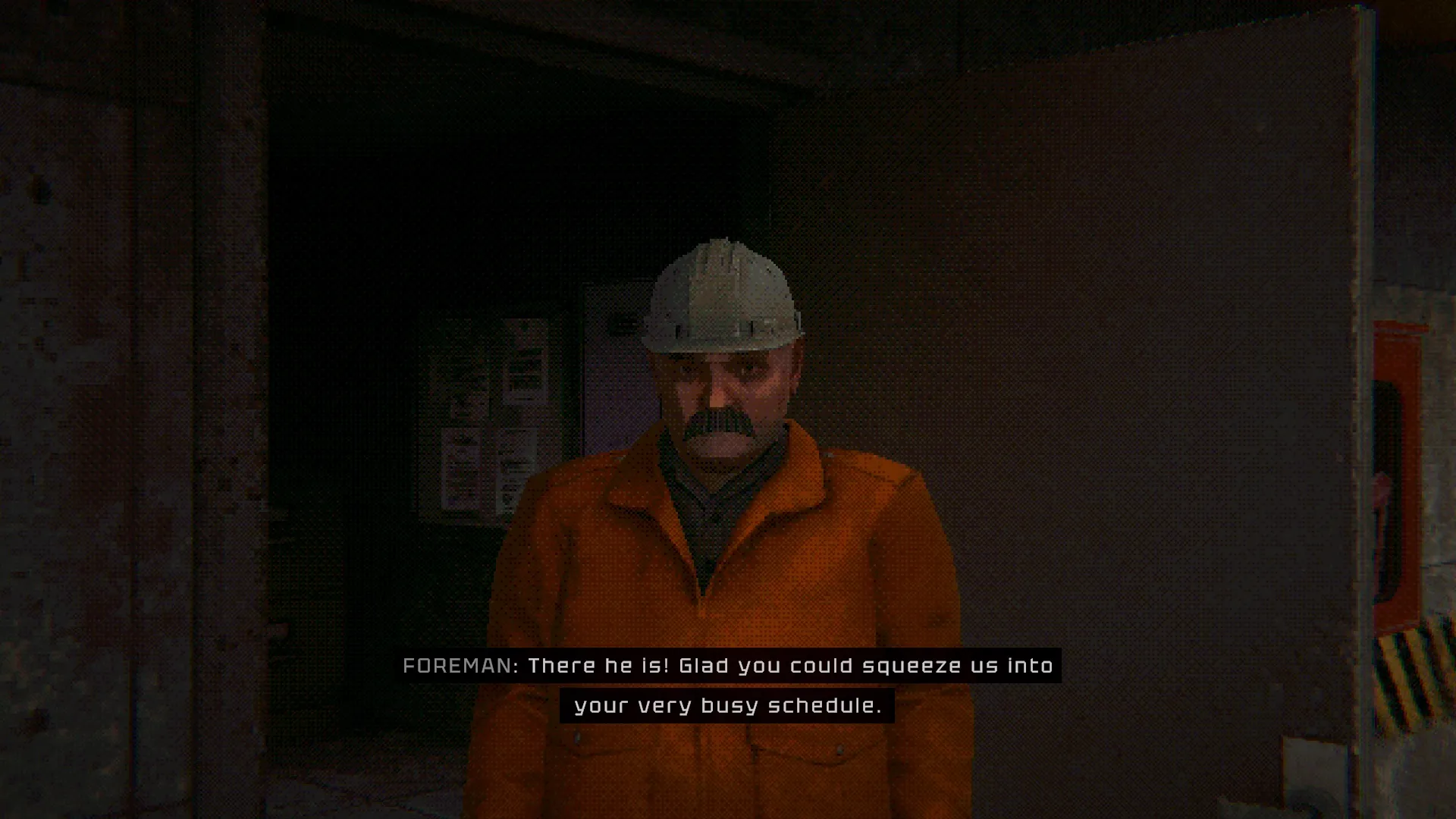
Your shift begins in a fairly ordinary way, although you’ve already made a terrible first impression by arriving late. Your boss is understandably unimpressed and wastes no time giving you a telling-off, especially since the rest of your crew have already headed underground and started working without you.
After getting yourself prepared, you climb aboard your mining rig and descend into the tunnels, expecting to catch up with your colleagues and get on with the job. Unfortunately, your plans for a normal working day are quickly thrown out of the window when the ground begins shaking and the mine starts collapsing around you.
Before you know it, you’re trapped inside your damaged machine, surrounded by darkness with no obvious way to escape. Your crew have disappeared, the equipment is struggling to function, and your oxygen supply is slowly leaking away. As if things couldn’t get any worse, your boss manages to contact you through the malfunctioning radio with the news that your colleagues are trapped even deeper underground.
With nobody around to help, you’re left with the rather unpleasant responsibility of finding your crewmates while trying to keep yourself alive. Unfortunately, the mine has a few surprises waiting for you, and it soon becomes clear that collapsing tunnels aren’t the only thing you need to worry about.
I enjoyed the simplicity of the story because it gives you a clear reason to keep moving without overwhelming you with unnecessary information. The situation feels increasingly desperate as you descend further underground, and the uncertainty surrounding your missing crew adds to the tension.
The demo gives you enough information to understand what’s happening while leaving plenty of questions unanswered. I particularly liked how the story allows your surroundings and the condition of your machine to communicate just how serious things have become.
One thing is certain: this is probably the worst shift anyone could ask for, and I’d certainly be putting in my notice if I made it back to the surface.
don't stop digging!
GRINDWORM places you inside an old mining rig that has definitely seen better days. Your job is to navigate through the underground tunnels, locate your missing colleagues and survive long enough to reach them. Unfortunately, keeping the machine operational is almost as challenging as finding your way through the mine itself.
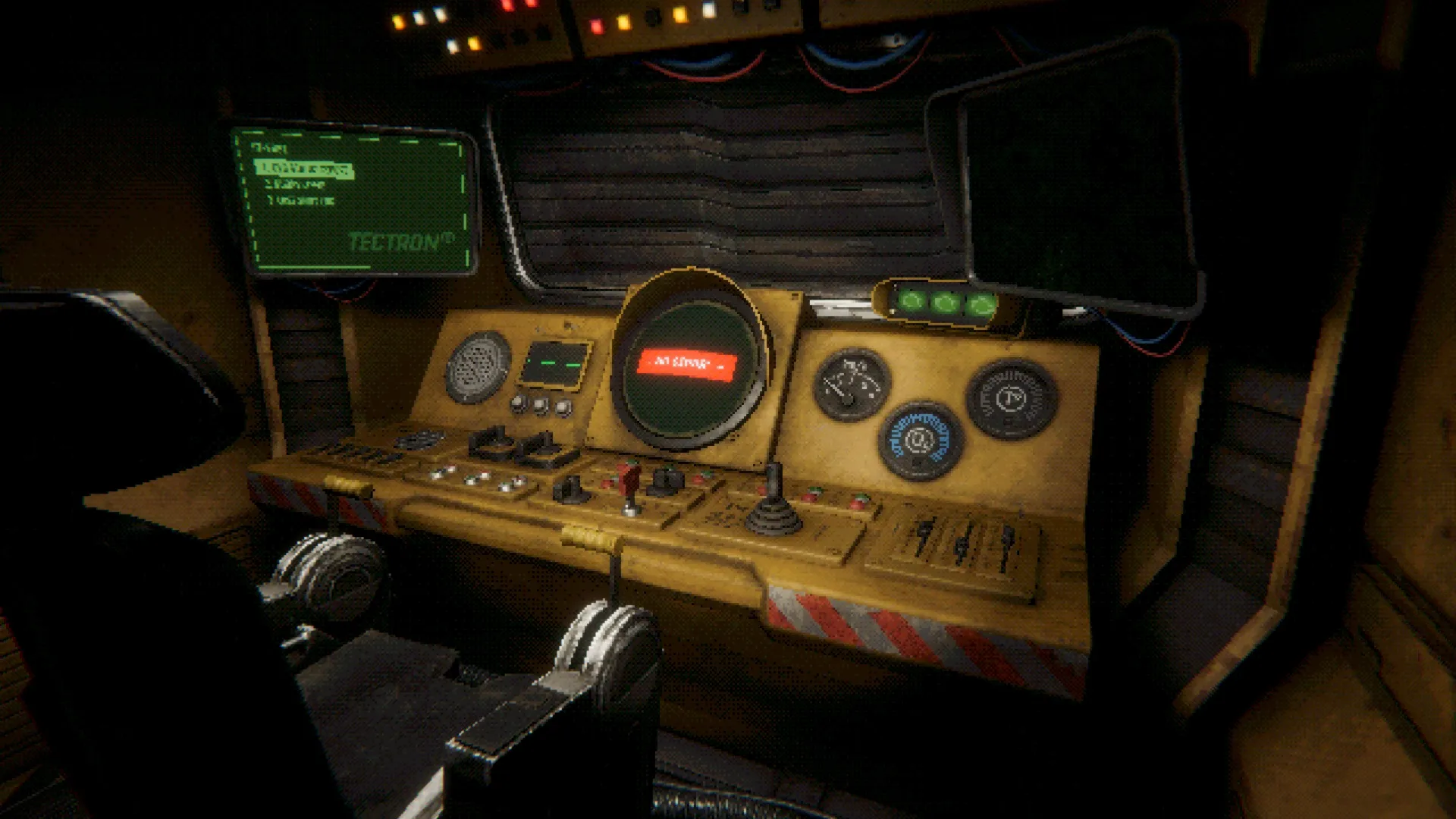
One of the first things I noticed was the complete lack of instructions. You’re placed inside the cockpit and essentially left to figure everything out for yourself. There are buttons, gauges and various systems demanding your attention, but very little explanation of what anything actually does.
I’ll admit that I found this frustrating at first. I spent a fair amount of time pressing buttons, trying to understand the equipment and wondering why something had suddenly started beeping at me. It wasn’t particularly reassuring knowing that my survival depended on machinery I barely understood.
However, as I became more familiar with the controls, I started to appreciate what the developer was trying to achieve. Rather than telling you exactly what to do, GRINDWORM encourages you to experiment, make mistakes and learn from them. I found that every unsuccessful attempt helped me understand something new, whether it involved operating the rig more effectively or recognising a hazard before it became a serious problem.
Once I’d worked out the basics, the objective seemed simple enough: keep digging, find the crew and try not to die. Easy, right? Well, not quite.
Your mining machine has several systems that need constant attention, including its oxygen supply, which gradually depletes as you travel underground. You also need to monitor the condition of your equipment while navigating through hazardous rock formations that can cause problems for your already struggling rig.
Not every rock is necessarily dangerous, though. Some conceal valuable discoveries, while others can interfere with your machinery. Learning which obstacles are worth investigating and which should be avoided becomes an important part of the experience. I enjoyed having to think about my decisions rather than simply grinding through everything in front of me.
Navigation is another challenge because visibility is extremely limited. You’ll rely heavily on the rig’s tracking beacon and radar to guide you towards your missing colleagues, although following the correct direction doesn’t guarantee a safe journey.
One mechanic I particularly liked involves dealing with radio interference and magnetic anomalies. These disruptions require you to monitor and adjust signal frequencies, meaning you occasionally have to take your attention away from navigating to deal with the equipment inside the cockpit.
It might sound like a fairly small detail, but having to concentrate on a monitor while knowing that something dangerous could be ahead made me feel surprisingly vulnerable. There were moments when I wanted to keep my eyes firmly on the tunnel, but the machine had other ideas.
What makes the gameplay interesting is how several relatively simple mechanics work together to create pressure. You’re not just trying to find your way through the mine; you’re also worrying about your oxygen, the state of your equipment and whatever might be waiting beyond the reach of your headlights.
I enjoyed gradually figuring things out and making a little more progress with each attempt. There was a genuine sense of satisfaction whenever I managed to overcome something that had previously caused me trouble.
That said, I do think the opening could benefit from a little more guidance. I understand that learning through trial and error is an intentional part of the experience, and I wouldn’t want the developer to remove that challenge entirely. However, a few subtle hints explaining the basic functions of the rig would make the introduction less frustrating without taking away the satisfaction of discovering things for yourself.
For me, the gameplay was at its best when I understood what I needed to do but still had to work out how to survive long enough to accomplish it.
a blast from the past
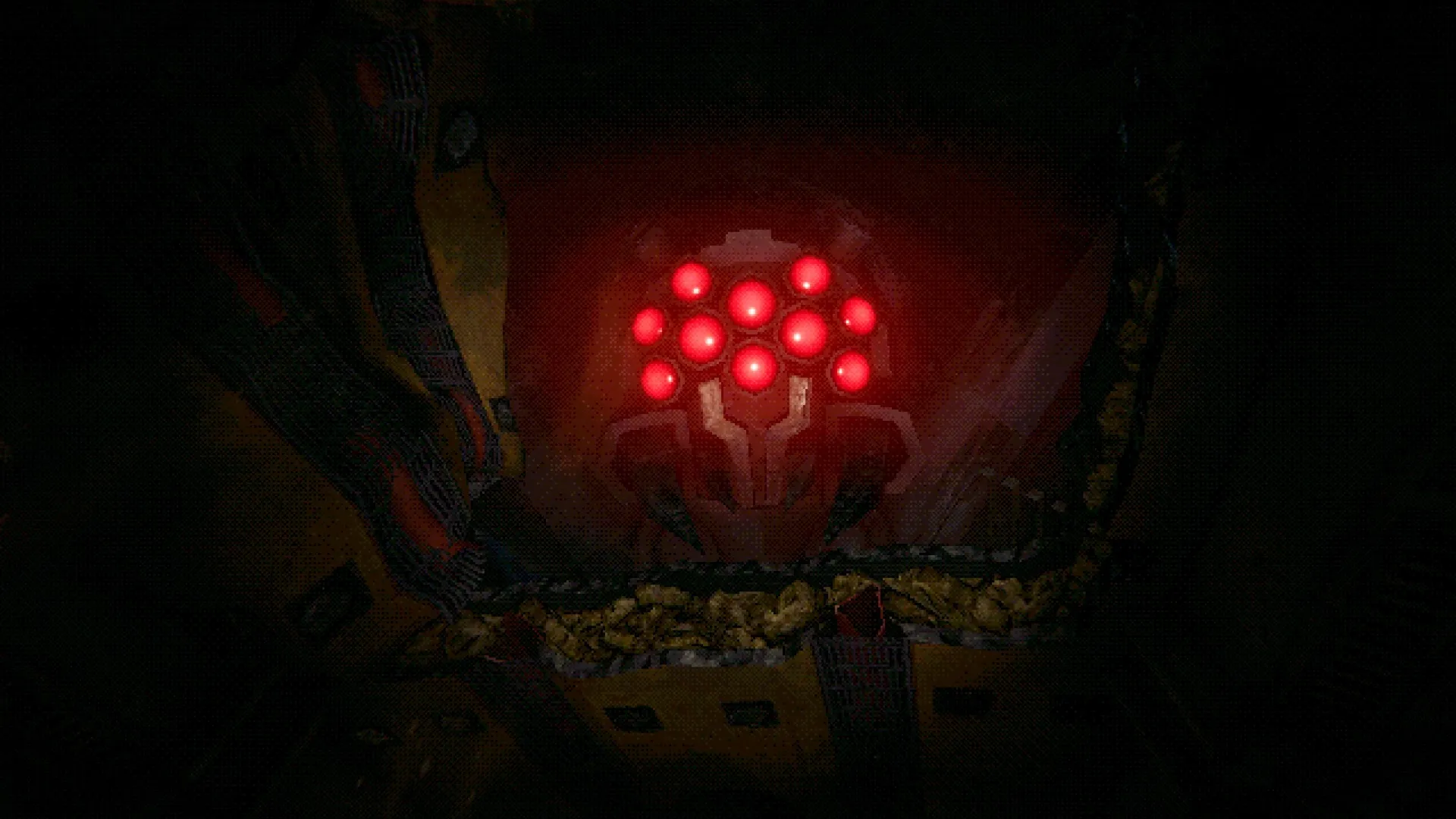
One of my favourite things about GRINDWORM is its retro visual style. The gritty, low-resolution graphics immediately reminded me of the older PC games I used to enjoy, particularly classics like Doom. Although the gameplay itself is very different, there’s something about that old-school appearance that brings back fond memories.
Rather than trying to impress players with highly detailed environments, GRINDWORM uses its rough textures, harsh lighting and confined spaces to create an uncomfortable atmosphere. The presentation suits the underground setting, making everything feel dirty, industrial and far removed from the safety of the surface.
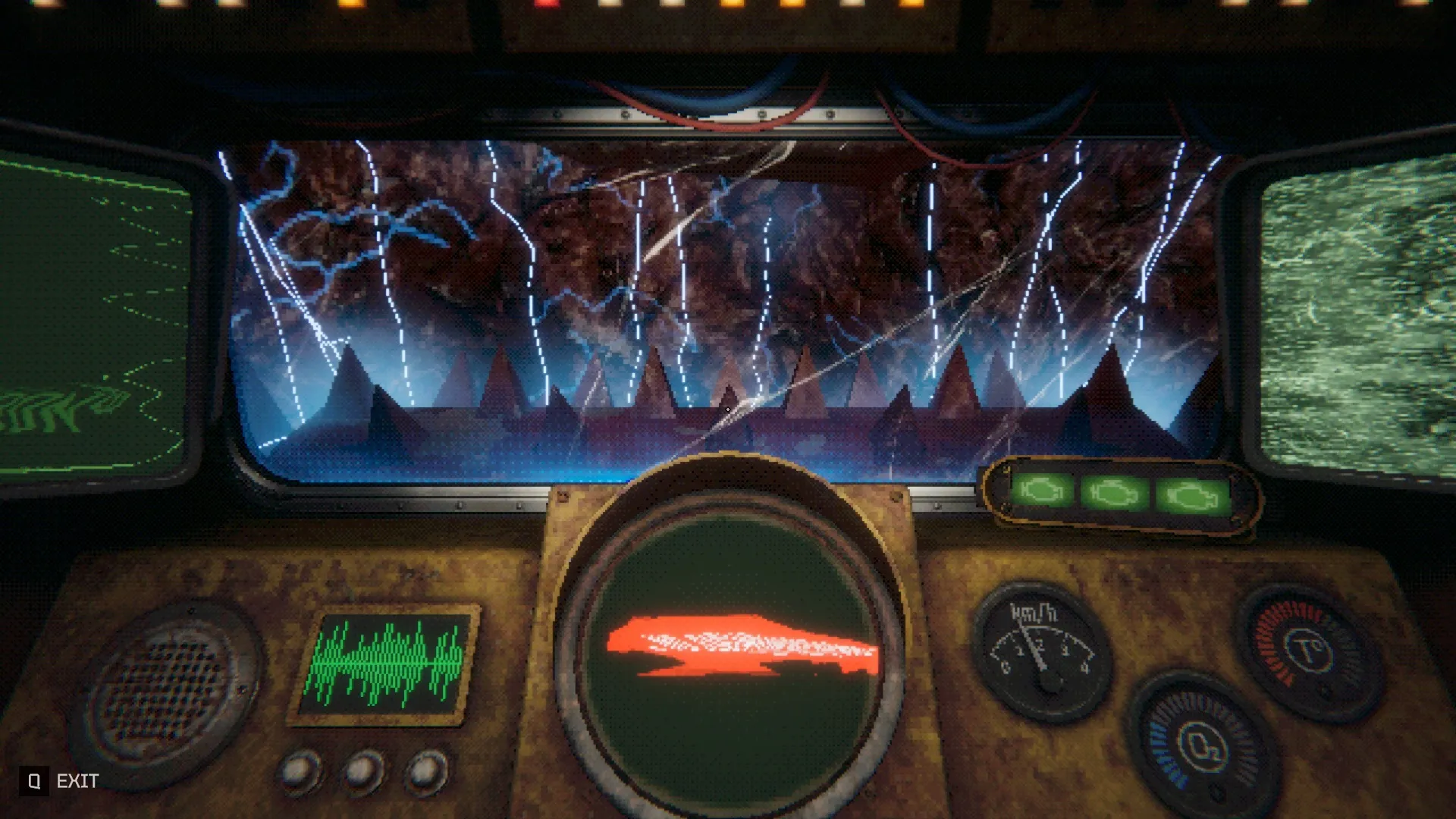
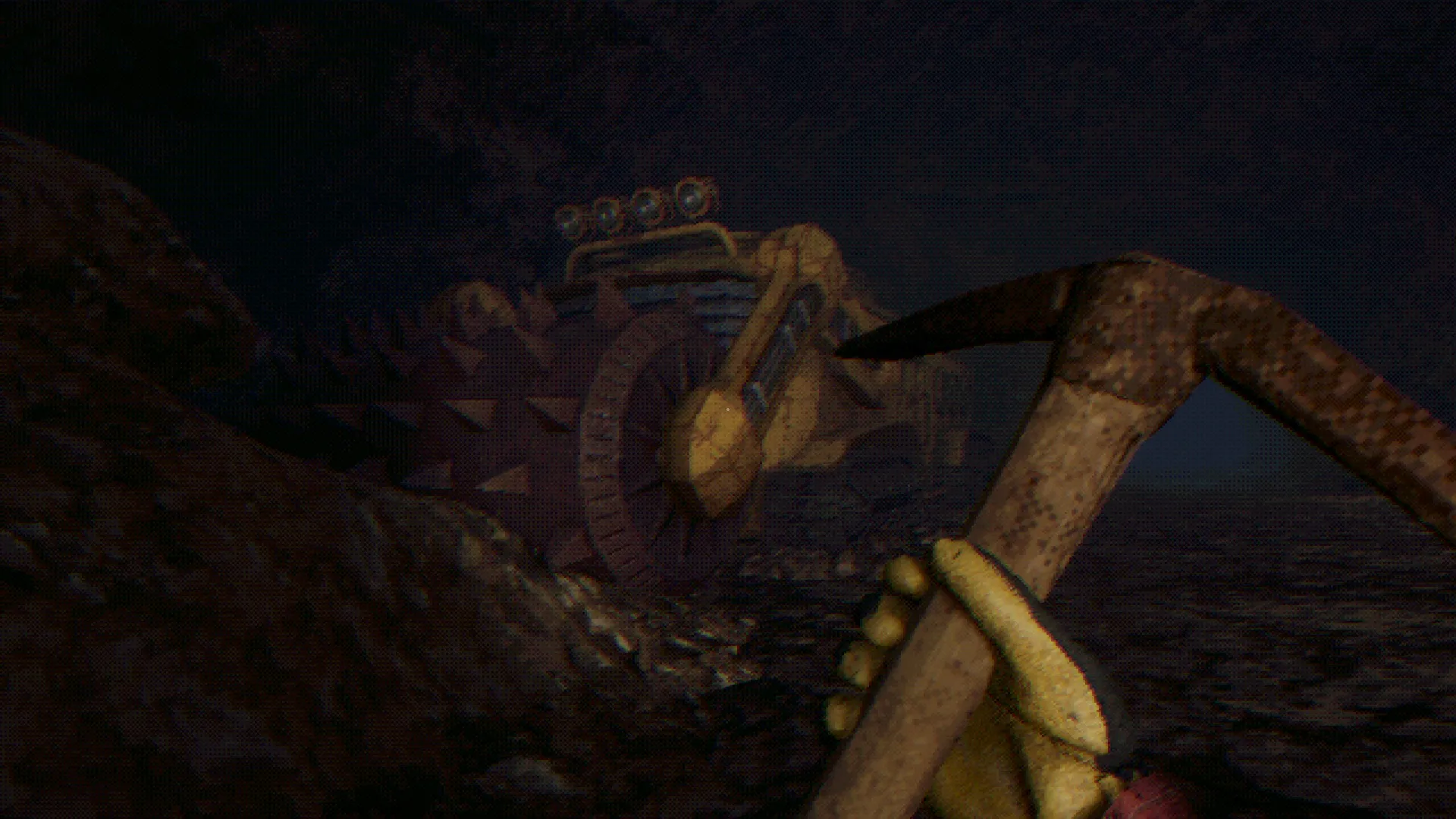
Most of your surroundings are viewed through the front window of the mining rig, with its enormous grinding teeth constantly visible as you burrow through the earth. I liked this perspective because it reinforces the feeling of being stuck inside a heavy piece of machinery rather than freely exploring on foot.
The cockpit itself is also an important part of the visual design. Different displays provide the information needed to survive, including a green radar for navigation, blue oxygen gauges and red warning screens that indicate when something needs attention.
I found these details particularly effective because they make the machine feel like something you’re genuinely operating. Instead of relying on a traditional interface that sits over the screen, you’re constantly checking the equipment around you, which helps maintain the feeling of being inside the rig.
As conditions deteriorate, the visual effects become increasingly noticeable. Screens begin flickering, cracks appear across the window, and certain rocks cause distortions that make it harder to see what’s happening outside.
I liked how these effects made the environment more difficult to navigate without feeling completely out of place. When your window is damaged and the displays are struggling to function, even a relatively ordinary stretch of tunnel can become uncomfortable to travel through.
The limited visibility also works in the game’s favour. You never have a particularly clear view of what lies ahead, leaving plenty of room for your imagination to do some of the work.
Overall, I thought GRINDWORM looked great for the style it was aiming for. Its retro presentation won’t appeal to everybody, but personally, I loved the nostalgic feeling it gave me. Sometimes a horror game doesn’t need realistic graphics to make you feel uneasy.
Something doesn't sound right
Sound plays an important role in GRINDWORM, particularly because you’re spending so much time trapped inside a machine surrounded by darkness. With very little to see beyond the cockpit window, you naturally begin paying more attention to the noises around you.
The constant rumbling of the mining equipment, the grinding of metal against rock and the occasional mechanical warning all contribute to the uncomfortable atmosphere. I particularly liked how the machine itself seemed to become another thing to worry about, with different noises making me question whether something was about to go wrong.
There are also strange sounds coming from the tunnels, which help create the impression that you’re not entirely alone. I found these especially effective because I couldn’t always tell whether a noise was coming from the surrounding environment or something happening to my equipment.
The radio interference is another interesting detail. Having your communications disrupted while trying to follow a signal makes an already difficult situation feel even worse, especially when you’re relying on that information to find your crew.
I thought the audio worked particularly well alongside the limited visibility. The game doesn’t need to constantly show you something frightening when the machinery and surrounding noises are enough to make you nervous about continuing.
While the sound design is relatively straightforward, I enjoyed how it supported the atmosphere without becoming distracting. The grinding equipment and distorted communications make the underground environment feel unpleasant in exactly the way a horror game should.
final thoughts
Being trapped underground in an unreliable mining machine while desperately searching for missing colleagues sounds like my idea of an absolute nightmare. Thankfully, playing GRINDWORM was considerably more enjoyable than actually experiencing that situation would be.
What stood out to me most was the retro presentation. I’ve always had a soft spot for older PC games, and GRINDWORM’s gritty appearance reminded me why I enjoyed them so much growing up. Combined with the uncomfortable underground setting and the constant pressure of keeping the machine operational, it creates an interesting horror experience that doesn’t need to rely on jump scares to make you nervous.
I also appreciated how the gameplay encourages experimentation. Although I struggled initially, there was something rewarding about gradually understanding the equipment and learning from my mistakes. Each attempt gave me a better idea of how to approach the next obstacle, and I enjoyed the challenge of balancing navigation with keeping the rig operational.
However, I do think the demo could benefit from some improvements, particularly when it comes to introducing players to the mechanics. Being left to figure everything out can be enjoyable, but there is a difference between presenting a challenge and leaving somebody completely confused about how their equipment works.
A few subtle hints would make the opening more approachable while still allowing players to discover the more complicated mechanics themselves. I wouldn’t want GRINDWORM to hold my hand throughout the entire experience, but a little assistance at the beginning certainly wouldn’t hurt.
Despite those frustrations, I enjoyed what Snail Bite has created. The combination of old-school visuals, equipment management and the fear of being trapped underground makes GRINDWORM an interesting prospect for horror fans who enjoy a challenge.
As a demo, it offers an encouraging introduction to the game’s ideas, although the full release will need to build on those strengths and refine the less welcoming aspects of its gameplay.
I’ll certainly be keeping an eye on GRINDWORM as development continues. Hopefully, the next time I head underground, I’ll be a little better prepared for whatever the mine has waiting for me.
Then again, knowing my luck, I’ll probably be late for work again.
A preview code for GRINDWORM was provided for preview purposes.
Positives
✅ Atmospheric Horror – The underground setting, unreliable machinery and limited visibility create a constant feeling of unease.
✅ Nostalgic Visuals – The retro, low-resolution graphics bring back memories of classic PC games and suit the industrial setting.
✅ Rewarding Learning Curve – Experimenting with the equipment and learning from mistakes makes successful attempts feel satisfying
✅ Interesting Survival Mechanics – Managing oxygen, navigating hazards and monitoring the rig’s systems adds pressure to the experience.
✅ Effective Sound Design – Mechanical noises, radio interference and unsettling background sounds help build tension.
Negatives
❌ Lack of Guidance – Being thrown into the cockpit without basic instructions makes the opening unnecessarily confusing.
❌ Frustrating Trial and Error – Learning how the rig functions can involve repeated mistakes before the mechanics become clear.
❌ Demanding Equipment Management – Having to monitor several systems while navigating can occasionally feel overwhelming.
❌ Limited Demo Scope – The short preview offers only an introduction to the game’s mechanics and horror elements.

Hey, I’m MezzaB, a passionate gamer and writer for IndieCritical, hailing from the North East of England! I’m a proud mum, animal lover and lover of all things gaming. Known for my cheeky humour, chaotic personality and brutally honest opinions, I bring my own unique flair to every review. From cosy adventures to complete gaming madness, I’m never afraid to speak my mind, with plenty of laughs and a little batty mischief along the way!