Hello, I’m IndieCresco, and welcome to another IndieCritical review! There’s something rather satisfying about going from struggling to kill a single skeleton to watching an entire group of them get absolutely roasted by a fireball. It’s the sort of progression that makes auto battlers so addictive, even if getting there requires a fair bit of patience. Legion Breaker, developed by Baffled Engineer and published by Level Up Gaming and Gamersky Games, understands this rather well, starting you off with very little before gradually turning you into the undead’s worst nightmare.
This incremental auto battler puts you in the shoes, or should I say hands, of a novice wizard tasked with surviving endless waves of skeletons and other undead creatures. The opening hours are relatively slow, with much of your time spent grinding away to improve your attacks and abilities. However, as new spells become available and your powers grow, the battlefield starts to feel considerably more exciting. I particularly enjoyed unlocking the fireball, which allowed me to deal with groups of enemies rather than picking them off individually. Before long, I was beginning to feel almost overpowered, although the game had other ideas, throwing larger waves and increasingly difficult enemies my way.
So, grab your staffs, dust off those spellbooks and prepare to unleash a little magical mayhem as we take on the undead in Legion Breaker!
Story
An army of the undead, a powerful Necromancer King and one novice wizard tasked with putting an end to his reign. Sounds like the beginning of an epic fantasy adventure, doesn’t it? Well, don’t expect Legion Breaker to deliver a grand tale filled with dramatic cutscenes or memorable characters, because the story is surprisingly vague. Instead, you’re thrown into a fantasy world overrun by skeletons and other undead creatures, with one simple objective: grow stronger, raise a holy army and fight your way through the Necromancer King’s Legion.
As for the characters, there’s not a great deal to get attached to. Your wizard starts out relatively weak, but gradually develops into a powerful battlemage through the abilities and upgrades you unlock. The Necromancer King serves as the main threat, although I would have liked to learn more about him, his motivations and how his undead army came to be. There’s certainly room for some interesting storytelling here, but unfortunately, much of it is left unexplored.
One thing I did find interesting was how the game occasionally presents you with a question and three possible answers, with your choices offering upgrades to help you along the way. It’s a nice little touch that adds something different to the usual grind, although I wouldn’t say it makes the narrative particularly engaging.
Personally, I would have appreciated a bit more background to give the adventure some meaning beyond simply becoming stronger. That being said, Legion Breaker clearly puts its gameplay ahead of storytelling, and there’s still something rather satisfying about watching a novice wizard grow powerful enough to stand against an entire army of the undead.
Gameplay
When it comes to gameplay, Legion Breaker keeps things remarkably simple, with your mouse doing pretty much all the work. You aim towards the enemies you want to attack, and that’s about it. I did try using a controller to see whether it was possible, but unfortunately, I couldn’t get it to work. It’s a shame for anyone who prefers sitting back with a controller in hand, although the mouse controls are easy enough to get used to.
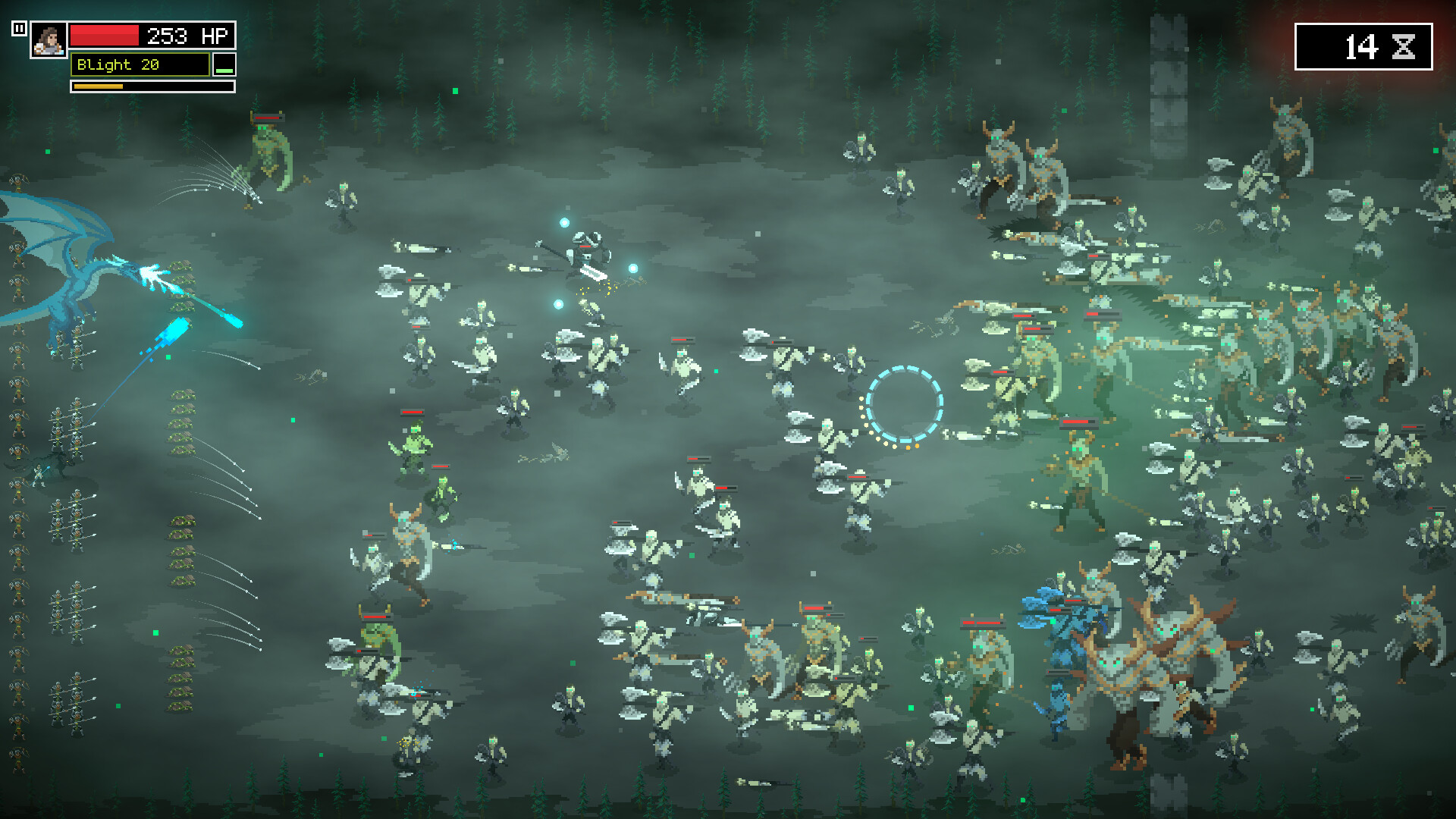
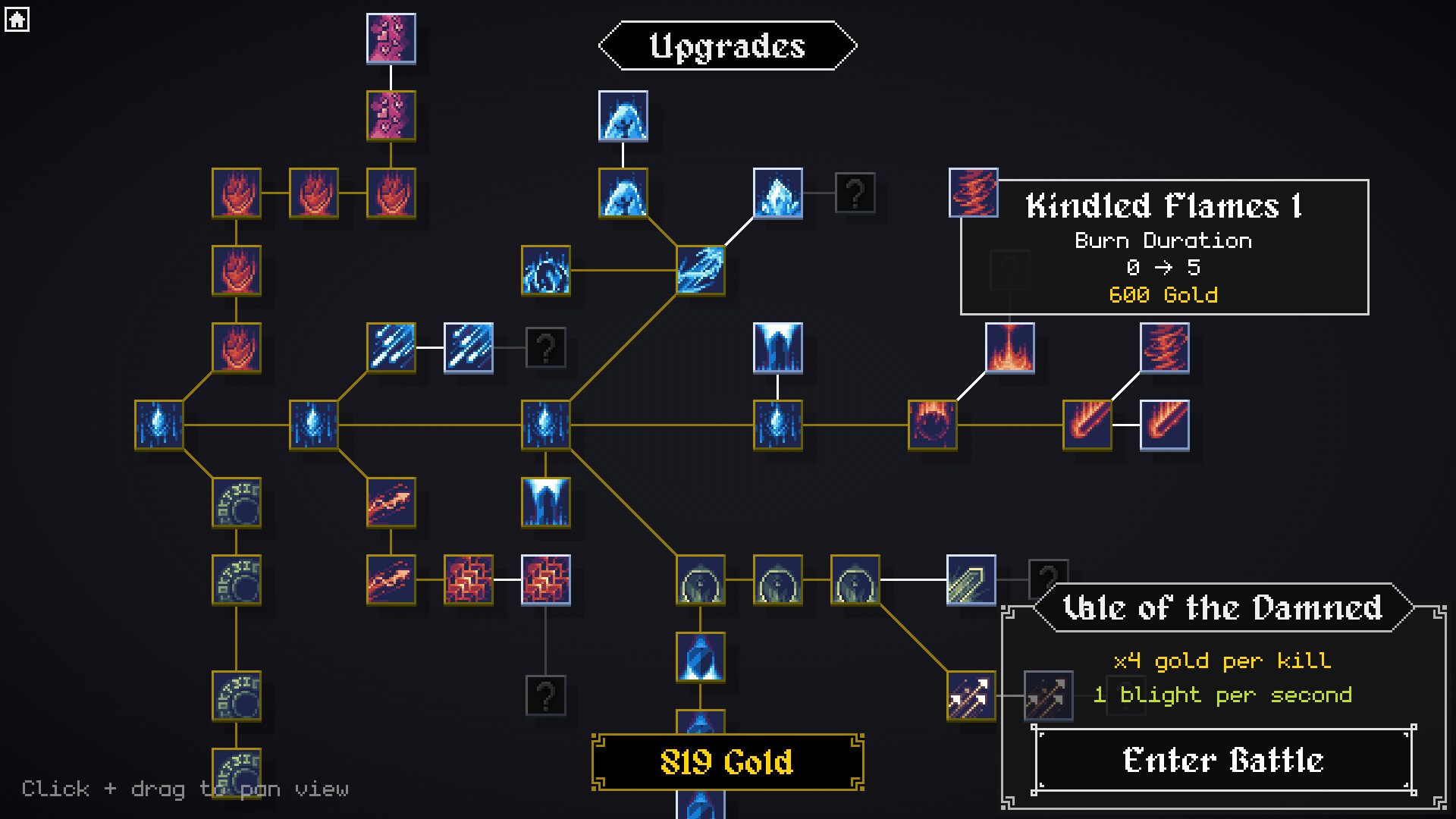
At first, things move rather slowly, with your basic Arcane spell doing just enough damage to deal with the occasional skeleton wandering your way. Every enemy you defeat rewards you with gold, which becomes incredibly important as you progress. However, there’s a slight problem. You’re constantly being poisoned by something called Blight, meaning your health is gradually being drained until your run eventually comes to an end. It’s a rather unpleasant way to go, especially when you’re finally getting somewhere.
Thankfully, death isn’t the end of your progress. Unlike a traditional roguelike where you might lose much of what you’ve worked towards, the gold you’ve earned can be spent on permanent upgrades that make your next attempt considerably easier. Your skill tree offers plenty of ways to improve your wizard, whether that’s increasing the damage and range of your basic Arcane attacks, improving your maximum health and damage resistance, or unlocking abilities that restore health whenever you defeat an enemy. I particularly appreciated the healing upgrades, considering the Blight is constantly trying to send you to an early grave.
This is where I started finding Legion Breaker genuinely addictive. Those first few attempts can feel like a bit of a slog, but the more gold you collect, the more improvements you can afford, and suddenly those skeletons that once took forever to defeat are dropping like flies. There’s a satisfying sense of progression that makes you want to jump straight back in after every defeat, just to see how much further you can push your abilities.
Of course, the game isn’t content with letting you spend all your time bullying helpless skeletons. After roughly 45 seconds, a boss makes an appearance, giving you something considerably tougher to deal with. Defeating it allows you to advance to the next battleground, where the enemies become increasingly challenging. Every three levels, you’re also presented with a multiple-choice question offering three possible answers. These provide small pieces of the game’s story alongside upgrades that can help you survive what’s coming next.
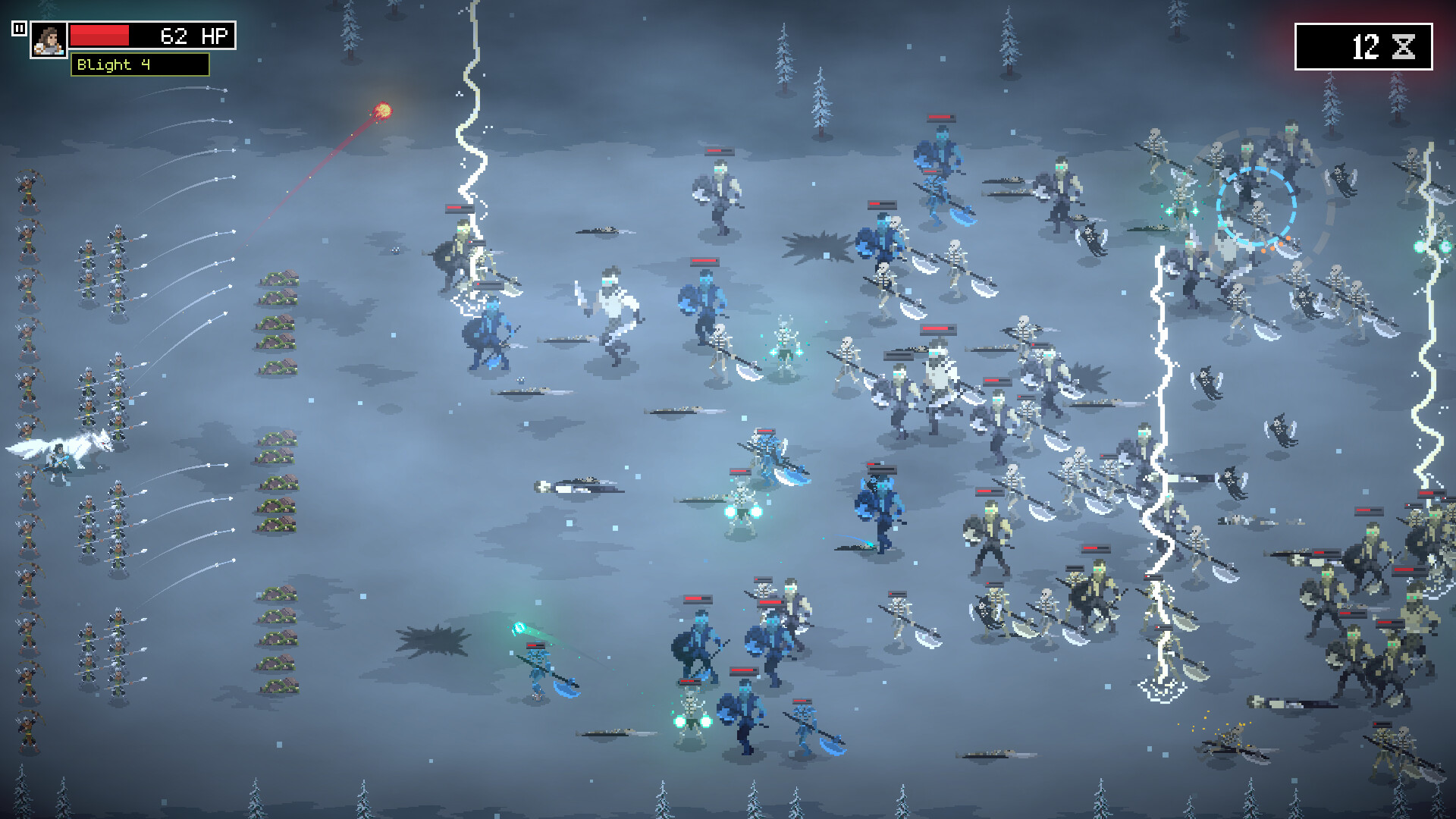
One of my favourite additions is the Holy Army, which allows you to recruit allies to fight alongside you. Rather than facing the Necromancer King’s Legion entirely on your own, you can unlock units such as spearmen and archers to help deal with the growing number of enemies. Watching your little army develop alongside your wizard adds another layer to the progression, and having some backup certainly doesn’t hurt when you’re being surrounded by the undead.
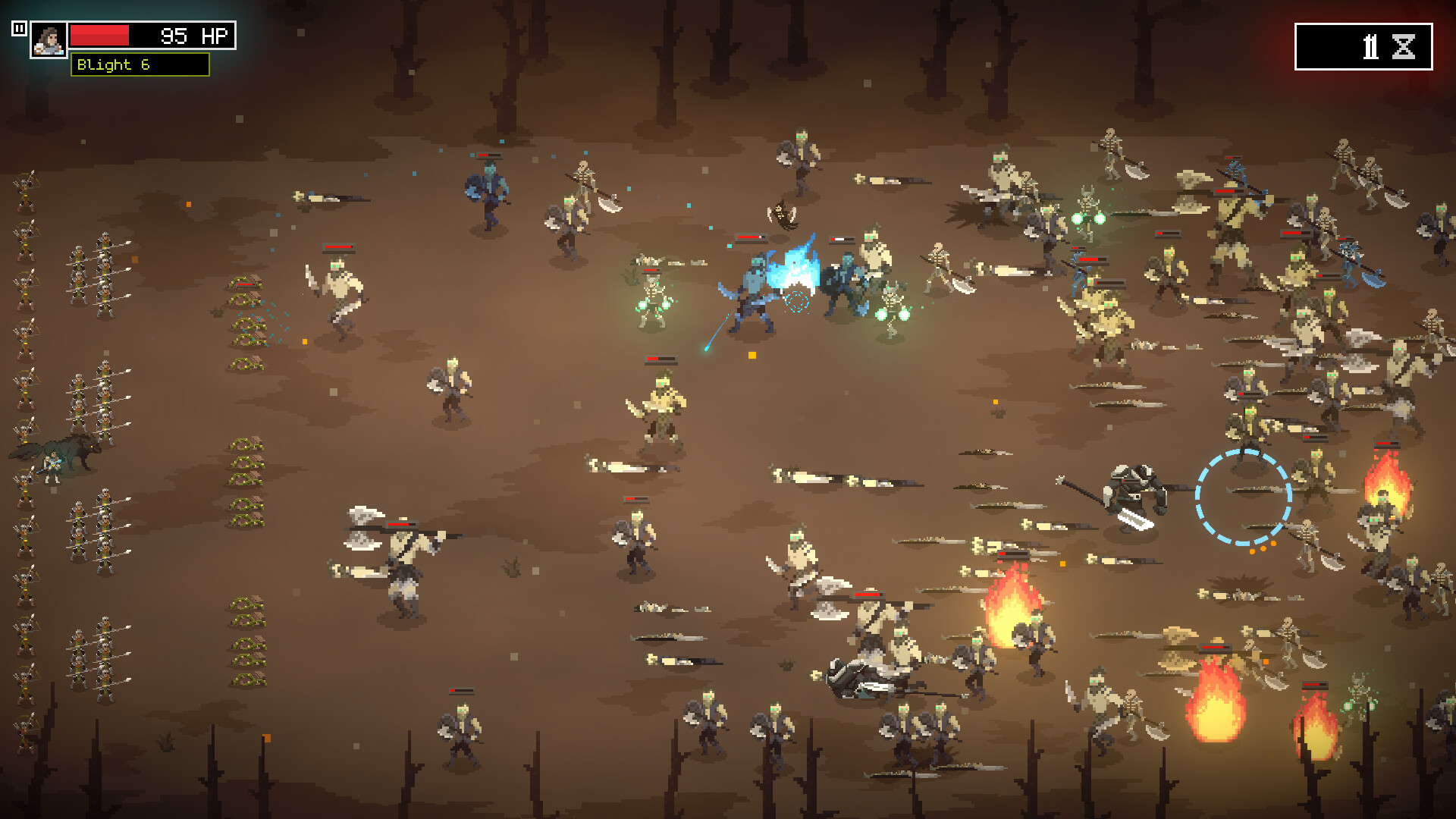
You’re not limited to your starting Arcane attacks either, as there are several different magical elements to unlock, including Earth, Fire, Lightning, Ice and Poison. Personally, the Fireball was where things really started getting interesting. Instead of slowly picking off individual enemies, I could finally hit groups of them at once, which made a noticeable difference when the battlefield started getting crowded. There’s something deeply satisfying about watching several skeletons disappear in a burst of flames, particularly after spending so long struggling against them individually.
What impressed me most was how much the experience changed the longer I played. Initially, I wasn’t entirely convinced by the slow pace, but once the upgrades started making a noticeable difference, I found myself enjoying it far more than I expected. The tougher enemies, larger waves and variety of spells kept things entertaining, while the constant improvements made me feel almost overpowered at times.
It took me roughly five hours to work my way through the game, eventually reaching the Necromancer King and defeating him. That should give you an idea of how much time you can spend building up your abilities before facing the game’s main threat. What I liked about that journey was how different my wizard felt compared to those first few attempts. I’d gone from struggling against individual skeletons to commanding a holy army and unleashing powerful spells against entire groups of enemies. All those upgrades I’d spent my hard-earned gold on were finally paying off.
That being said, the early grinding won’t appeal to everyone, particularly those expecting something immediately action-packed. You’re essentially repeating the same process of defeating enemies, collecting gold and upgrading your abilities, so enjoyment largely depends on how satisfying you find that progression. For me, the improvements were substantial enough to keep me interested, and without giving too much away, there’s plenty more to discover as you become stronger.
visuals
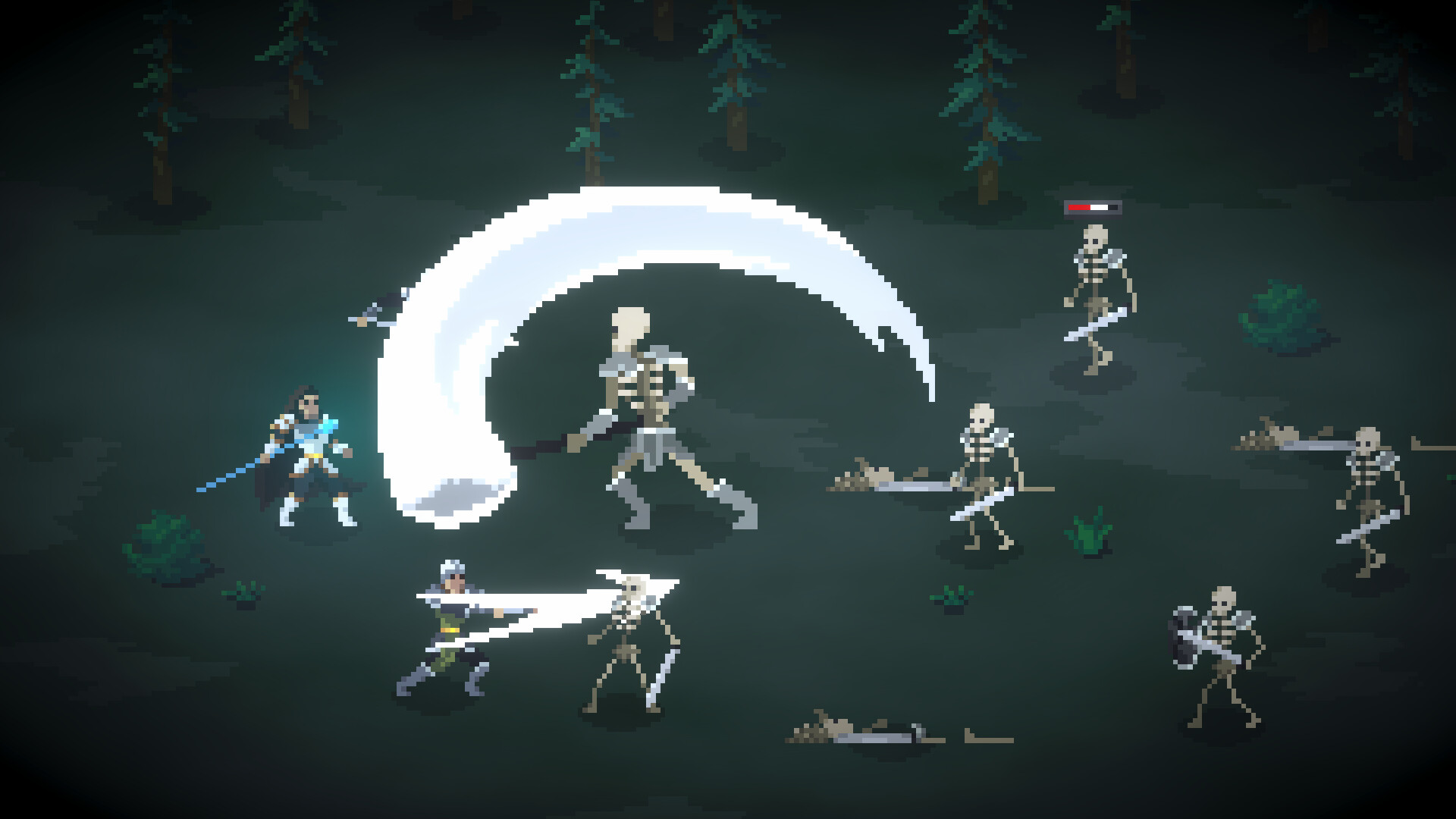
Legion Breaker goes for a pixelated aesthetic with clear Norse mythology influences, and I think it suits the game rather well. It doesn’t try to overwhelm you with overly detailed visuals or flashy presentation for the sake of it. Instead, it sticks to a more minimalistic artistic direction, which works in its favour and helps keep the focus on the action unfolding across the battlefield.
The backgrounds are artistic without being too busy, giving each battleground its own identity while still feeling clean and easy to read. I actually liked this approach, because with so many enemies, attacks and effects appearing on screen, the game could have easily become a visual mess. Instead, the environments remain fairly simple, which makes it easier to keep track of what’s happening without sacrificing the atmosphere.
The character designs follow a similar idea. They’re not massively detailed, but they don’t need to be. Your wizard, the undead enemies and the various units in your Holy Army all have a straightforward look that fits neatly with the pixel-art style. The same goes for the bosses, which stand out well enough to feel threatening without looking completely out of place next to the more minimal design of everything else.
Where the visuals become more exciting is in the spell effects. As you begin unlocking stronger abilities, the screen starts to feel much livelier, with attacks like Fireball making combat far more satisfying to watch. Seeing groups of enemies wiped out in one hit definitely adds to the sense of progression, and the visual effects do a good job of making your growing power feel more impactful. The lighting and effects aren’t especially elaborate, but they do enough to make each spell feel distinct.
Animation-wise, Legion Breaker keeps things fairly simple, which matches the rest of the game’s presentation. It may not be the most visually advanced game you’ll play, but everything moves clearly enough, enemies are easy to recognise, and combat remains readable even when things get busier. For a game built around gradually increasing chaos, that’s quite important.
I didn’t run into any major graphical or performance issues while playing, which is always a relief. More importantly, the visual style feels consistent throughout. Legion Breaker isn’t trying to wow you with realism or cutting-edge effects. Instead, it relies on a clean pixel-art style, minimalistic design and satisfying spell effects, and honestly, that approach works well for the kind of game it wants to be.
audio
When it comes to audio, Legion Breaker keeps things fairly simple, much like its visuals. The background music fits the fantasy setting rather well, providing a suitable soundtrack as you work your way through the Necromancer King’s Legion. It’s nothing particularly groundbreaking, but it does its job without becoming too distracting, especially when you’re spending hours grinding for that next upgrade.
Your magical attacks have their own sound effects, which give the combat a little more impact, particularly once you start unlocking stronger spells. However, I was disappointed by how quiet everything else felt. There isn’t much in the way of environmental audio or sounds coming from the enemies themselves, which is a shame considering you’re supposed to be fighting an entire legion of undead creatures. A few rattling bones, monstrous growls or even some satisfying death sounds would have made the battlefield feel considerably more alive. Well, as alive as a battlefield full of skeletons can be.
There’s also no voice acting, although given how limited the storytelling is, I can’t say I was particularly surprised or that it bothered me too much. The multiple-choice encounters are presented through text, and I don’t think the game necessarily needs spoken dialogue to get its point across.
My main criticism is that the audio doesn’t quite match what’s happening on screen. Visually, battles become increasingly chaotic as your spells grow stronger and more enemies appear, yet the soundscape remains relatively basic. The music helps establish the atmosphere, and the attack effects are a welcome addition, but a little more attention to enemy and environmental sounds could have made those larger battles much more satisfying.
FINAL THOUGHTS
Legion Breaker is one of those games that takes a little patience before you begin to appreciate what it has to offer. I’ll admit that the opening was rather slow, and I wasn’t entirely convinced it would keep me entertained for very long. However, the more time I spent improving my wizard, unlocking new spells and building up my Holy Army, the more I found myself enjoying it. What started as a fairly basic experience eventually became an addictive little game that had me wanting to jump straight back in after every failed attempt.
For me, the biggest strength is undoubtedly the progression system. There’s something incredibly satisfying about watching your character go from struggling against a handful of skeletons to practically wiping out entire groups without breaking a sweat. The variety of magical abilities, permanent upgrades and additional units gives you plenty to work towards, while the increasingly difficult enemies prevent things from becoming a complete walk in the park.
That’s not to say Legion Breaker is without its problems. The story feels rather underdeveloped, the audio could do with a bit more attention. I also would have appreciated controller support, although the mouse controls work perfectly well for what the game requires.
It took me roughly five hours to reach and defeat the Necromancer King, and looking back, I enjoyed that journey far more than I initially expected. The pixelated visuals and Norse-inspired setting give the game a charming identity, even if the overall presentation is fairly formulaic. It certainly doesn’t reinvent the auto battler genre, but it understands what makes these games enjoyable: the satisfaction of becoming stronger with every attempt.
Would I recommend it? Absolutely, particularly if you enjoy incremental games, auto battlers and watching your character gradually develop into an unstoppable force. However, if you’re someone who needs an engaging story, varied gameplay from the very beginning or constant action, you might struggle with the slower opening hours.
Ultimately, Legion Breaker is a simple but enjoyable experience that proves you don’t always need complicated mechanics or fancy graphics to have a good time. Sometimes, all you need is a wizard, a few powerful spells and an unreasonable number of skeletons to set on fire.
I’d like to extend a huge thank you to the developers and publishers for giving me the opportunity to experience and review Legion Breaker.
And, of course, a massive thank you to all of you for taking the time to read my review. Your continued support means a great deal to me and everyone here at IndieCritical. We hope to see you again for the next one!
A code for Legion Breaker was provided for review purposes.
Positives
✅ Rewarding Progression: Permanent upgrades make each run feel worthwhile as your wizard gradually becomes more powerful.
✅ Satisfying Combat: Unlocking stronger spells makes taking down large groups of enemies incredibly enjoyable.
✅ Holy Army System: Recruiting spearmen and archers adds another layer to combat.
✅ Charming Pixel-Art Visuals: The minimalistic, Norse-inspired aesthetic suits the game’s fantasy setting.
✅ Plenty of Upgrades: Different elemental spells and improvements offer a satisfying sense of growth.
✅ Simple Controls: Easy to pick up and play using just a mouse.
Negatives
❌ Slow Start: The opening grind requires patience before the more exciting abilities become available.
❌ Underdeveloped Story: The Necromancer King and the wider world receive very little background.
❌ Limited Audio: A lack of enemy and environmental sound effects makes battles feel quieter than they should.
❌ No Controller Support in Testing: I couldn’t get a controller working during my playthrough.
❌ Repetitive Gameplay Loop: Defeating enemies, collecting gold and purchasing upgrades may not appeal to everyone.

My name is Cresco, I’m passionate about gaming, creating content, and building a community people can enjoy being part of. As a UK-based variety streamer, I love discovering new games, sharing different experiences, and bringing people together through streams. When I’m not live, I’m probably checking out something new to play, planning future content, or finding the next game to get stuck into.
Written by

Cresco Spero
@IndieCresco