Some games are so memorable that they convince you to buy an entire console just to experience them. For me, that game was Gears of War. Cast your mind back to 2006, long before Epic Games became best known for Fortnite, when the original game made its debut on the Xbox 360. I still remember walking into the room and seeing my stepdad playing through the opening prison section. I couldn’t believe what I was looking at. The graphics were incredible for their time, the characters looked enormous, and the sheer brutality of the action was unlike anything I’d experienced before. From that moment, I was determined to get an Xbox 360 of my own, which naturally involved spending the next few months begging my parents for one.
Before I eventually got my hands on the console, my stepdad would let me join him for some good old-fashioned couch co-op, and those afternoons became some of my fondest childhood memories. Whether I was playing as Marcus Fenix or Dominic Santiago, I was completely hooked. The aggressive third-person shooting, horrifying Locust Horde and ridiculous amount of blood and gore made every encounter exciting. I mean, how many games back then allowed you to curb-stomp an enemy’s head into the pavement or slice a monstrous creature in half with a chainsaw attached to an assault rifle? Looking back, I’d give anything to experience those moments again, sitting beside my stepdad with a controller in my hands and absolutely no idea what horrors were waiting around the next corner.
That experience started a love for the franchise that’s lasted almost twenty years. I’ve followed Marcus, Dom and the rest of Delta Squad through the devastating events of Gears of War 2, the emotional rollercoaster of Gears of War 3 and The Coalition’s more recent instalments. Along the way, I’ve celebrated victories, shed a few tears and experienced boss battles that made me seriously question whether my controller would survive another attempt. Yet beyond the excessive violence and memorable enemies, it’s always been the characters who’ve kept me coming back. Marcus and Dom’s friendship remains one of my favourite relationships in gaming, with their loyalty and sacrifices giving the original trilogy an emotional depth that went far beyond shooting anything unfortunate enough to cross their path.
Now, we’re finally returning to the event that started humanity’s darkest chapter. Developed by The Coalition and published by Xbox Game Studios, Gears of War: E-Day takes place fourteen years before the original game, following younger versions of Marcus and Dom as they experience the beginning of the Locust War. For those unfamiliar with the franchise, Emergence Day marks the moment monstrous creatures erupted from beneath the surface of Sera, launching a devastating invasion that would change its civilisation forever.
Having grown up with Gears of War, I’ve always wanted to experience those early days, before humanity understood what it was fighting and when the Locust were still an unfamiliar, terrifying enemy. I was also eager to see the franchise embrace the darker atmosphere that made the original so memorable while taking advantage of modern technology.
Of course, having nearly two decades of memories attached to a series brings some enormous expectations. Seeing Marcus and Dom standing side by side again was enough to put a smile on my face, but nostalgia alone isn’t going to earn a game a glowing review.
So, did Gears of War: E-Day deliver the experience I’d been waiting for, or had my love for the franchise set the bar a little too high?
where it all began
After nearly 80 years of bloodshed, the Pendulum Wars had finally come to an end, giving the people of Sera something many believed they’d never experience: peace. Soldiers were returning home, families were rebuilding their lives, and there was finally hope that future generations might grow up without knowing the horrors of warfare. Sadly, their celebrations wouldn’t last very long. While humanity was busy recovering from decades of conflict, a new threat was preparing to emerge from beneath their feet. Honestly, you’d think the people of Sera would be entitled to a few years off after everything they’d already endured!
Our journey begins in the city of Kalona, where we reunite with Marcus Fenix and Dominic Santiago, although their relationship isn’t quite the brotherhood we’ve come to recognise throughout the original trilogy. Both are struggling with the death of Carlos Santiago, Dom’s older brother and Marcus’s closest friend, whose passing has created an uncomfortable distance between them. I liked seeing this more vulnerable side of Marcus because we’re so accustomed to the hardened soldier who rarely shows his emotions. Beneath that intimidating armour is a young man carrying an enormous amount of grief and guilt, someone who hasn’t quite worked out how to deal with everything he’s lost.
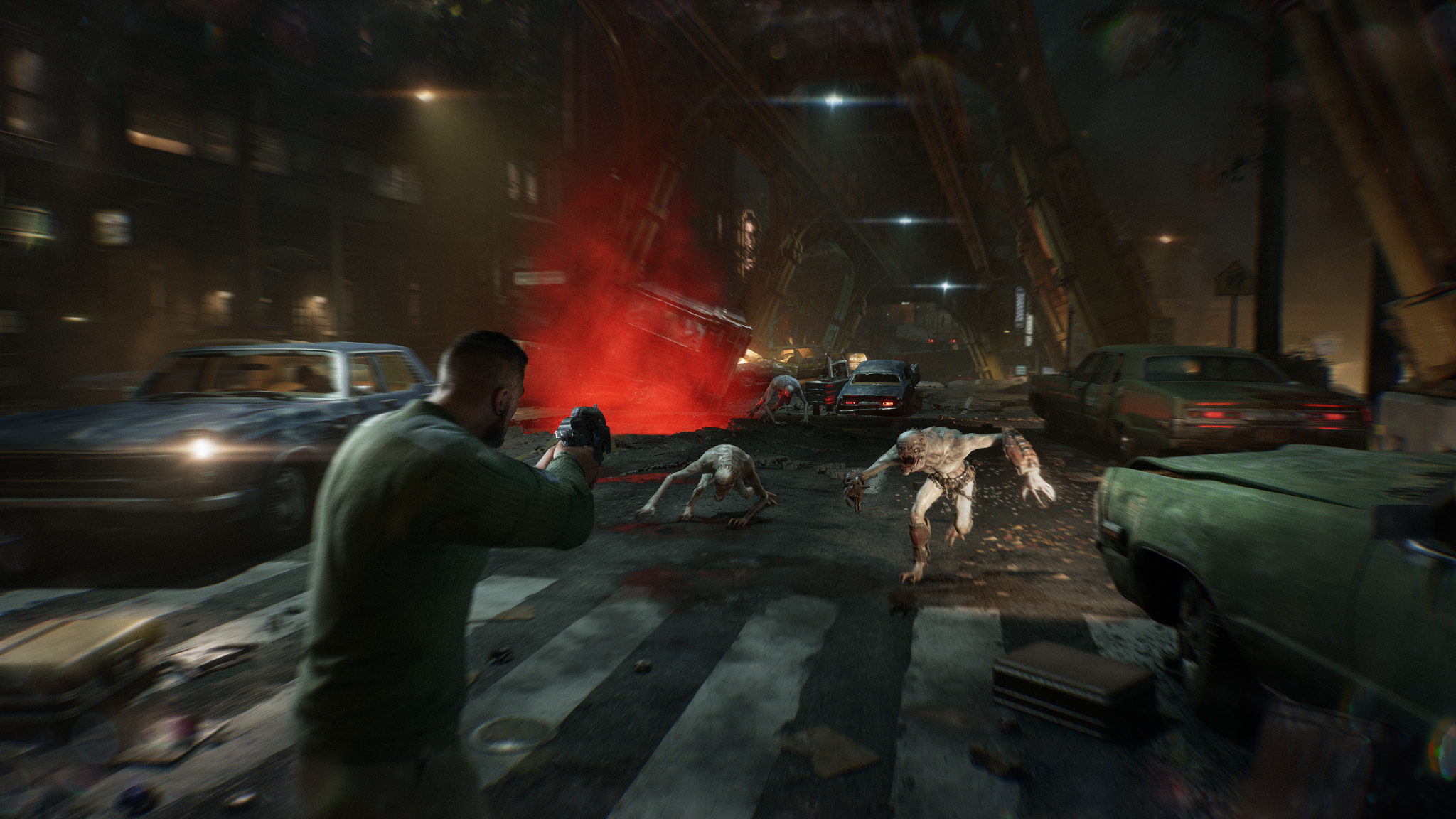
Whatever plans they had for a peaceful future are quickly abandoned when enormous Emergence Holes tear through the streets, unleashing the Locust Horde upon an unsuspecting population. Buildings collapse, terrified civilians flee for their lives, and the COG suddenly find themselves fighting something far beyond their understanding. Imagine surviving decades of warfare, finally looking forward to putting your feet up, only for a bunch of underground monsters to come bursting through your living room floor. I certainly wouldn’t fancy explaining that situation to my insurance company! Behind the chaos, though, is a frightening reality. These are trained soldiers who understand conventional warfare, suddenly facing creatures that make everything they’ve previously encountered seem insignificant.
As the invasion spreads, Marcus and Dom are joined by two newcomers, Mags Carter and Lucas Reyes, forming Bravo Squad. Mags brings years of military experience to the group, whereas Lucas is a younger soldier who hasn’t yet developed the instincts needed to survive such extreme circumstances. Their contrasting backgrounds create an interesting dynamic, especially when even the most experienced members are struggling to understand what they’re fighting. I appreciated having characters whose futures weren’t already familiar to me, as they added some uncertainty to a story where longtime fans already know many of the major events.
Rather than attempting to cover the destruction taking place across the entire planet, the campaign concentrates on three devastating days. I think this narrower approach works well because it gives the writers room to explore the human consequences of the invasion. The story isn’t simply concerned with enormous military operations or how many Locust the COG can eliminate. It’s about soldiers suddenly realising their training might not be enough, civilians attempting to escape an impossible situation and friendships being tested when survival becomes the only priority.
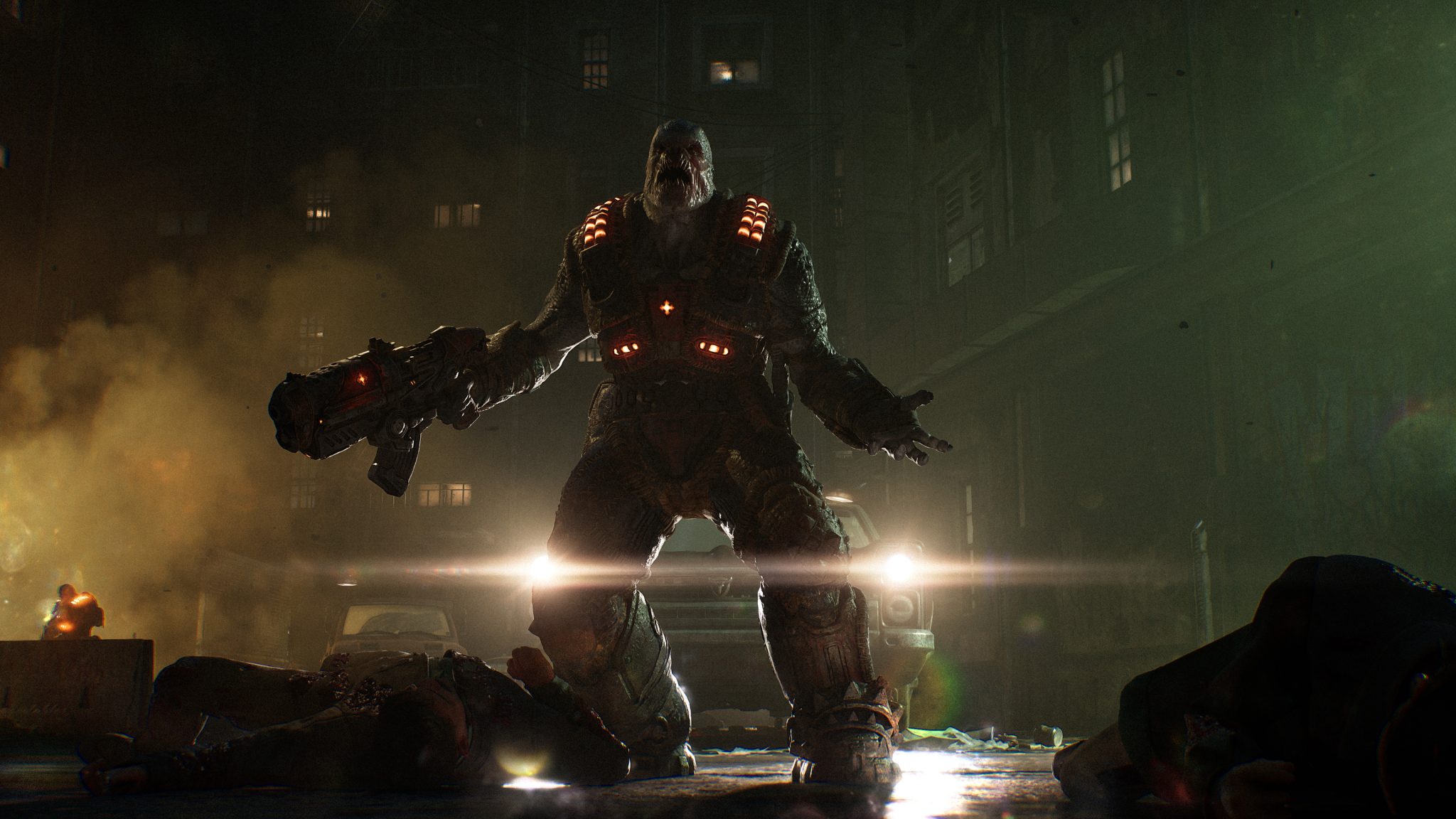
Of course, no Gears of War adventure would feel complete without an intimidating villain, and E-Day introduces Vraahk, a terrifying Locust Blight Commander who leads the Scorched Legion. Having previously fought in the Lambent War, where he suffered significant injuries, Vraahk now has his sights set on humanity’s destruction. He’s not interested in negotiating, forming alliances or offering anyone a second chance. His intentions are straightforward, and his appearance certainly reflects his violent nature. I wouldn’t exactly fancy bumping into him while popping down to the local shop for a pint of milk.
The Scorched Legion are equally disturbing, with spikes protruding from their bodies and signs of deliberate mutilation making them look considerably more sinister than ordinary Locust soldiers. I liked how their appearance reflected the cruelty of the commander leading them, giving this group its own identity within the Horde. Having already faced memorable villains such as General RAAM and Skorge, I was curious to see whether Vraahk could establish himself alongside some of the franchise’s most recognisable antagonists.
One of the biggest challenges with telling a prequel is that longtime fans already understand the consequences of Emergence Day. The writers can’t rely entirely on shocking us with the outcome, which means the smaller moments become increasingly important. Conversations between friends, personal decisions made under impossible circumstances and the reactions of ordinary people facing an unimaginable threat can carry just as much emotional weight as the larger battles.
For me, the relationship between Marcus and Dom is where this approach matters most. I’ve already witnessed how far these two men are willing to go for one another, so I don’t need another game repeatedly reminding me how loyal they are. What interests me is understanding how they reached that point, especially when their friendship wasn’t always as straightforward as we’ve come to remember. Exploring their disagreements and shared grief offers something more meaningful than simply bringing two beloved characters back for another adventure.
There’s also a bittersweet feeling that comes from knowing their future. Marcus and Dom have absolutely no idea what the coming years will demand from them, which friendships will survive or how much they’ll eventually sacrifice. As someone who’s followed their journey since childhood, seeing these younger versions of the characters made me appreciate just how much their lives would change.
We’ve spent years fighting alongside Marcus and Dom as heroes of the Locust War, but E-Day allows us to see them before those legends were written, when surviving another day mattered far more than becoming heroes.
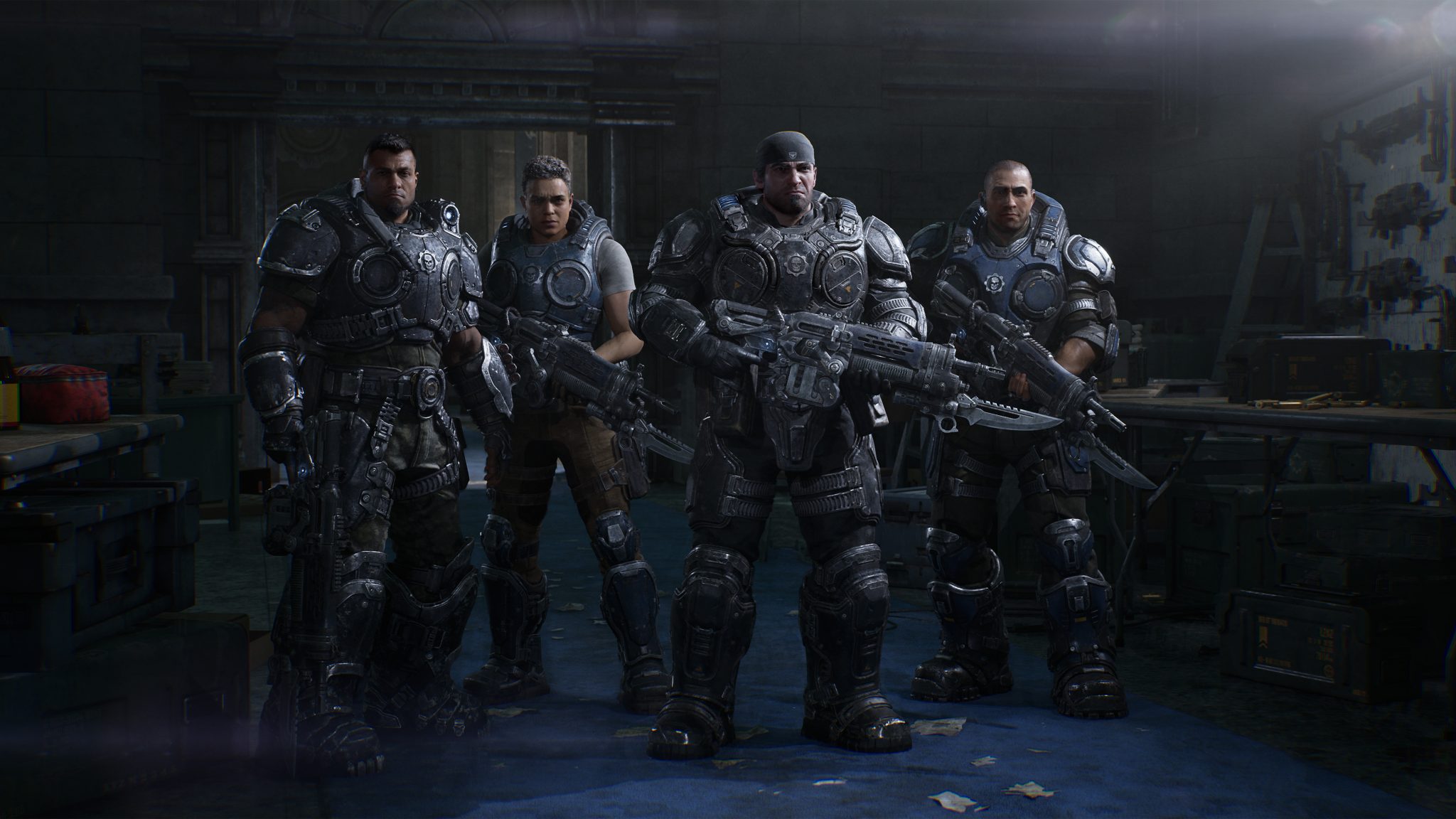
we are the gears of war
The moment you take control of Marcus; there’s an immediate familiarity to E-Day. The weighty movement, cover-based shooting and gruesome executions are exactly what I’d expect from Gears of War, although The Coalition has made several adjustments to bring the mechanics closer to modern standards. For the most part, these additions feel welcome, making combat more responsive without losing the distinctive heaviness that’s been part of the franchise since 2006.
Movement is one of the more noticeable improvements, offering greater freedom when navigating the environments. Marcus and the rest of Bravo Squad can now jump, climb over obstacles and slide across the ground, making it easier to reposition yourself when things get dangerous. Previously, getting over certain objects required entering cover first, whereas E-Day allows you to mantle directly over them. It’s a simple adjustment that makes getting around much smoother, although Marcus hasn’t suddenly become an Olympic gymnast. Considering the enormous amount of armour he’s carrying, I’m surprised the poor bloke can even climb over a wall. I’d need a week’s recovery after wearing that equipment for five minutes!
The cover system has also been expanded, allowing you to make better use of your surroundings rather than relying entirely on traditional waist-high barriers. Smaller objects can provide temporary protection, while certain obstacles allow you to slide underneath them or fire through narrow openings. There’s even a low-ground cover option that lets Marcus position himself closer to the floor when a suitable hiding spot isn’t available. I enjoyed having these additional choices because they encouraged me to pay attention to my positioning rather than immediately throwing myself behind the nearest concrete wall. Of course, trying to get too clever occasionally ended with Marcus lying face-first on the ground while Dom was left cleaning up my mess.
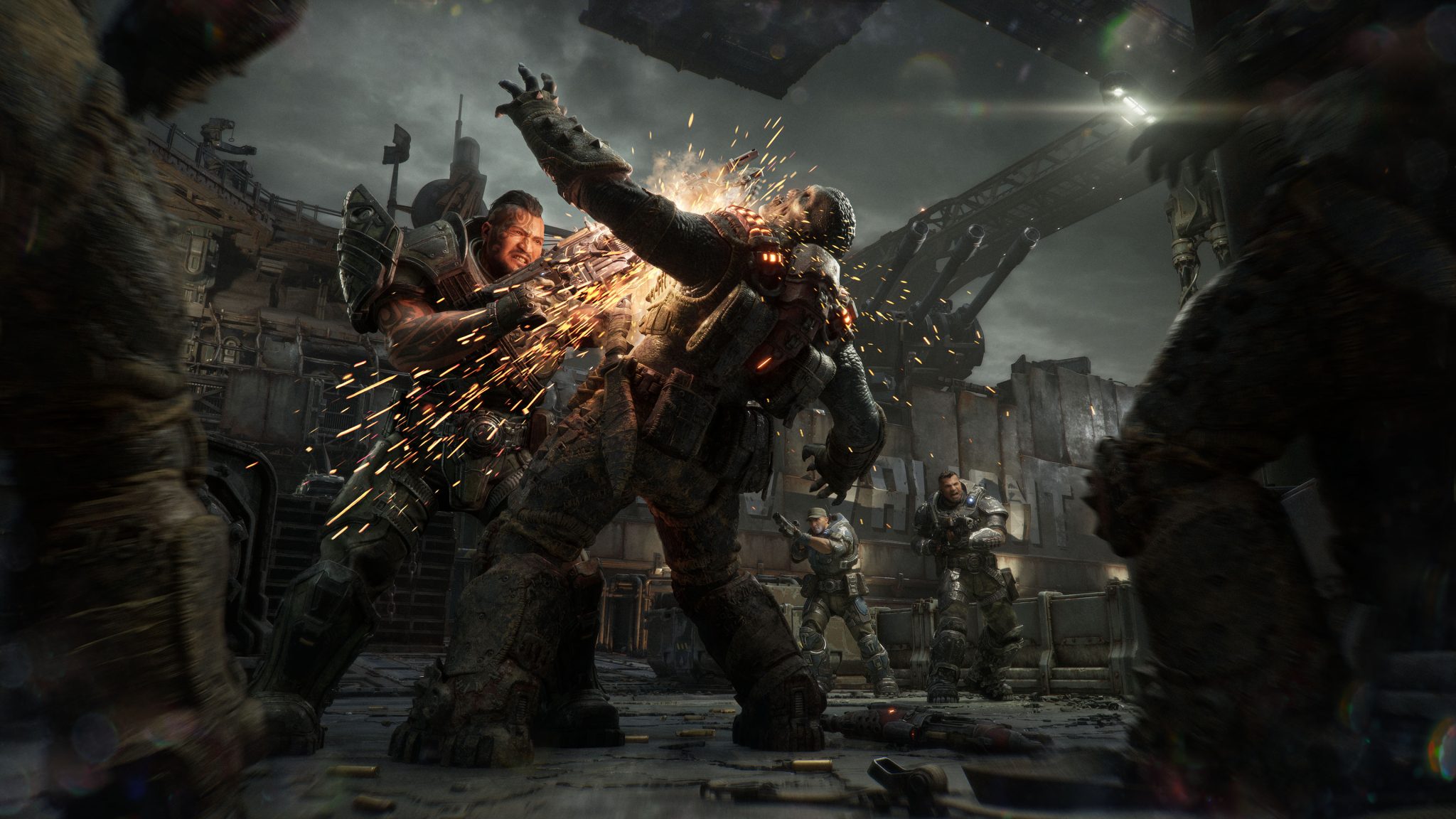
Where E-Day impressed me most was with the Locust Horde. I’ve spent years cutting through these ugly creatures without giving them much thought, but here they’re stronger, more aggressive and considerably harder to kill. Their thick hides make conventional firearms feel almost useless at times, with certain enemies absorbing an extraordinary amount of punishment before finally going down. You can unload an entire magazine into a Drone, only for the stubborn brute to continue advancing as though you’ve done little more than annoy it. This increased resilience made me reconsider my approach, especially when ammunition was running low.
Their unpredictability also keeps you on edge. The Locust can erupt from beneath the ground without much warning, meaning an apparently quiet street can become a dangerous situation within seconds. One moment, you’re exploring, minding your own business, and the next, several rather unpleasant underground residents have decided to introduce themselves. These encounters reminded me of the original game, when you weren’t entirely sure what might be waiting around the next corner. They also demonstrate just how overwhelming the Horde was before humanity developed effective ways of fighting back.
That resilience provides an explanation for the evolution of one of gaming’s most recognisable weapons: the Lancer. With ordinary ammunition struggling against the Locust’s tough exterior, humanity needed something capable of inflicting serious damage at close range. Apparently, someone decided that attaching a chainsaw to an assault rifle was the most sensible solution.
Longtime fans will recognise the return of the Lancer MK1, better known as the Retro Lancer, which we first got our hands on in Gears of War 3 back in 2011. Unlike its famous successor, this older rifle features a traditional bayonet that allows you to charge towards enemies and impale them. I have fond memories of using it in Gears 3, although my enthusiasm for charging directly towards an unsuspecting Locust occasionally ended with Marcus being turned into Swiss cheese. Seeing the MK1 return as standard military equipment rather than an outdated relic is a lovely detail, and the eventual introduction of the Prototype Lancer makes that famous chainsaw attachment feel like a natural development.
However, while the Lancer might be the face of the franchise, my favourite weapon throughout E-Day was easily the Longshot Sniper Rifle. I’ve always enjoyed weapons that reward accuracy, and there’s nothing quite like taking your time, lining up the perfect shot and watching a Locust’s head disappear before he even realises what’s happened. The Longshot delivers that satisfying combination of precision and power, making every successful headshot feel earned rather than simply holding down the trigger and hoping for the best. Whenever I had the opportunity to get my hands on one, it quickly became my preferred choice for dealing with enemies at a distance. There’s something incredibly rewarding about clearing a dangerous position with a well-placed shot, especially after spending the previous few minutes watching your ammunition disappear into a Drone that refuses to die.
Naturally, there’s a selection of other familiar firearms, including the Gnasher shotgun, Hammerburst and Snub pistol, each suited to different situations. The Gnasher remains useful when something gets a little too close for comfort, while the Hammerburst offers another option for players who prefer keeping enemies at a distance. Adjustments to recoil and projectile behaviour make the weapons feel more refined, with shoulder swapping providing greater flexibility when aiming.
Enemy variety helps keep you on your toes, with Drones, Wretches and Boomers returning alongside larger threats such as Seeders and Reavers. Their different abilities mean you can’t always rely on the same strategy, especially when several types appear together. Armoured Wretches can disorient you with their screams, while Boomers remain enormous walking tanks that can absorb a ridiculous amount of punishment. Some encounters require you to identify weaknesses, reposition yourself or prioritise certain targets before they become a problem. I enjoyed having to think about which enemy needed dealing with first, rather than simply pointing my Longshot at anything unfortunate enough to move.
That being said, not every battle feels equally inventive. There are occasions when the familiar routine of entering an area, eliminating several waves of Locust and gathering supplies before continuing becomes predictable. It’s a formula that has served the franchise well, but after so many instalments, I would have liked a few more encounters that caught me genuinely off guard. The tougher enemies add an enjoyable challenge, even when the structure of certain firefights follows a well-established pattern.
Perhaps the biggest departure from the original formula is the introduction of larger, more open-world-style environments. Instead of following a predetermined path, certain sections of Kalona allow you to explore different routes and decide how to reach your next objective. You might choose to avoid a dangerous Locust position by taking a longer path, or head straight towards the enemy with your weapons ready and deal with the consequences. I liked having that choice. Sometimes I fancied being tactical and conserving ammunition, whereas other times I simply wanted to go in guns blazing and leave a mountain of Locust corpses behind me. I’ll let you guess which approach usually won.
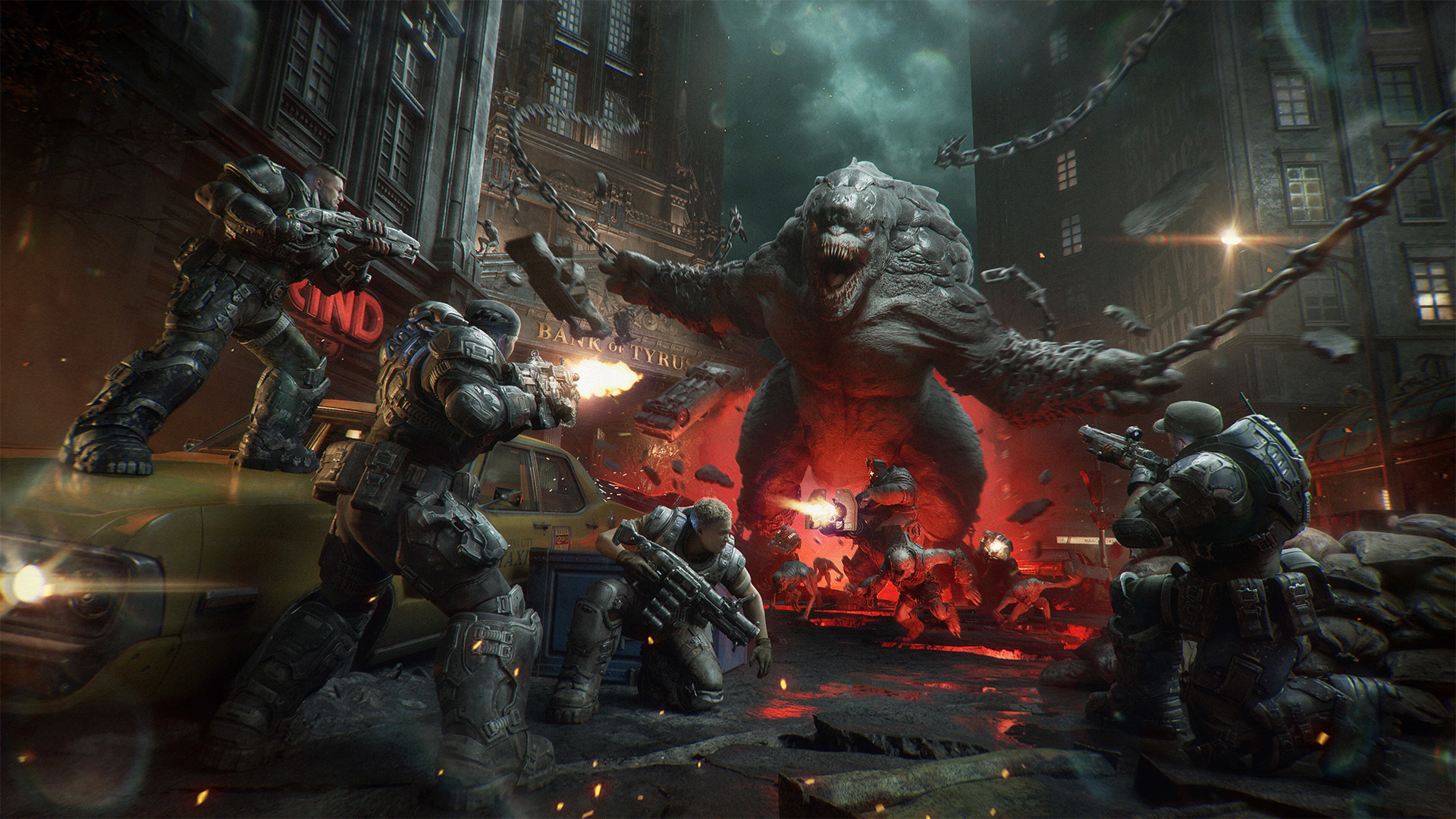
exploring the city of kalona
These locations also introduce optional side missions, including opportunities to rescue civilians and assist COG soldiers who’ve found themselves in trouble. I welcomed these objectives because they offered something different from simply eliminating enemies and moving towards the next objective. Helping survivors gave the invasion a more personal touch, while some missions rewarded players with useful weapon modifications. Although, I’d like to think Marcus would still rescue someone even if there wasn’t a shiny new attachment waiting for him afterwards.
You’ll also discover Supply Caches throughout the city, allowing you to replenish ammunition, change weapons and equip modifications you’ve collected during your journey. As new firearms become available, these stations provide an opportunity to experiment with different loadouts before heading into another dangerous situation. Additional upgrades can be obtained through optional objectives and special containers known as Hard Cases, encouraging you to investigate locations away from the main route.
Unfortunately, this is where I started to have mixed feelings about the direction The Coalition has taken. While I appreciate the ambition behind expanding the environments, some sections simply don’t offer enough meaningful activities to justify their size. There are plenty of abandoned buildings, side streets and hidden corners to investigate, yet exploring them often amounts to finding another collectible or modification crate. I’d have loved more unexpected encounters, substantial side missions or smaller stories involving survivors. Imagine discovering a family barricaded inside a building, only for an Emergence Hole to open while you’re desperately trying to escort them to safety. Something like that could have made taking a different route genuinely worthwhile, rather than leaving me wondering whether the next building contained anything beyond another Hard Case.
The problem isn’t that Gears of War has introduced exploration, because I genuinely enjoyed having more freedom. It’s that the additional space sometimes comes at the expense of the focused pacing that made the original trilogy so memorable. I don’t mind searching for collectibles, but I reached a point where rummaging through abandoned properties began to feel more like a chore than an adventure. Considering humanity is supposed to be fighting for survival, Marcus certainly seems to have enough spare time to start a second career as a warehouse inventory manager! I would have preferred fewer optional activities with more substance, giving me a reason to explore beyond upgrading my equipment.
Cooperative play introduced a couple of frustrations of its own. When joining a friend’s campaign, I found that weapon modifications didn’t always appear to carry over properly, which made collecting upgrades less rewarding. There was also the player-tethering system, which pulled me back towards the host whenever I wandered too far away. I understand the importance of keeping teammates together, but it became irritating when we were deliberately exploring different areas in search of hidden items. On more than one occasion, I was halfway through investigating a building when I suddenly found myself beside my mate again. At that point, I wasn’t fighting the Locust anymore; I was fighting the invisible leash attached to my friend!
Despite those annoyances, I still had plenty of fun playing alongside someone else. Cooperative gameplay has always been an important part of Gears of War, and I’m pleased that local split-screen remains available alongside online play. There’s something special about covering your teammate during a difficult encounter, reviving them when things go wrong or having a friendly argument because someone decided to take all the ammunition. When we were working together during the more intense battles, E-Day delivered exactly the kind of shared experience I’ve always enjoyed from the franchise.
Ultimately, the shooting, enemy encounters and improved movement demonstrate that The Coalition still understands how to make Gears of War entertaining. I’m not against the series trying new things, and the larger environments have some promising ideas. I just wish the developers had put as much thought into filling those spaces with worthwhile experiences as they did into making the combat feel so enjoyable.
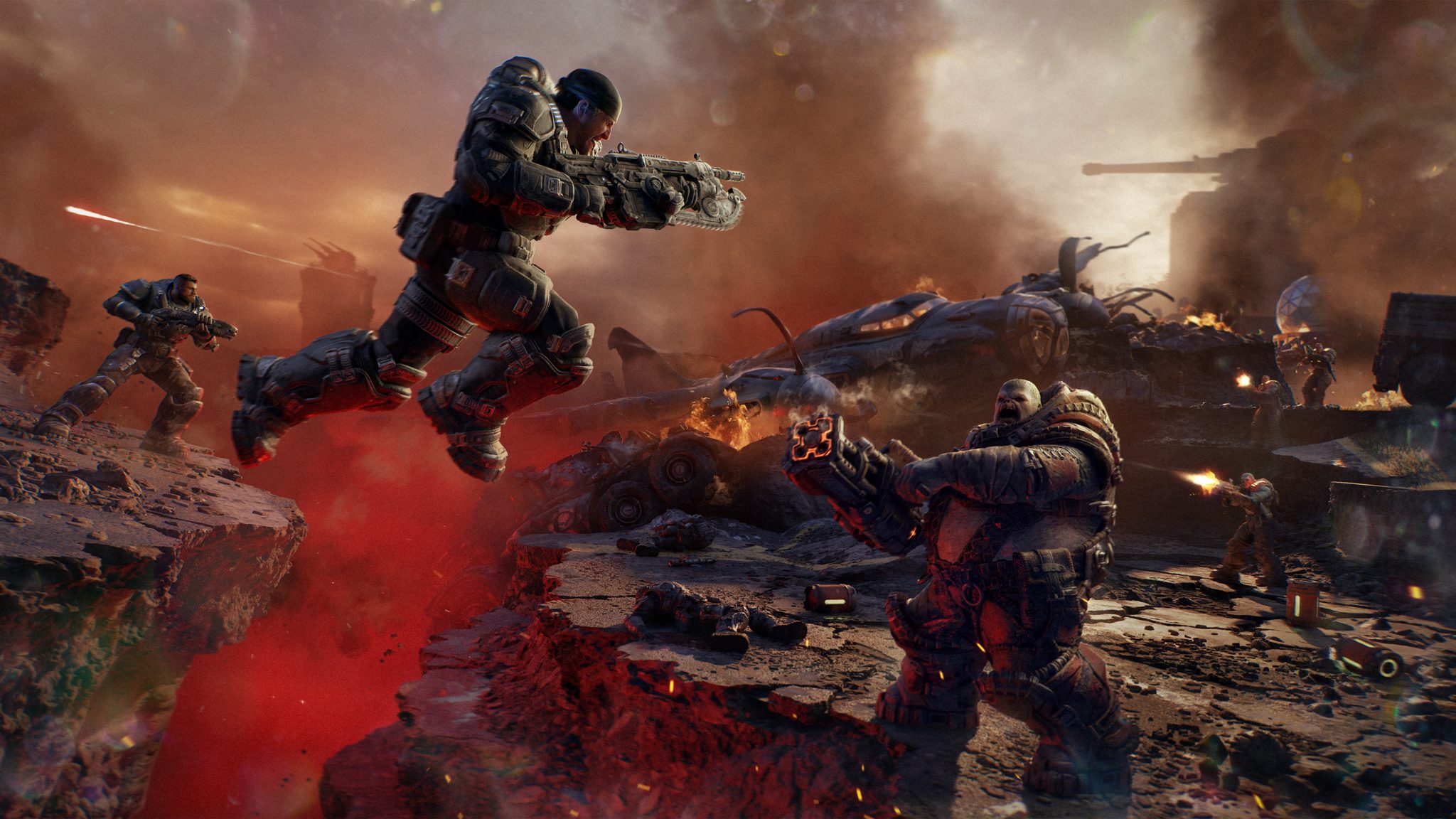
the destruction of kalona
Visually, Gears of War: E-Day is absolutely stunning. The Coalition has always had a reputation for pushing Xbox hardware to its limits, and Unreal Engine 5 has allowed the developers to create one of the most impressive-looking entries in the franchise. From the detailed character models and realistic lighting to the scale of the environments and destruction unfolding around you, there’s an incredible amount to appreciate. I still remember being blown away by the original game’s graphics back in 2006, so seeing how far the technology has come is remarkable. Marcus has certainly aged well over the years, although I wish I could say the same about myself!
What caught my attention was Kalona itself. Unlike previous Gears of War games, where we’re usually exploring locations that have already suffered years of destruction, E-Day gives us the opportunity to see what life on Sera looked like before the invasion. Streets are filled with vehicles, businesses are operating, and buildings haven’t yet been reduced to piles of rubble. There’s plenty of detail throughout the city, from shopfronts and advertisements to everyday objects scattered inside homes and workplaces. I enjoyed seeing this side of Sera because it offered something we rarely experience in the franchise: a civilisation that hasn’t already been devastated by war.
The most impressive part, though, is watching that normality disappear. Locations you previously visited can later become almost unrecognisable, with buildings collapsing, abandoned vehicles blocking the roads and Emergence Holes tearing through the streets. I loved recognising landmarks and comparing how they appeared before and after the attack. It’s one thing to explore a ruined city, but witnessing somewhere you’ve already visited gradually fall apart is an entirely different experience. I occasionally found myself stopping to admire the destruction, recognising a building I’d passed earlier and thinking, well, that’s definitely not getting repaired anytime soon!
The environmental detail becomes even more impressive during the larger action sequences. Thick clouds of dust, flying debris and structures collapsing around you help communicate the force of the invasion. Lighting is another standout, especially during darker sections where shadows, smoke and flickering lights create an atmosphere that wouldn’t feel out of place in a survival-horror game. Some locations look beautiful from a distance, only for you to discover the horrifying aftermath of an attack when you get closer.
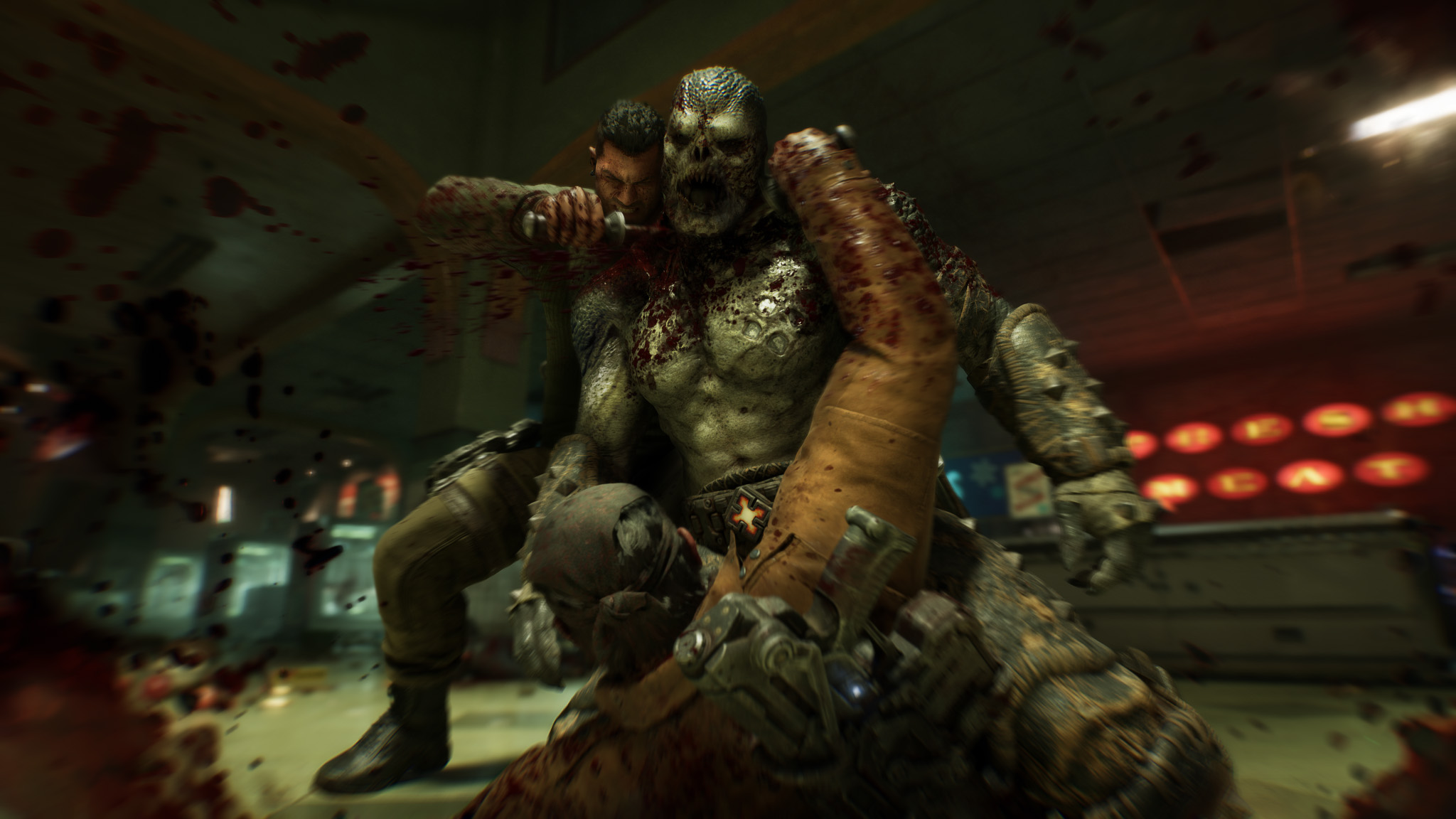
Now, let’s talk about something Gears of War has never been shy about: blood and gore. Ever since the original game, the franchise has embraced its wonderfully excessive violence, but E-Day takes that brutality further with a noticeably more detailed damage system. Enemies react to the punishment they’re receiving, executions are considerably more graphic, and dismemberment looks more convincing than anything we’ve previously experienced in the series. Blood splatters across the surroundings, bodies are torn apart, and the aftermath of a messy encounter certainly doesn’t leave much to the imagination. It’s gloriously disgusting, and I mean that as a compliment.
The chainsaw executions are probably the best demonstration of this improved system, with the additional visual detail making every slice look more gruesome. I also appreciated how blood and dirt accumulate on the characters themselves, meaning Marcus can emerge from a difficult encounter looking as though he’s personally responsible for cleaning out an entire Locust nest. These might seem like small additions, but they make the violence feel more physical. After witnessing the state of his armour, I certainly wouldn’t fancy being the poor soul responsible for washing his uniform!
The cutscenes are equally impressive, especially when it comes to facial animations and character expressions. Seeing younger versions of Marcus and Dom brought to life with this level of detail is wonderful, and I enjoyed noticing the smaller reactions that communicate their emotions without needing lengthy dialogue. The cinematic presentation moves comfortably between intimate conversations and enormous action sequences, making certain moments feel closer to a big-budget film. There’s a confidence to the way these scenes are presented, allowing the characters to carry the emotional weight without constantly relying on dramatic camera movements.
Although the graphical quality remains high throughout, some of the quieter locations could have benefited from stronger environmental storytelling. Personal belongings, signs of hurried evacuations or small reminders of the people who once lived there would have made these areas more memorable. With so much attention given to the overall spectacle, I wanted to discover more of the individual stories left behind in the aftermath.
For me, that’s what makes the visual direction so effective. It’s not just about showing how impressive destruction can look; it’s about allowing us to recognise what existed beforehand. After years of exploring Sera’s ruins, seeing the world before it was torn apart offered something genuinely different.
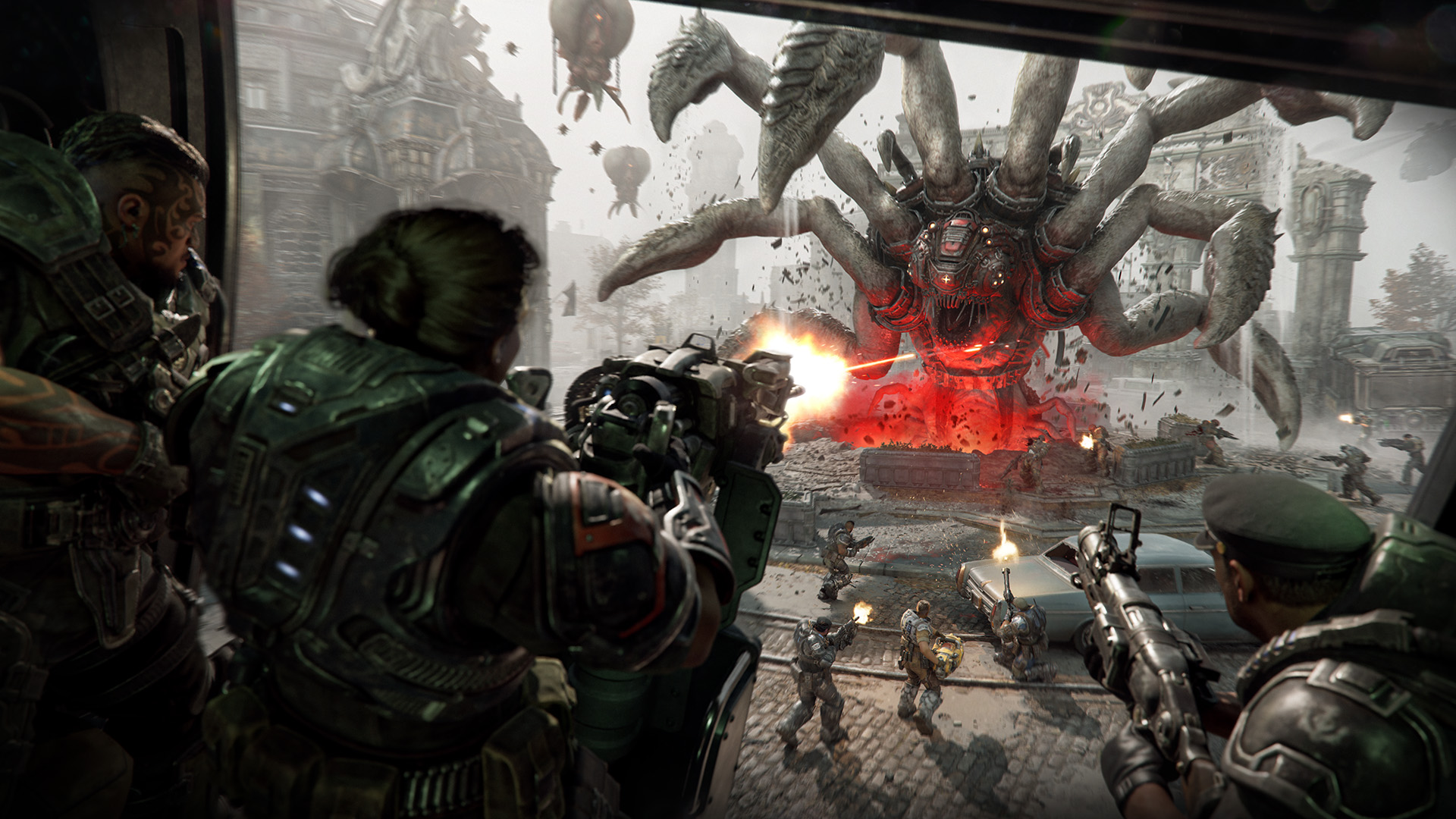
lets make some noise
There’s something about the audio in Gears of War that immediately takes me back to my Xbox 360 days. Whether it’s the unmistakable growl of a Boomer, the click of a successful active reload or that familiar chainsaw bursting into life, the franchise has always had its own identity. E-Day builds upon that foundation with an impressive level of detail, making everything from small mechanical movements to enormous explosions feel powerful. It’s the kind of presentation I’ve come to expect from a series that has never exactly been known for doing things quietly.
Each firearm has its own personality, with the Longshot producing a sharp, powerful crack that makes landing a headshot even more rewarding. The Gnasher also delivers a thunderous blast, while the Lancer retains that familiar mechanical roar we’ve all come to recognise. Even smaller details, such as spent ammunition casings hitting the floor and the movements of reloading, help make the weapons feel as heavy as they look.
The environmental audio also deserves recognition, especially during the invasion’s opening stages. Distant gunfire, frantic military communications and terrified civilians create the impression of a population desperately struggling to survive. What I liked about these details was how they suggested events were unfolding beyond whatever Marcus was directly involved in. You don’t need to witness every battle taking place to understand that the COG is struggling to regain control.
The Locust themselves have an intimidating vocal presence, with aggressive shouting and guttural growls contributing to their threatening appearance. Since enemies can emerge from beneath the ground without much warning, an unfamiliar noise nearby can immediately put you on edge. I enjoyed that uncertainty because it encouraged me to listen carefully rather than relying entirely on what I could see directly in front of me.
Moving away from the violence, the soundtrack is another important part of the presentation. Composed by Adam Lastiwka, the music combines powerful orchestral arrangements with quieter pieces that reflect the emotional nature of the story. The main theme, Emergence, captures the tragedy surrounding humanity’s first encounter with the Horde, while other compositions accompany the larger battles without constantly demanding your attention. I liked how certain scenes were allowed to breathe, especially during conversations between Marcus and Dom, where a restrained musical approach felt more appropriate than another enormous orchestral performance.
Naturally, I couldn’t help comparing the soundtrack with the original trilogy. Kevin Riepl and Steve Jablonsky delivered some incredible compositions throughout those earlier games, many of which I can still recognise within seconds. Lastiwka’s work suits the darker direction of E-Day, although I wouldn’t say every track left the same lasting impression. Perhaps nostalgia plays a part in that, but those soundtracks set an incredibly high standard. Even so, I appreciate how the music supports the story without overpowering the dialogue or action.
Another highlight is hearing John DiMaggio and Carlos Ferro return as Marcus Fenix and Dominic Santiago. These voices have been part of my gaming life since childhood, so having them reprise their roles was wonderful. DiMaggio still delivers the rough, commanding personality we’ve come to associate with Marcus, while Ferro brings warmth and emotion to Dom. What’s interesting this time is that they’re portraying younger versions of the characters, allowing us to experience their personalities before years of fighting the Locust shaped them into the soldiers we recognise. I enjoyed the quieter conversations between them, where a change in tone or a brief exchange could communicate more than a lengthy speech.
The supporting cast also deserves some credit, with Mags Carter and Lucas Reyes bringing their own personalities to Bravo Squad. Their interactions help establish the relationships within the group, whether they’re exchanging military orders, reacting to an unexpected situation or simply talking amongst themselves. These conversations give the characters a sense of personality beyond their roles as soldiers, making the team feel more believable.
My main criticism comes from the exploration sections, where the audio occasionally becomes a little too restrained. Additional radio chatter, distant encounters or civilians calling for assistance could have helped maintain a sense of danger between the larger battles. The action sequences demonstrate how effectively The Coalition can use audio to build tension, and I would have liked more of that atmosphere during the quieter stretches.
horde siege
Although the campaign has always been my main reason for playing Gears of War, multiplayer has been an important part of the franchise for almost twenty years. Whether you’re surviving waves of Locust alongside your mates or competing against other players in a match that quickly becomes far more serious than anyone intended, there’s always been plenty to enjoy beyond the main story. E-Day continues that tradition with two main experiences, Horde Siege and Versus, offering cooperative and competitive gameplay for those who aren’t quite ready to put down their weapons once the campaign credits have rolled.
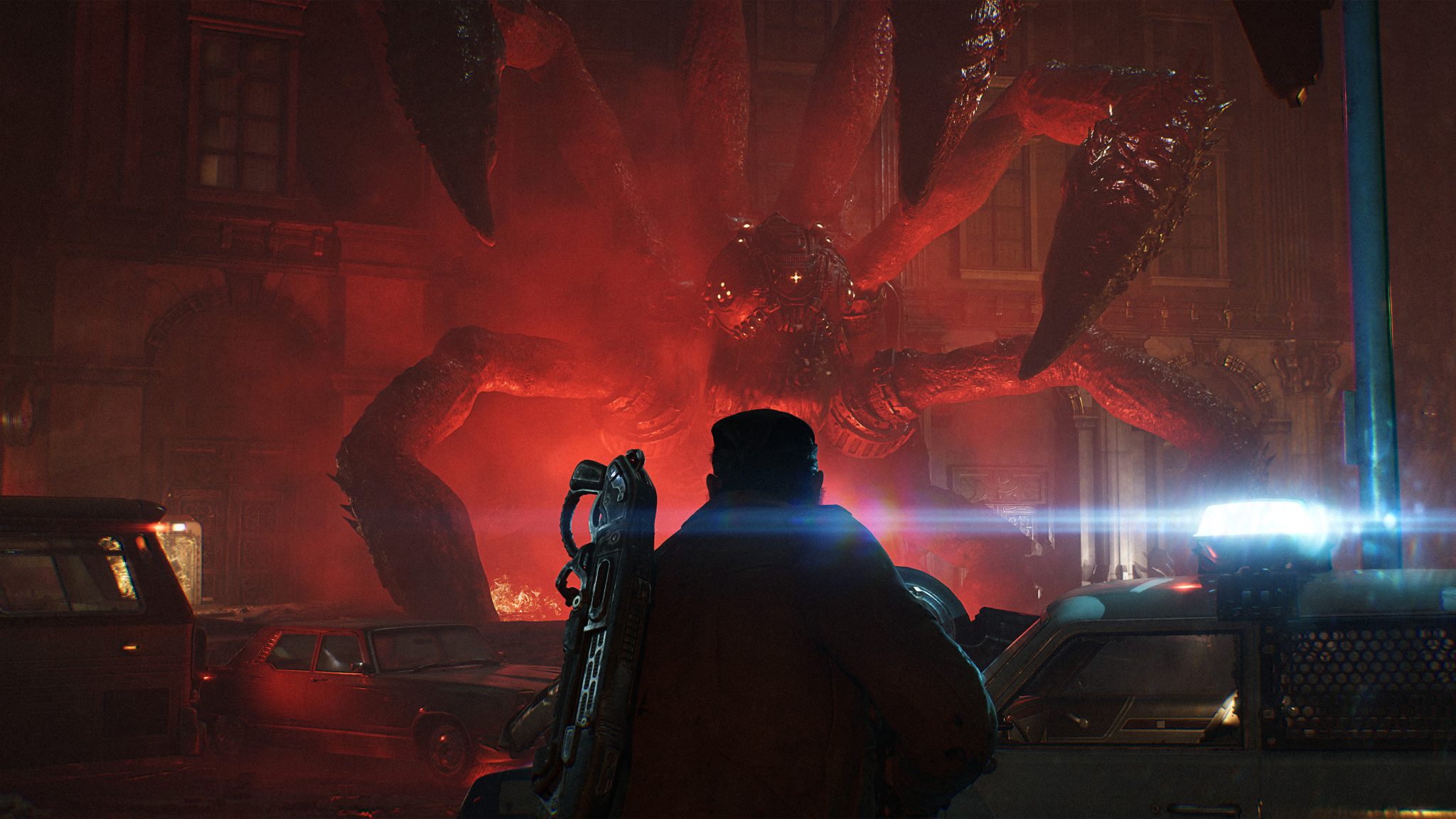
One of the biggest additions is Horde Siege, a new take on the survival mode first introduced in Gears of War 2. Instead of having a single squad defending one location, E-Day allows up to twelve players to participate across three separate teams of four. Each squad receives its own objectives while sharing the same battlefield, meaning you’ll occasionally encounter other groups who are dealing with their own problems. I like the ambition behind this approach because it gives the conflict a larger scale, creating opportunities for different squads to work together when things become overwhelming. There’s also something entertaining about the thought of twelve heavily armoured soldiers desperately trying to organise themselves while an enormous Locust creature attempts to flatten everyone.
Before heading into battle, players can choose between four classes: Assault, Breacher, Marksman and Medic. Each comes with its own equipment, abilities and progression system, allowing squads to build a team around their preferred playstyles. Assault focuses on mid-range combat, Breacher specialises in close encounters, and Medic provides valuable support through healing and reviving teammates. Marksman, meanwhile, rewards accuracy and critical hits, making it an obvious choice for anyone who enjoys picking enemies off from a distance. Considering my love for the Longshot Sniper Rifle, you can probably guess which class immediately caught my attention. Give me a decent vantage point, enough ammunition and a clear view of the battlefield, and I’ll happily leave the close-range fighting to someone else!
Horde Siege also offers three different mission playlists. Blitz provides shorter encounters lasting approximately 15–20 minutes, while Siege introduces longer objectives that can take between 20 and 40 minutes to complete. Finally, Horde offers a more traditional experience, challenging squads to defend a position against ten increasingly difficult waves of enemies. I appreciate having different options depending on how much time I want to spend playing, especially when gathering friends for an extended session isn’t always straightforward.
However, as much as I appreciate The Coalition trying something new, I would have loved to see a proper return to Horde 2.0 from Gears of War 3. There’s something about that version of Horde that has always stuck with me. Spending hours surviving fifty waves, building fortifications, upgrading defensive positions and desperately trying to keep everything from falling apart was brilliant fun. You started with a relatively simple setup, but as the waves became more difficult, every decision mattered. Should you spend your money repairing barriers, purchase another turret or save your resources for whatever monstrous creature was about to arrive? I loved that sense of progression, especially when your carefully constructed defences eventually collapsed and everyone started running around like headless chickens.
While E-Day does include a ten-wave Horde playlist, Horde Siege puts greater emphasis on larger battlefields and shifting objectives. That’s not necessarily a bad thing, but I would have welcomed a separate, fully developed version of the traditional fifty-wave experience alongside it. Sometimes I don’t want to travel between objectives or worry about extracting from the battlefield. I just want to find a defensible position with a few mates, build an absolutely ridiculous number of barriers and see how long we can survive before everything goes horribly wrong.
i miss beast mode
And while we’re talking about multiplayer modes I’d love to see return, what happened to Beast Mode? Introduced in Gears of War 3, this brilliant addition flipped the traditional formula on its head by allowing players to control the Locust Horde instead of the COG. Rather than defending humanity, you could take control of creatures such as Tickers, Wretches and Boomers, working your way through increasingly powerful enemies as you attempted to wipe out the human defenders. I spent plenty of time enjoying this mode back in the Xbox 360 days, and I’m genuinely surprised it hasn’t made a proper comeback.
Imagine how entertaining Beast Mode could be with E-Day’s improved visuals, animations and enemy designs. Being able to control the terrifying Locust creatures we’ve spent years fighting could offer something completely different from traditional multiplayer. I’d happily spend an evening charging towards COG soldiers as a Boomer or causing absolute chaos with a group of Wretches. After nearly twenty years of being on the receiving end of the Horde’s aggression, I think it’s only fair that we occasionally get to be the problem! With the amount of attention The Coalition has given the Locust in this instalment, Beast Mode feels like an opportunity that would have been worth exploring.
Returning to Horde Siege, the missions introduce several objectives, ranging from securing enemy-controlled positions and repairing equipment to defending important COG technology. Optional activities also reward players with additional resources, encouraging squads to take risks rather than simply following the main objective. Larger invasion events can bring enormous enemies such as Corpsers and Brumaks onto the battlefield, occasionally forcing multiple teams to work together. I appreciate how these encounters encourage cooperation between squads, although I still think the more traditional Horde formula deserves a place alongside these newer ideas.
versus and customisation
For those who prefer competing against other players, Versus makes a welcome return with four-versus-four matches built around the franchise’s cover-based combat. Movement has been modernised to match the campaign, while players begin with equal equipment and weapon modifications are disabled. I think that’s a sensible decision because competitive multiplayer should reward positioning, teamwork and accuracy rather than giving someone an advantage simply because they’ve spent longer upgrading their weapons. Of course, that won’t stop an experienced Gnasher player from making the rest of us look completely hopeless!
There are four main Versus modes available. Team Deathmatch returns with its familiar elimination-based objective, while Conquest challenges teams to capture and defend designated areas. Demolition introduces a more tactical approach, with players attempting to plant a bomb at enemy positions, whereas Crucible revolves around transporting a Power Core into a scoring zone that changes throughout the match. I appreciate having different objectives to choose from because they encourage players to approach combat in different ways instead of relying entirely on traditional elimination matches.
Versus also features six maps at launch: Outpost, Battleship, Park, Precinct, Market and Skyward. Each offers different layouts and opportunities for close-range encounters or longer-distance fighting. Ranked and Social playlists allow players to decide how competitive they want their experience to be, while Boot Camp and Combat Training provide opportunities to familiarise yourself with the mechanics. The latter also supports cooperative practice, which is a welcome addition for anyone who wants to improve before being thrown into a match against players who seem to have spent their entire lives mastering the Gnasher.
Beyond the multiplayer modes, customisation and progression have received plenty of attention. Players can unlock more than sixty character skins across the COG and Locust factions, alongside weapon skins, character poses, banners, emblems and titles. You can even customise the music played throughout the menus and lobbies, which is a small addition I quite like. I also appreciate that The Coalition has kept most cosmetics connected to the Gears of War universe rather than filling the game with unrelated crossover characters. I’m all for having a laugh, but I don’t particularly want Marcus Fenix sharing the battlefield with someone dressed as a walking advertisement.
Another welcome decision is the absence of a traditional Battle Pass or Tour of Duty system. Instead, most cosmetics can be unlocked through gameplay, challenges or Coins earned while playing. Premium currency and paid-only bundles are still available, so microtransactions haven’t disappeared entirely, but I prefer having the opportunity to earn rewards through my own efforts rather than constantly being encouraged to spend more money. There’s something much more satisfying about unlocking a character skin because you’ve completed a difficult challenge rather than simply opening your wallet.
never fight alone and progression
However, there’s one cosmetic addition I wanted to give special recognition to, and that’s the Never Fight Alone Charity Bundle, which supports mental health awareness and suicide prevention. The Coalition has been working alongside Crisis Text Line, a non-profit organisation providing free, confidential mental health support, through its ongoing Never Fight Alone initiative. The studio has also committed to donating a portion of the net revenue from eligible Gears of War games and merchandise to organisations working to prevent suicide and combat loneliness.
With E-Day, the developers introduced the Never Fight Alone Year 5 bundle, featuring an exclusive character skin and matching weapon cosmetics, alongside a Legacy set. What makes these additions meaningful is that 100% of their net revenue goes to Crisis Text Line, helping support its mental health and suicide prevention services. There’s also specially designed merchandise connected to the initiative, including artwork from UK illustrator Luke Preece.
I have a great deal of respect for this initiative because mental health is an incredibly important subject, and seeing a developer use its platform to support those who might be struggling deserves recognition. When you think about it, friendship, loyalty and supporting one another have always been central themes throughout Gears of War. Marcus and Dom’s relationship is a perfect example of that, reminding us that even the toughest people sometimes need someone by their side. Seeing The Coalition take that message beyond gaming and use it to make a positive difference is genuinely wonderful. Never Fight Alone is more than a memorable slogan, and I hope it’s an initiative the studio continues supporting for many years to come.
Progression also brings back the medal system inspired by Gears of War 3, with more than eighty medal series available to complete. Players can earn rewards through challenges, increase their overall level and eventually use the returning Re-Up system to continue progressing beyond level 100. Horde Siege also features class-specific progression, allowing players to unlock additional equipment, armour improvements and weapon modifications. I like having long-term objectives to work towards, although the important thing will be ensuring those rewards remain enjoyable to earn rather than turning multiplayer into another endless grind.
final thoughts
Reviewing Gears of War: E-Day has been more difficult than I expected, mainly because this is a franchise I care about enormously. When you’ve spent almost twenty years following a series, it’s hard not to approach a new instalment with certain expectations. I wanted a game that respected the identity of the original trilogy while giving longtime fans something fresh, and although The Coalition has delivered some excellent moments, I walked away with mixed feelings about the direction it’s taken.
When E-Day concentrates on what it does best, it’s an incredibly entertaining experience. The shooting feels satisfying, the improved mechanics make controlling Marcus more enjoyable, and the campaign delivers some excellent encounters that reminded me why I’ve remained a fan for so long. I also appreciated the opportunity to experience a defining moment in the franchise’s history rather than simply hearing characters talk about it years later.
My biggest disappointment is that the new ideas don’t always complement the experience. The exploration has potential, but the lack of substantial optional content, inconsistent cooperative progression and restrictive player tethering occasionally make the adventure feel more cumbersome than it needs to be. I don’t believe Gears of War should remain stuck in 2006, but I also don’t think expanding a game’s size automatically makes it better. Sometimes a carefully designed sequence that lasts twenty minutes can be more memorable than an hour spent wandering around looking for upgrades.
Of course, E-Day offers a substantial selection of multiplayer content, with Horde Siege providing a more ambitious cooperative experience and Versus maintaining the competitive foundation longtime fans will recognise. The customisation options are welcome, and The Coalition’s commitment to mental health through Never Fight Alone deserves enormous credit. However, I can’t help wishing we’d received a more traditional Gears of War 3-style Horde experience or, better yet, the return of Beast Mode. Both offered something special, and bringing them back alongside these newer modes could have made the multiplayer offering even stronger. Hopefully, they’re ideas The Coalition will consider revisiting in the future, because sometimes the best way to move a franchise forward is to remember what made its earlier games so much fun.
Would I recommend Gears of War: E-Day? Absolutely, especially to anyone who’s followed the franchise since the Xbox 360 days. There’s plenty to appreciate, and newcomers will find an interesting introduction to the Locust War. However, anyone expecting the tightly focused structure of the original trilogy may find the slower exploration sections disappointing. It’s an ambitious entry that gets many of the important things right without quite bringing all its ideas together.
For me, Gears of War will always be more than another third-person shooter. It’s the reason I wanted an Xbox 360, a franchise that gave me countless memories with my stepdad and a series I’ve continued to appreciate through its highs and lows. Perhaps that’s why I’m willing to be critical of its direction, because I know just how incredible these games can be when everything comes together.
Almost twenty years ago, I sat beside my stepdad, completely mesmerised by Marcus Fenix and the terrifying creatures crawling out of the ground. E-Day brought back some of that excitement, and those moments meant a great deal to me. I just wish the rest of the adventure had captured that magic quite as consistently.
Positives
✅ A Meaningful Return to Marcus and Dom – Exploring the early relationship between two of gaming’s most beloved characters adds emotional depth to a story that longtime fans have wanted to experience for years.
✅ Brutal and Satisfying Combat – Improved movement, responsive cover mechanics and more aggressive Locust encounters bring a welcome challenge to the franchise’s familiar third-person shooting.
✅ The Longshot Sniper Rifle – Precision shooting feels incredibly rewarding, with the Longshot delivering some of the most satisfying headshots and combat moments throughout the campaign.
✅ A Stunning World Falling Apart – Kalona looks incredible, with detailed environments and the ability to witness familiar locations before and after the Locust invasion making the destruction much more impactful.
✅ A Gruesome New Gore System – More detailed dismemberment, brutal executions and realistic blood effects take the franchise’s trademark violence to another level.
✅ Impressive Voice Acting and Audio – John DiMaggio and Carlos Ferro deliver memorable performances, while the powerful weapon effects and atmospheric soundtrack complement the darker story.
✅ Multiplayer Variety and Customisation – Horde Siege, competitive Versus modes, unlockable cosmetics and class progression provide plenty of content beyond the main campaign.
✅ Never Fight Alone Charity Initiative – The Coalition’s continued support for mental health awareness and suicide prevention through its charity cosmetics is a meaningful commitment that deserves recognition.
Negatives
❌ Open-World Areas Lack Substance – Although the larger environments offer greater freedom, some locations feel underdeveloped, with too few meaningful side missions, unexpected encounters or worthwhile activities.
❌ Too Much Collectible Hunting – The abundance of Hard Cases and weapon modifications can turn exploration into a repetitive chore, interrupting the campaign’s momentum.
❌ Restrictive Cooperative Exploration – The player-tethering system frequently pulls players back towards the host, making independent exploration frustrating, while weapon upgrades didn’t always carry over properly between sessions.
❌ Inconsistent Campaign Pacing – Some of the slower exploration sections interrupt the urgency of Emergence Day, while certain firefights follow a predictable wave-based structure.
❌ Classic Multiplayer Modes Are Missed – Horde Siege offers an ambitious alternative, but the absence of Gears of War 3’s full fifty-wave Horde 2.0 experience and the beloved Beast Mode feels like a missed opportunity.
❌ Quieter Areas Could Feel More Alive – Additional environmental storytelling, radio communications and background activity could have made the less eventful sections feel more atmospheric and immersive.
Owner of Indie Critical. I’m passionate about highlighting independent voices in film, games, and culture. I focus on honest, thoughtful reviews and love helping great indie projects get the recognition they deserve. When I’m not writing or editing, I’m probably diving into the latest hidden gem or discovering the next big thing in the indie scene.
Written by

Lewis Langton