Who would have thought that a handful of tiny tin soldiers could lead you through one of the most emotional adventures in gaming? When I first picked up Tin Hearts VR, I expected a charming puzzle game filled with clever challenges, mechanical toys and the occasional frustration of watching my miniature army march straight towards certain doom. What I wasn’t expecting was a story that would hit so close to home that I’d find myself removing my VR headset just to process what I’d experienced.
Developed by Rogue Sun, a studio founded by former Lionhead Studios developers who worked on the beloved Fable series, and published by Wired Productions, Tin Hearts VR takes the original puzzle adventure and brings its imaginative Victorian world into virtual reality. Drawing inspiration from the classic Lemmings formula, the game challenges players to guide a group of mechanical soldiers through increasingly elaborate environments, using Albert J. Butterworth’s inventions, everyday objects and a bit of creative thinking to overcome obstacles. Although, judging by the number of soldiers I accidentally sent marching towards disaster, perhaps I should reconsider my qualifications as a commanding officer.
However, there’s far more to Tin Hearts VR than simply getting a collection of miniature soldiers from one location to another. Beneath its colourful presentation and inventive puzzles lies a deeply personal story about family, love, cherished memories and the devastating reality of loss. Rather than relying on lengthy cutscenes or constantly explaining what’s happening, the game allows its narrative to unfold naturally as you explore the surroundings and witness moments from the Butterworth family’s past.
Having previously played the original version, I was curious to discover whether virtual reality could bring anything meaningful to an already memorable experience. Would the added immersion make the puzzles more enjoyable, or would it simply be the same adventure viewed through a headset? What I discovered was an experience that not only made me appreciate the game’s world in an entirely different way but also reminded me why certain stories stay with us long after we’ve finished playing.
step by step, heart to heart
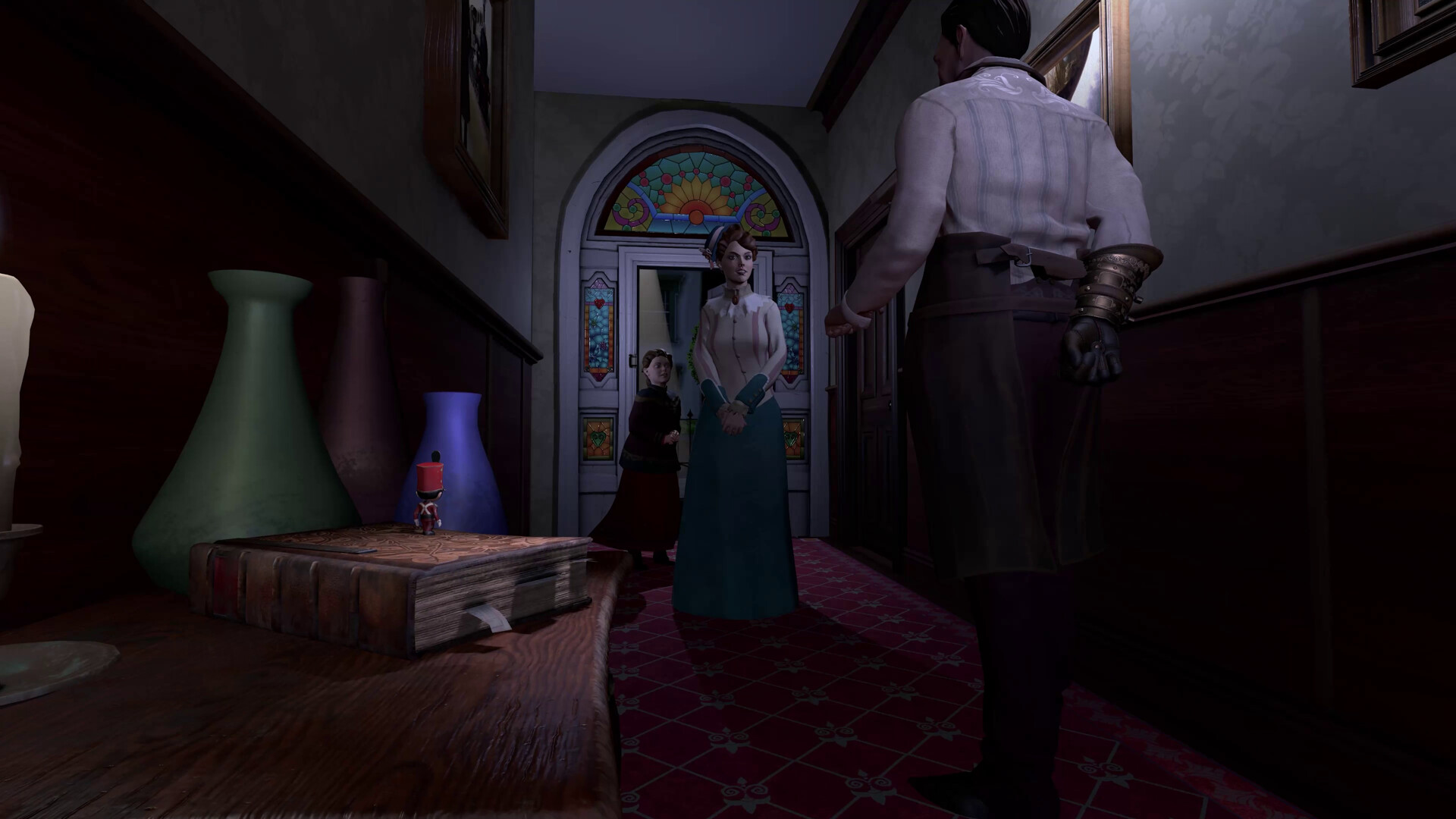
At the heart of Tin Hearts VR is Albert J. Butterworth, a gifted inventor living during the Victorian era whose wonderful creations bring joy to his beloved wife, Helen, and their young daughter, Rose. From the moment you’re introduced to the family, there’s a genuine sense of warmth surrounding their lives, particularly when watching Albert share his passion for inventing with those closest to him. His home is filled with fascinating mechanical creations, but it’s the relationships between the characters that gradually become the most important part of the experience.
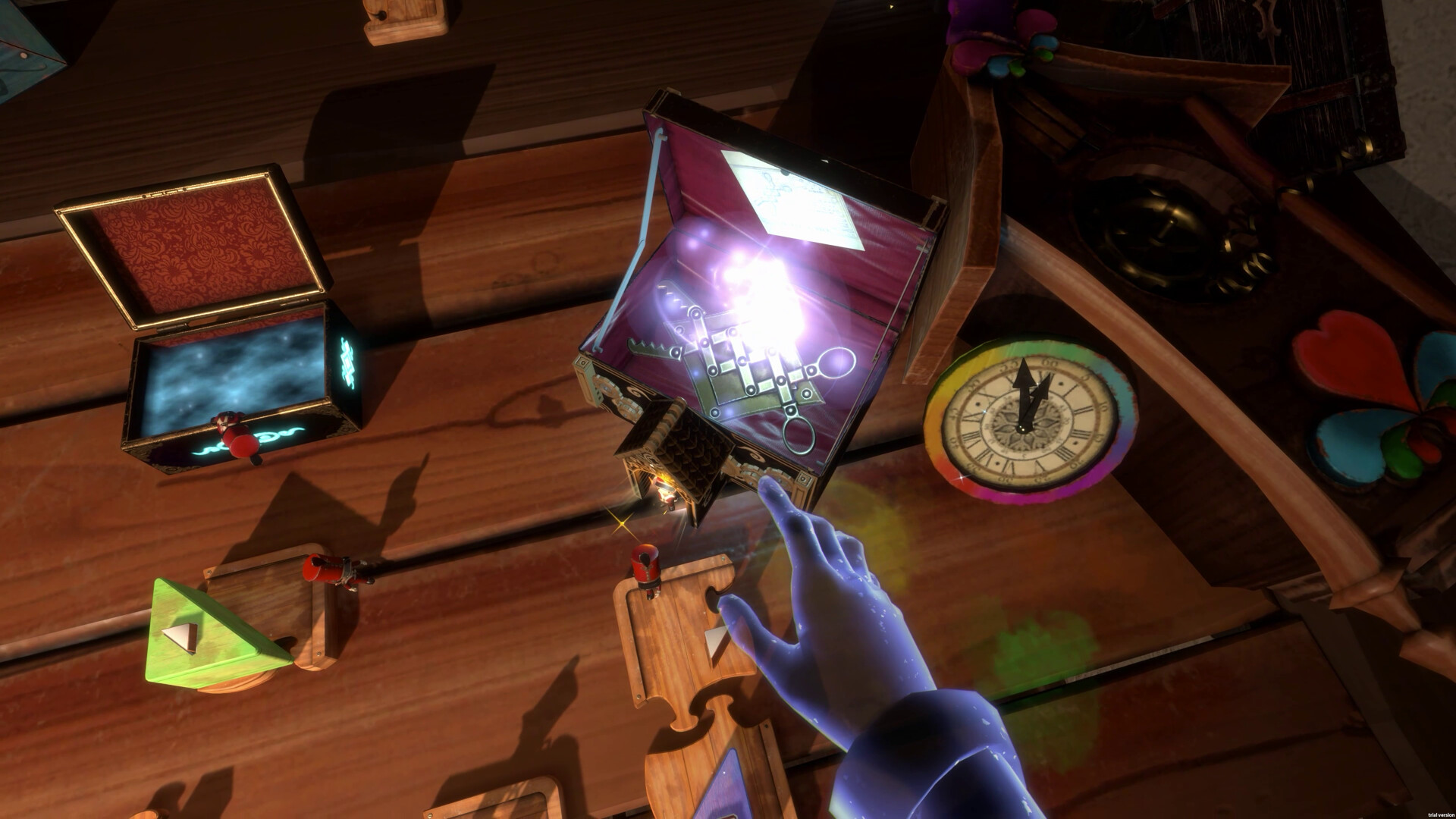
Rather than telling its story through traditional cutscenes, Tin Hearts VR introduces ghostly apparitions that allow you to witness moments from the Butterworth family’s past. These memories appear as you progress through the different environments, giving you little glimpses into their everyday lives and the events that shaped them. I particularly enjoyed this method of storytelling because it never felt like the game was forcing information upon me. Instead, I found myself becoming genuinely curious about the family, occasionally putting my puzzle-solving responsibilities aside just to watch their interactions.
Unfortunately, what begins as a heartwarming tale gradually takes a considerably darker and more emotional direction. As you continue exploring, you begin to understand that the Butterworth family has experienced hardships that have changed their lives forever. The once cheerful atmosphere surrounding their home slowly gives way to something far more sombre, with memories of happier times becoming painful reminders of what has been lost. Without revealing too much, the story tackles grief and the impact it can have on a family, something I found particularly difficult to witness because of my own personal experiences.
The story also introduces Lucien Mantlefell and the Guild of Toy Makers, bringing another layer of conflict into Albert’s life. Through letters and other documents scattered throughout the environments, you learn more about the Guild’s interest in his inventions and the pressures placed upon him. I appreciated having these additional details to discover because they helped me understand the bigger picture, showing that Albert’s struggles weren’t limited to his family life. There’s something satisfying about finding a letter, reading its contents and suddenly understanding an earlier moment in the story a little better.
What impressed me most was how the developers managed to tell such a meaningful story without taking the focus away from the puzzles. Each new location reveals another piece of Albert’s life, and as those memories begin to connect, you develop a greater understanding of the characters and their circumstances. There were moments when I completely forgot I was supposed to be commanding a group of miniature soldiers because I was so invested in what was happening around me.
I’ve experienced plenty of emotional moments in video games over the years, but Tin Hearts VR managed to connect with me on a level I hadn’t anticipated. Watching Albert interact with his family brought back memories of my own childhood and, more importantly, my father. Some of these scenes were genuinely difficult for me to sit through, although I appreciated the care taken in presenting such sensitive subjects. It’s not often that a puzzle adventure makes me put down my controller because I’m struggling to hold back tears, but this one certainly managed it.
left right left, we all fall down
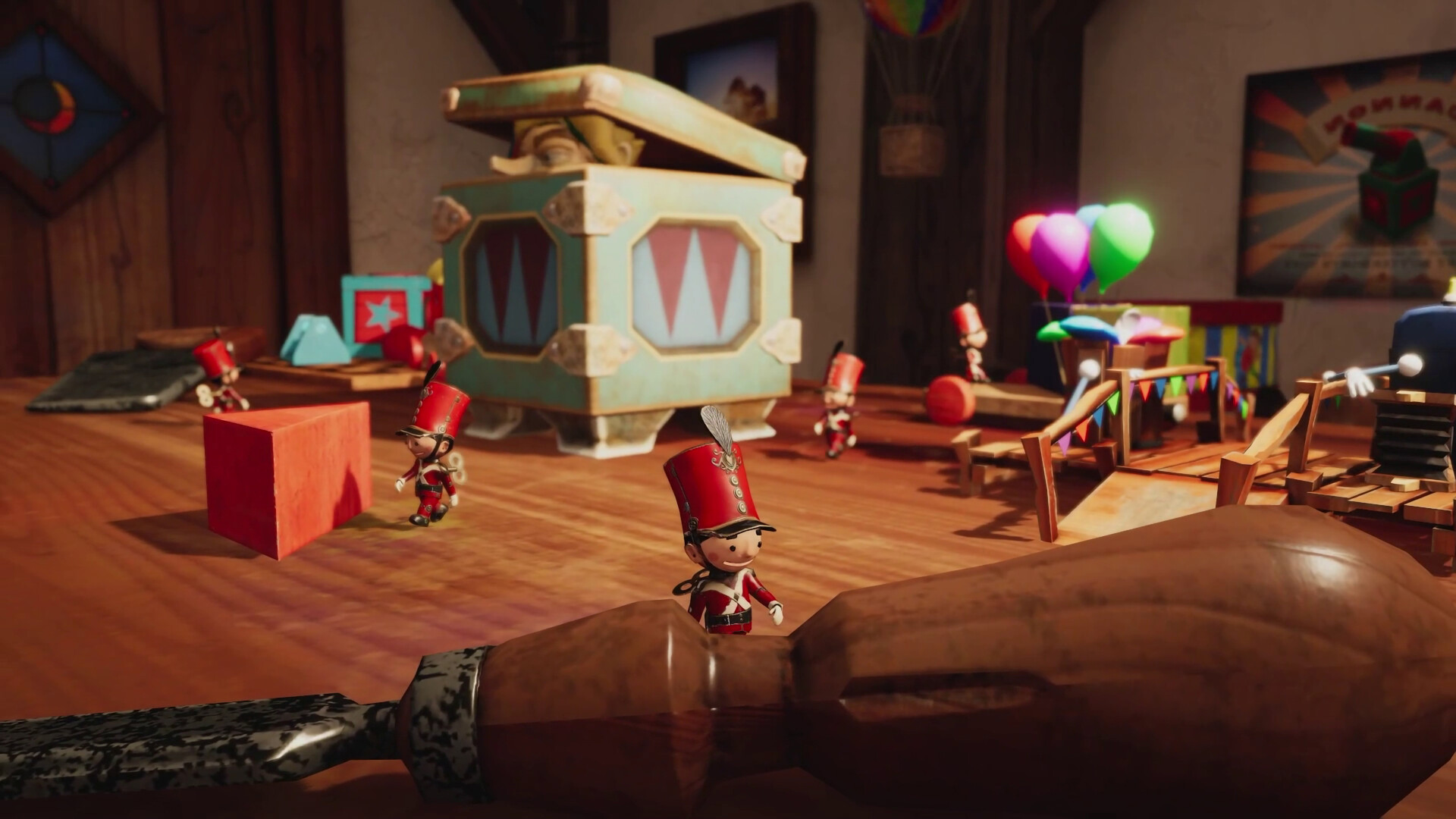
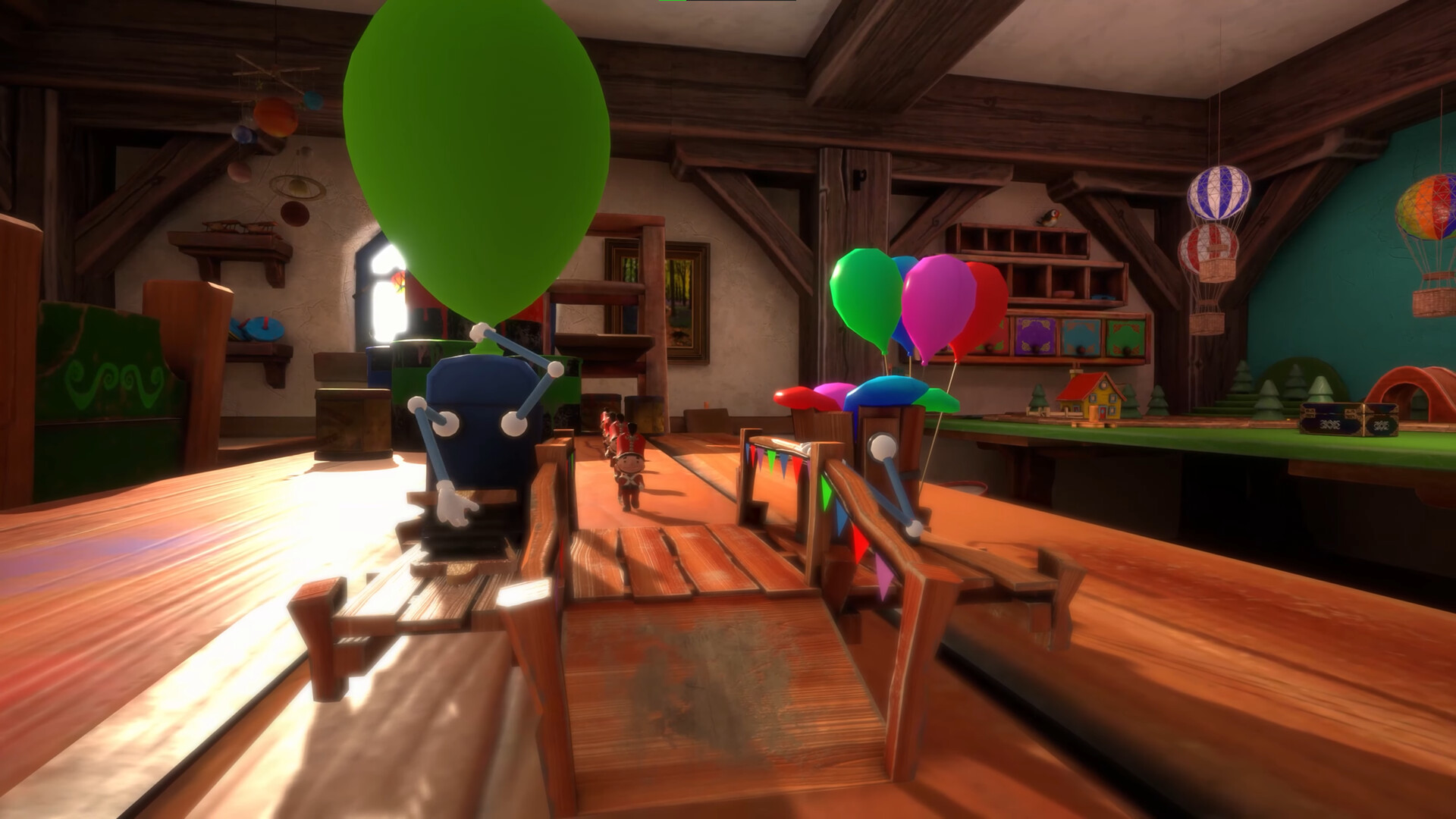
If you’re familiar with Lemmings, you’ll feel right at home with the basic gameplay mechanics of Tin Hearts VR. Your main objective is to guide a group of miniature tin soldiers from their starting position towards an exit, using whatever tools and environmental objects are available to help them reach their destination safely. Sounds relatively straightforward, doesn’t it? Well, there’s one rather important detail I should mention. These little soldiers have absolutely no sense of self-preservation, meaning they’ll happily march off the edge of a table without a second thought. Honestly, I’ve seen better survival instincts from characters in horror films.
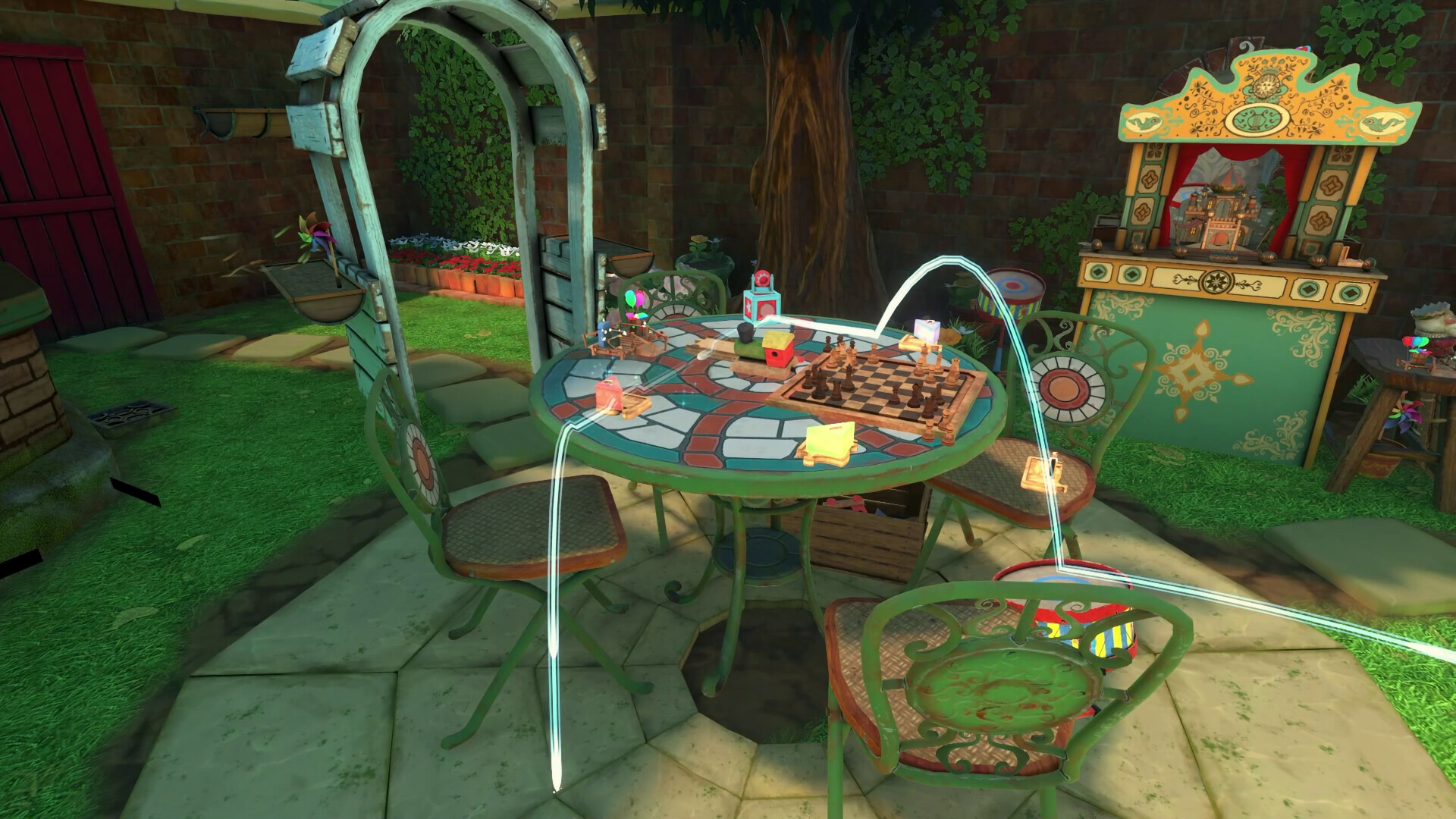
Rather than directly controlling your tiny army, you’ll need to manipulate objects around the environment to influence the direction they travel. Certain blocks can be positioned to redirect their movement, while other items allow you to create new pathways or help soldiers reach otherwise inaccessible areas. It’s a simple concept that becomes increasingly challenging as the levels introduce more complicated layouts, forcing you to think carefully about where everything needs to go. I enjoyed experimenting with different arrangements, particularly when a solution I’d been struggling with suddenly clicked into place.
As you progress, Albert’s inventions gradually introduce new abilities that change how you approach each puzzle. One of my favourites is the ability to rewind and fast-forward time, which proved incredibly useful whenever my soldiers decided to take an unexpected trip towards the floor. Instead of restarting everything, you can simply reverse time and correct your mistake. Fast-forwarding is equally handy when you’ve successfully arranged your objects and don’t particularly fancy watching an entire army slowly march across the same platform. Believe me, after spending several minutes trying to work out a solution, the last thing you want is to wait another five minutes for everyone to reach the exit.
New abilities also allow you to interact with parts of the environment that were previously inaccessible. For example, you might encounter a toy train blocking your intended route, but once you’ve unlocked the necessary ability, you can move it out of the way and discover another solution. I liked how the developers gradually expanded the mechanics rather than introducing everything immediately, as it gave me time to become familiar with each invention before asking me to combine several techniques into one puzzle.
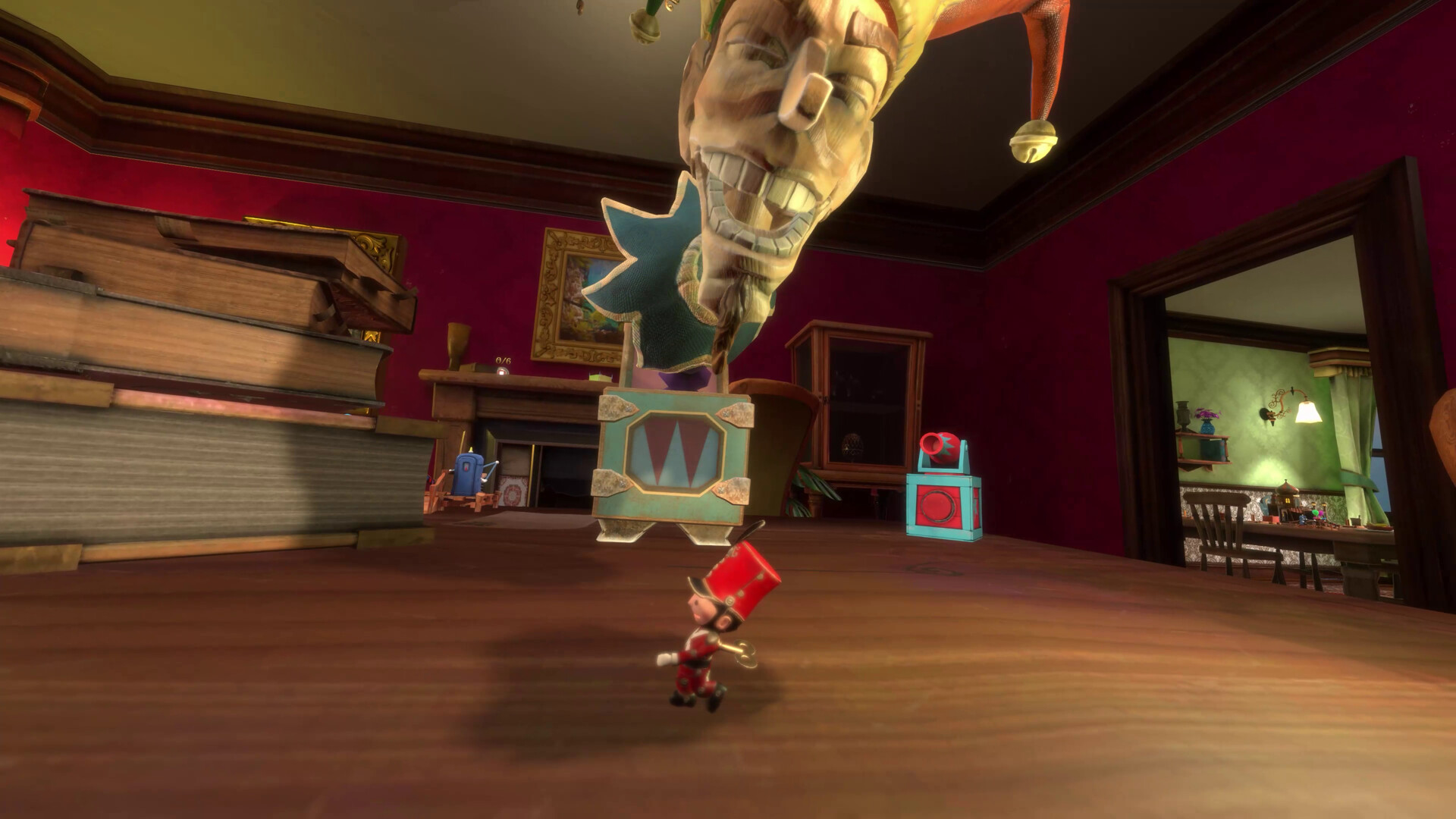
Of course, not everything within Albert’s wonderful collection of toys is particularly friendly. One of the more memorable obstacles comes in the form of a sinister jack-in-the-box associated with the Guild of Toy Makers, which has an unfortunate habit of devouring any soldiers that wander too close. Watching my miniature troops get swallowed by one of these things was certainly an interesting experience, although I couldn’t help feeling personally responsible for their unfortunate demise. Thankfully, by rearranging nearby objects and experimenting with different routes, you can usually find a way around these hazards. Just don’t expect your soldiers to have the common sense to avoid them without your assistance.
There’s also plenty to discover outside the main puzzles, including letters, photographs and other collectibles that provide additional information about the Butterworth family. These aren’t simply items scattered around for the sake of giving completionists something else to collect; they help develop the narrative and offer valuable context about the events you’re witnessing. I found myself regularly examining the surroundings for anything I might have missed, especially as the story became more emotional. Unfortunately, my curiosity occasionally came at the expense of my soldiers, who would continue marching while I was distracted by another ghostly memory. Sorry, lads. Apparently, emotional storytelling takes priority over military leadership.
When it comes to difficulty, I found the puzzles offered a satisfying balance between accessibility and challenge. Some solutions are fairly obvious, while others require a little more patience and experimentation before everything falls into place. Thankfully, the developers have included a hint system through the pause menu for anyone who becomes stuck. Personally, I decided against using it because I wanted the satisfaction of figuring everything out myself, even if that meant spending an embarrassing amount of time staring at a wooden block and wondering where on earth I was supposed to put it.
Having experienced the original version of Tin Hearts, I was particularly interested in seeing how the transition to virtual reality would affect the gameplay. Thankfully, I found that being able to physically look around the environments added another level of enjoyment to the experience. Examining objects from different angles, observing my soldiers as they marched through the workshop and seeing the scale of everything around me made the world feel considerably more engaging. It also strengthened my connection to the story, as witnessing the family’s memories in VR felt more personal than simply watching them unfold on a traditional screen.
There’s something particularly special about seeing the creativity of former Lionhead Studios developers brought to life through another project. As someone who has always appreciated the Fable series, I couldn’t help recognising that same passion for imaginative worlds, character-driven storytelling and playful design. While Tin Hearts VR is an entirely different type of game, it reminded me why I became such a fan of their work in the first place. I still wish Lionhead Studios were around today, but it’s wonderful to see some of that talent continuing to create experiences like this.
like toy soldiers
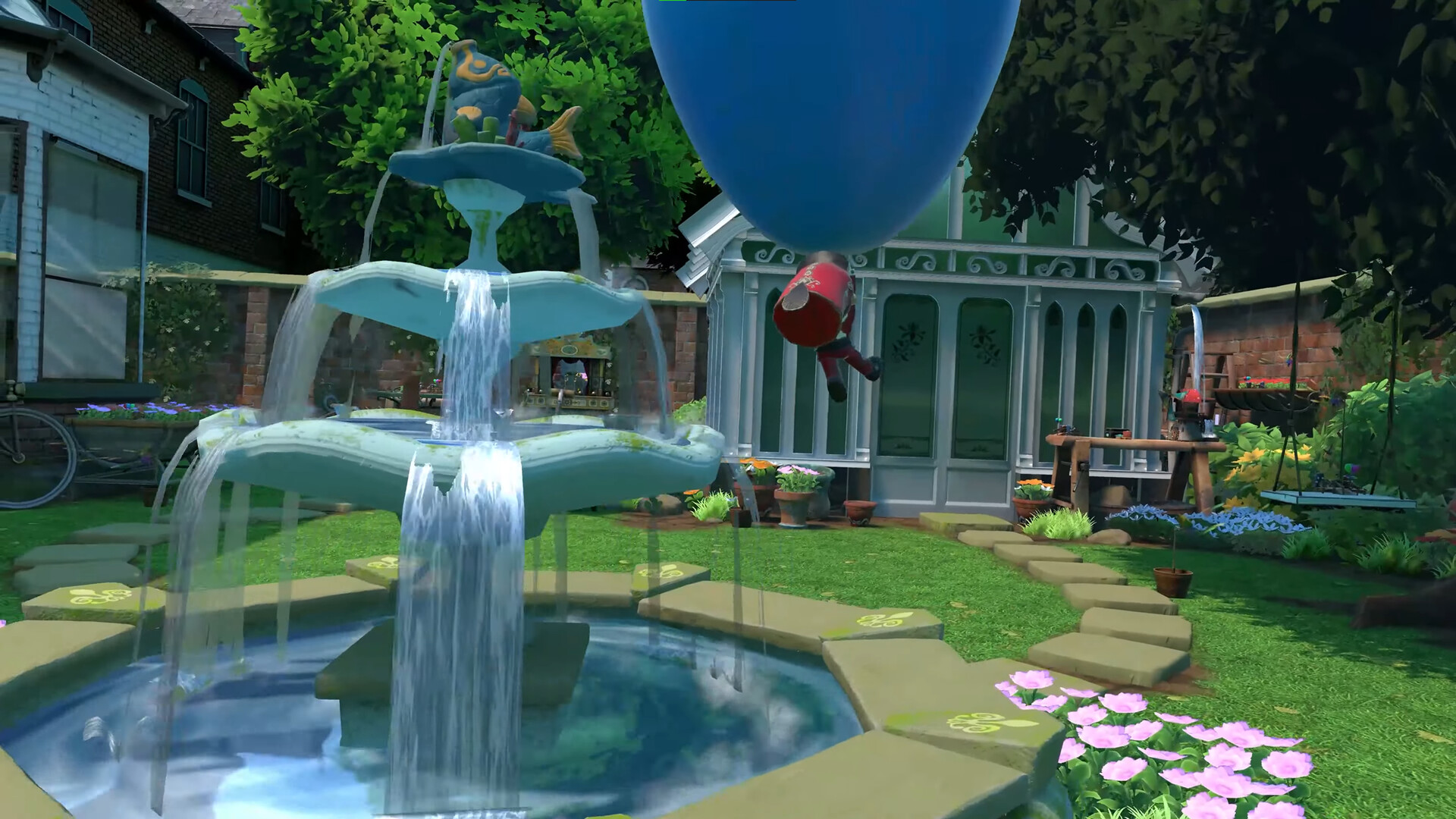
Visually, Tin Hearts VR is an absolute delight, and I was genuinely impressed by the amount of care that has gone into bringing its Victorian setting to life. From Albert’s workshop filled with fascinating inventions to the beautiful garden surrounding the family home, each environment has its own personality and offers plenty of little details to appreciate. One of the first things that caught my attention was the dust floating through the air, something that might sound incredibly minor but adds a surprising amount of atmosphere when you’re standing inside these locations in virtual reality.
The workshop is particularly impressive, with mechanical creations, wooden furniture and everyday household objects scattered throughout the environment. I found myself regularly looking around simply to admire the scenery rather than concentrating on the task at hand. There’s something wonderfully nostalgic about seeing traditional toys and inventions presented with such care, especially when many of them become essential parts of the puzzles. The garden is equally charming, with its greenery and carefully arranged surroundings offering a pleasant change of scenery from the indoor environments.
Another detail I appreciated was how the developers used the scale of ordinary objects to their advantage. When you’re dealing with soldiers only a few inches tall, something as simple as a table, wooden block or toy train suddenly becomes an enormous obstacle. This gives the environments an almost miniature-world appearance, making familiar objects feel considerably more interesting than they otherwise would. I particularly enjoyed examining the different routes my soldiers would need to navigate, as the level design often encouraged me to look at the surroundings from perspectives I wouldn’t normally consider.
The character models are also beautifully presented, with Albert and his family having distinct appearances that complement the game’s artistic direction. The little tin soldiers themselves are wonderfully charming, especially when you watch them marching along in formation, seemingly unaware of whatever terrible fate I’ve accidentally arranged for them. Their mechanical designs fit perfectly within the Victorian setting, while the surrounding environments help create the impression that you’re exploring a world filled with imagination and craftsmanship.
I also want to give some credit to how the visuals support the storytelling. As you encounter different memories, the ghostly apparitions blend naturally into the locations, allowing you to witness events from the past without completely interrupting your exploration. The contrast between the warmth of the family home and the more sorrowful moments of the narrative becomes increasingly noticeable as the story progresses. It’s a clever way of using the environment to communicate emotion, particularly when familiar rooms begin to take on an entirely different meaning.
Of course, Tin Hearts VR isn’t necessarily trying to deliver photorealistic graphics, and there are moments when the character animations and environmental details are relatively simple. However, I don’t consider this a significant drawback because the artistic direction works so well with the game’s overall identity. The world feels carefully constructed, and being able to explore it through a VR headset only makes those smaller details easier to appreciate.
bit by bit, torn apart
If there’s one aspect of Tin Hearts VR that deserves particular praise, it’s the soundtrack. Composed by the talented Matthew Chastney, the music plays an incredibly important role in shaping the emotional atmosphere of the experience, and I genuinely believe it deserves recognition alongside the storytelling itself. From the gentler melodies accompanying your exploration to the more powerful compositions heard during important narrative moments, there’s a tremendous amount of feeling behind the music.
What I particularly loved was how naturally the soundtrack complemented the different events unfolding throughout the game. During the lighter moments, the music feels warm and inviting, creating a relaxing atmosphere while you’re busy solving puzzles and guiding your little army towards safety. However, as the narrative becomes more serious, the compositions begin to carry a different emotional weight. There were occasions when simply listening to the music while watching the family’s memories was enough to bring tears to my eyes. I don’t often find myself getting emotional over a soundtrack, but Matthew Chastney certainly managed to catch me off guard.
The voice acting also deserves recognition, particularly because the relationships between the characters are such an important part of the narrative. Hearing Albert interact with his wife and daughter helps establish that sense of warmth and affection within the family, making the more difficult moments considerably harder to witness. I appreciated how the performances brought personality to these memories without making the dialogue feel overly dramatic or forced. Sometimes, a relatively ordinary conversation between family members can have more impact than the biggest cinematic speech, and Tin Hearts VR understands that rather well.
Outside the music and dialogue, there’s an enjoyable collection of sound effects that help bring Albert’s mechanical creations to life. From the rhythmic movements of the tin soldiers to the playful boing of a drum and the various noises produced by the surrounding toys, these little audio details give the puzzles plenty of character. I especially liked how the sounds complemented the actions taking place around me, making the environments feel more interactive and believable.
Playing in virtual reality also makes the audio presentation feel more engaging, particularly when you’re surrounded by the sounds of the workshop while concentrating on your next move. The combination of mechanical noises, character performances and beautiful musical arrangements creates an atmosphere that manages to feel playful one moment and genuinely heartbreaking the next.
Even after finishing the game, I found myself returning to the soundtrack simply because of how much it reminded me of certain moments throughout the story. For me, that’s the sign of music that has done far more than provide something pleasant to listen to in the background.
we never win, but the battle wages on
While Tin Hearts VR impressed me in several areas, I do think the controls could have benefited from a little more refinement. They’re not necessarily terrible, but there were moments when the movement and interaction systems felt less intuitive than I would have liked, particularly when compared with other VR experiences I’ve played over the years.
One of my biggest frustrations came from playing in a seated position, as I found myself needing to readjust my height at the beginning of each level. While this isn’t exactly a game-breaking problem, having to repeat the same adjustment became rather annoying after a while. Sometimes, I simply wanted to continue solving puzzles without spending the opening moments of another level making sure I was positioned correctly. It almost felt like preparing for a driving lesson, except the only thing I was operating was a tiny army of tin soldiers.
Another aspect that took some getting used to was the turning system. Rather than relying on the analogue stick in the way I normally expect, turning is handled through button inputs, which initially felt a little awkward. I also noticed that movement controls could vary between sections, with some requiring only one joystick while others made use of both. Although I eventually became more comfortable with the layout, I would have appreciated a little more consistency, especially for players who might be experiencing virtual reality for the first time.
Thankfully, the developers have included several comfort settings that allow you to tailor the experience to your preferences. Players can choose between teleportation and smooth movement, while turning speed can also be adjusted depending on what feels most comfortable. There’s also the option to enable vignettes during movement, turning and object interactions, which can help reduce discomfort for those who are particularly sensitive to motion sickness.
I appreciated having these choices available because VR comfort is never a one-size-fits-all experience. What works perfectly for one person might leave another reaching for a sick bag, so giving players the freedom to experiment with different settings is always welcome.
Once I became familiar with the controls and found a setup that suited me, I was able to concentrate more on the puzzles and the surrounding environments. However, I still feel that some of the interactions could have been more straightforward, particularly when considering how much of the experience involves carefully observing and manipulating objects.
for toy soldiers
When I first saw the trailers for Into the Pit, its visual presentation immediately caught my attention because Mega Cat Studios had chosen to embrace a detailed pixel-art style rather than following the 3D approach used in games such as Security Breach and Help Wanted. As someone who has always enjoyed retro-inspired games, I was interested in seeing how this presentation would complement the darker elements of FNaF, particularly when so many memorable moments from the series have relied on carefully constructed character designs and environmental details.
Thankfully, the developers have done a wonderful job of bringing this interpretation of Freddy Fazbear’s world to life, creating environments that feel colourful, expressive and surprisingly detailed despite the limitations normally associated with pixel art. From the arcade machines and party decorations to the furniture, lighting and smaller background objects, each location feels carefully designed, encouraging you to slow down occasionally and appreciate the work that’s gone into recreating these recognisable surroundings.
Exploring Freddy Fazbear’s Pizzeria in 1985 was easily one of my favourite parts of the adventure, particularly because the restaurant feels much closer to the family entertainment centre it was originally intended to be. The bright colours, familiar decorations and lively surroundings create a convincing sense of nostalgia, which makes the darker discoveries feel even more uncomfortable once you begin understanding what happened within those walls.
The contrast with Jeff’s Pizza is equally impressive, as the present-day restaurant feels neglected, tired and almost forgotten, reflecting a business that has clearly struggled to survive after the building’s more successful years. Moving between these different periods allows the developers to tell part of the story through the environments themselves, showing how the same location can change dramatically over time without needing constant dialogue to explain everything.
I particularly enjoyed recognising certain areas when travelling between the two timelines, because even relatively small changes in decoration or layout helped reinforce the feeling that I was exploring a building with a complicated history. It’s the sort of environmental storytelling that rewards players who pay attention, and considering how much I enjoy investigating the smaller details in FNaF games, I found myself regularly stopping to examine rooms before moving on.
final thoughts
I’ve played and reviewed countless games over the years, but very few have left such a personal impression on me as Tin Hearts VR. What initially appeared to be a charming puzzle adventure about guiding miniature soldiers through a Victorian workshop gradually became something far more meaningful. Its thoughtful storytelling, imaginative puzzles and beautiful soundtrack came together to create an experience that I know I’ll remember for a very long time.
However, before I finish this review, I want to share something personal because I don’t think I could properly explain how much this game meant to me without doing so.
In September 2023, I lost my father, someone who meant absolutely everything to me. He wasn’t just my dad; he was my hero, my biggest supporter and the person who always encouraged me to keep going, even when things weren’t particularly easy. He never missed an opportunity to tell me how proud he was of me, and those are words I would give anything to hear from him again.
During my time with Tin Hearts VR, there was a particular moment involving Albert playing with his daughter, Rose, where he pretends to be a monster chasing her around. It’s such a simple scene, one that might not seem particularly important to someone watching it for the first time. However, for me, it brought back memories of my own childhood and the times I spent playing with my dad. I could remember the laughter, the silly little games and those ordinary moments that you don’t necessarily appreciate fully until they’re gone.
That scene completely caught me off guard. I found myself sitting there with tears in my eyes, thinking about how much I’d give to experience just one of those moments again. I had to remove my headset because it became too overwhelming, and even now, writing about it brings back those same emotions.
One of the hardest things I’ve had to come to terms with is knowing that, as I grow older, there will eventually come a point where I’ve spent more years living without my dad than I ever had with him. That’s an incredibly painful thought, and one I still struggle to accept. He won’t be there to witness certain milestones, celebrate my achievements or offer reassurance when life becomes difficult. There are so many things I wish I could tell him, and so many moments I wish we could share.
Losing someone you love changes you in ways that are difficult to explain. The person I was before September 2023 isn’t quite the same person I am today, and I don’t think I ever will be. Grief doesn’t simply disappear because time has passed, and there isn’t some magical moment where everything suddenly returns to normal. You learn to carry it, to live alongside it and to appreciate the memories you were fortunate enough to create.
That’s why Tin Hearts VR affected me so deeply. Through Albert and his family, I found myself reflecting on my own experiences, remembering moments I’d almost forgotten and appreciating just how precious those ordinary memories really are. The game doesn’t shy away from difficult emotions, and I respect the developers enormously for approaching such sensitive subjects with care.
Of course, looking at the experience purely from a gameplay perspective, there are still a few areas that could have been improved. The VR controls take some getting used to, adjusting your height repeatedly can become frustrating, and certain interactions could feel more natural. However, those criticisms did very little to diminish my enjoyment of the puzzles or the emotional connection I developed with the story.
I particularly loved how the game encouraged me to explore its environments, uncover the family’s past and gradually understand the events that shaped their lives. Combine that with the beautiful artistic direction and Matthew Chastney’s wonderful soundtrack, and you’ve got something that offers considerably more than a traditional puzzle adventure.
For anyone who enjoys creative puzzle-solving, beautifully presented environments and stories with genuine emotional depth, I cannot recommend Tin Hearts VR enough. Just be prepared for an experience that might affect you in ways you weren’t expecting, particularly if you’ve experienced the loss of someone close to you.
Finally, I want to express my sincere gratitude to everyone at Rogue Sun and Wired Productions for bringing this experience to life. Thank you for creating something that reminded me of the wonderful memories I shared with my father and allowed me to revisit moments from my childhood that I’ll treasure forever.
Sometimes, video games are more than just entertainment. They can remind us of the people we love, the memories we’ve made and the moments we wish we could experience just one more time.
And for me, that’s exactly what Tin Hearts VR achieved.
A code for Tin Hearts VR was provided for review purposes.
Positives
✅ Beautiful Victorian Environments – Wonderfully detailed locations filled with charming inventions, mechanical toys and plenty of personality.
✅ Creative and Rewarding Puzzles – Clever Lemmings-inspired gameplay that introduces new mechanics and abilities as you progress.
✅ Outstanding Soundtrack – Matthew Chastney’s emotional compositions complement the storytelling and make memorable moments even more powerful.
✅ Immersive VR Experience – Virtual reality adds another level of immersion, making the puzzles more engaging and the family’s memories feel more personal.
✅ Excellent Voice Acting – Heartfelt performances help bring the Butterworth family and their relationships to life.
Negatives
❌ Awkward VR Controls – Movement and turning can feel unintuitive initially, particularly when switching between different control methods.
❌ Inventory Management Could Be Better – Constantly opening menus to check items or consult the map occasionally interrupts the flow of exploration.
❌ Limited Voice Acting – While the sound design is excellent, additional voiced dialogue could have made certain story moments and characters more memorable.
❌ Occasional Trial and Error – Some objectives require repeated exploration or attempts to work out what to do next, which can slow the pacing.
Owner of Indie Critical. I’m passionate about highlighting independent voices in film, games, and culture. I focus on honest, thoughtful reviews and love helping great indie projects get the recognition they deserve. When I’m not writing or editing, I’m probably diving into the latest hidden gem or discovering the next big thing in the indie scene.
Written by

Lewis Langton