There’s nothing quite like returning to Freddy Fazbear’s Pizzeria, a place where the cheerful music, colourful decorations and familiar animatronics are supposed to provide families with an unforgettable experience, although probably not for the reasons advertised in the brochure. After all, we’re talking about an establishment with a rather questionable history, where birthday parties have a habit of ending badly and the employees should probably consider asking for danger money.
I’ve been a massive fan of Five Nights at Freddy’s ever since Scott Cawthon released the original game on 8 August 2014, and like many people who grew up watching gaming content on YouTube, I have Markiplier to thank for introducing me to this incredible series. I can still remember watching him attempt to survive those first five nights, getting caught off guard by the animatronics and slowly discovering that there was much more happening behind the scenes than a few mechanical animals wandering around a restaurant. Before long, I was playing the games myself, watching theories and becoming increasingly fascinated by the history of Freddy Fazbear’s Pizza.
Interestingly, the origins of FNaF can be traced back to an entirely different game called Chipper & Sons Lumber Co., a family-friendly title developed by Scott Cawthon that featured cartoon animals and a much more innocent premise. Unfortunately, some players found the characters unintentionally creepy, comparing their appearance to disturbing animatronics rather than the friendly creatures they were supposed to represent. Instead of allowing that criticism to discourage him, Cawthon decided to embrace it and create something that was intentionally frightening, eventually giving birth to one of gaming’s most recognisable horror series.
What started with a security office, a handful of cameras and four particularly troublesome animatronics has since expanded into an enormous universe filled with sequels, spin-offs, novels, films and enough complicated lore to keep fans discussing theories for years. I’ve spent countless hours trying to understand the Afton family, the missing children and the events surrounding the various Freddy Fazbear establishments, yet somehow every new instalment manages to introduce another mystery that makes me question everything I thought I knew. Honestly, I think I’ve spent more time researching the FNaF timeline than I ever did studying for some of my exams, which probably explains a few things.
One of the reasons I’ve remained interested in the series for so long is its willingness to experiment with different gameplay styles, whether that’s monitoring security cameras in the original games, exploring the enormous Mega Pizzaplex in Security Breach or experiencing the terrifying world of Freddy Fazbear through virtual reality in Help Wanted. Each instalment has offered something slightly different while retaining the recognisable characters, hidden secrets and disturbing history that made the original so memorable.
Developed and published by Mega Cat Studios, Five Nights at Freddy’s: Into the Pit was released on PC in August 2024, coinciding with the tenth anniversary of the original game, before also arriving on PlayStation, Xbox and Nintendo Switch. Rather than creating another traditional sequel, the developers adapted Into the Pit, the opening story from the first Fazbear Frights collection, which was originally published in December 2019 and written by Scott Cawthon and Elley Cooper. The collection also includes To Be Beautiful and Count the Ways, introducing readers to three separate stories inspired by the darker corners of the FNaF universe.
For this adaptation, Mega Cat Studios expanded Oswald’s original adventure into a five-night survival experience, combining exploration, environmental puzzles, stealth mechanics and time travel within a beautifully detailed pixel-art world. When the game was first announced, I was incredibly excited to see one of the book stories receive its own adaptation, although I was also curious whether a 2D side-scrolling adventure could deliver the same feeling of danger that made the earlier games so memorable.
After spending several hours investigating suspicious locations, uncovering secrets and desperately trying to avoid a particularly unpleasant yellow rabbit, I can safely say that Mega Cat Studios has created something that feels wonderfully familiar while offering a different way to experience Freddy Fazbear’s disturbing history. However, before we get into everything the developers have created, I do have one piece of advice for anyone thinking about visiting a rundown pizzeria: if you discover an abandoned ball pit hidden away in the building, perhaps consider leaving it alone.
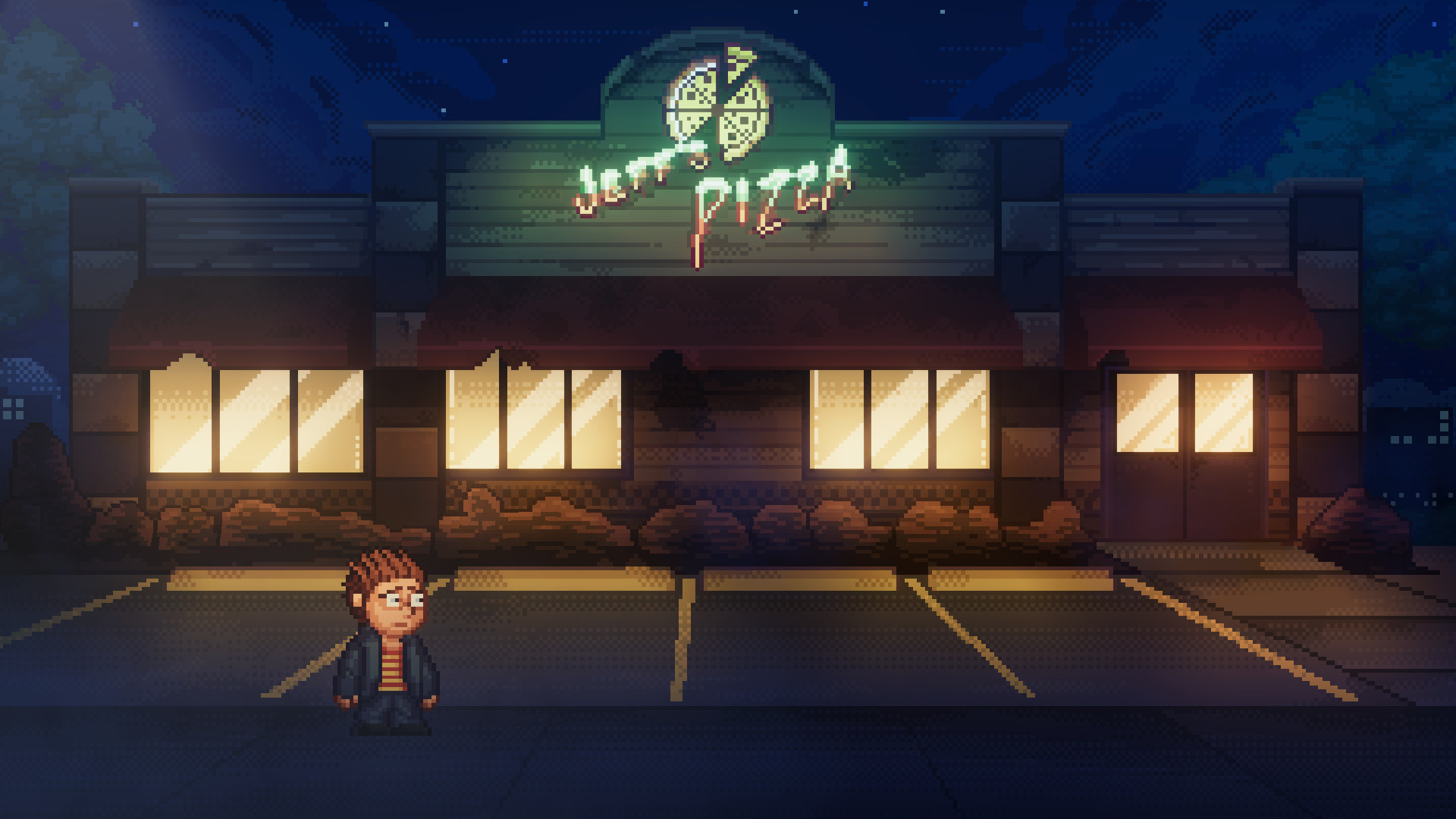
a trip back to 1985
Our story follows Oswald, a young boy living in a quiet town where excitement seems to be in particularly short supply, leaving him bored with his everyday routine and wishing that something interesting would happen for once. I think we’ve all experienced that feeling at some point, especially when we were younger and desperately wanted something exciting to interrupt an otherwise ordinary day, although I’m fairly certain most of us weren’t hoping to travel through time and encounter a murderous rabbit.
One afternoon, Oswald visits Jeff’s Pizza with his father, a rather depressing restaurant that has clearly seen better days and doesn’t exactly offer the sort of entertainment you’d expect from a family establishment. The building feels neglected, the business appears to be struggling, and there’s very little for a youngster to do beyond wandering around and finding something to occupy himself with. Eventually, Oswald discovers an old ball pit tucked away inside the restaurant and, rather than questioning why something like that has been left sitting there for so long, decides that jumping straight into it would be a brilliant idea.
Personally, I would’ve been more concerned about how many years of dust, forgotten food, and questionable germs were hiding beneath those plastic balls, but Oswald clearly has a much stronger sense of adventure than I do. Unfortunately for him, what appears to be an ordinary piece of children’s entertainment turns out to be something considerably stranger, as climbing into the pit transports him back to 1985, where he emerges inside a bustling Freddy Fazbear’s Pizzeria.
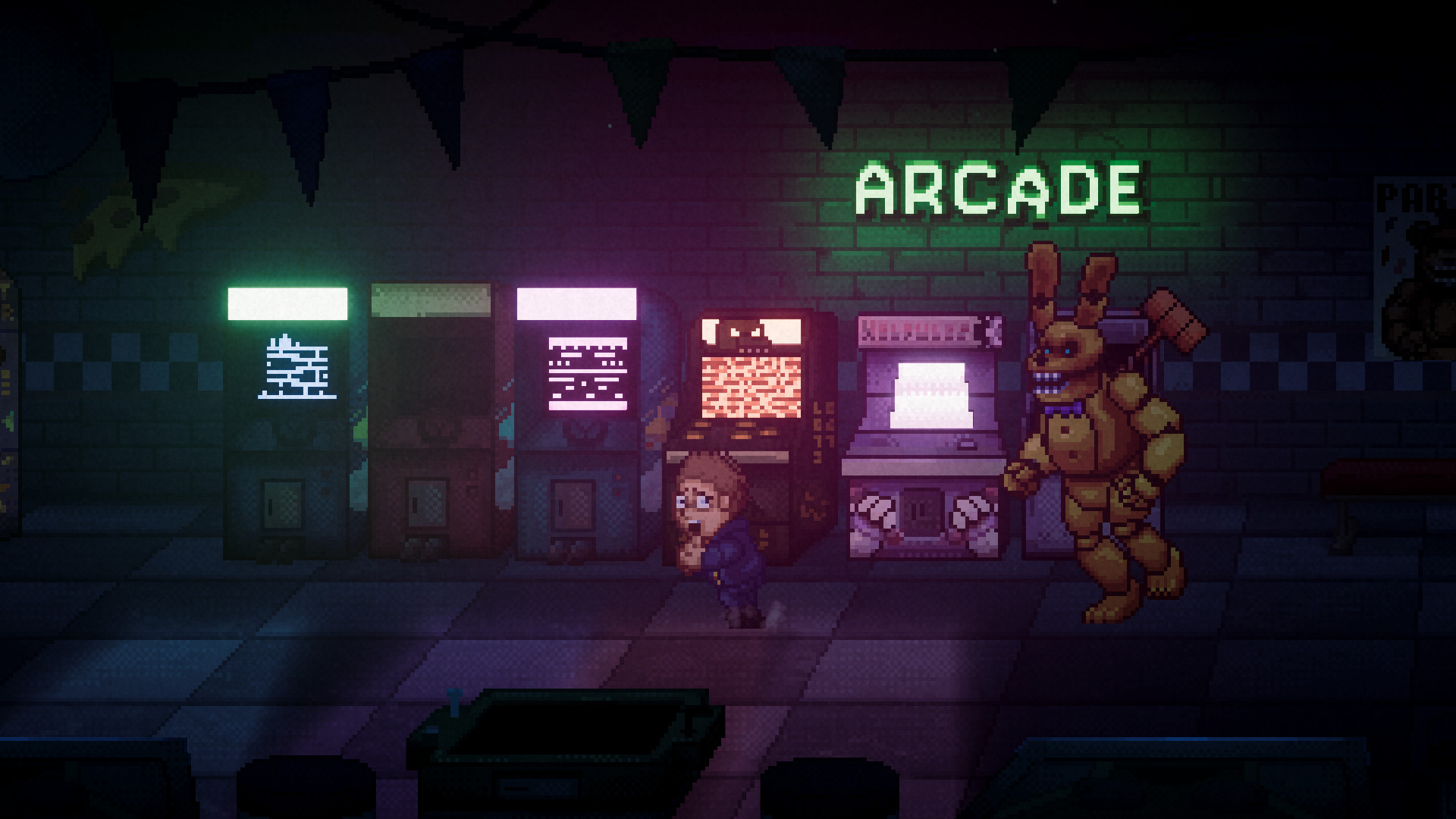
Suddenly, the miserable surroundings of Jeff’s Pizza have been replaced by a lively family restaurant filled with arcade machines, colourful decorations, cheerful music and children enjoying themselves, creating a wonderful contrast between the two periods. As someone who has followed FNaF for years, I found this particularly exciting because we’ve spent so much time learning about the restaurant’s history through hidden mini-games, newspaper articles, recordings and character dialogue, rather than getting the opportunity to explore one of its earlier locations in this way.
For a brief moment, Freddy Fazbear’s Pizzeria almost feels like the innocent family establishment it was supposed to be, although anyone familiar with the series will know that appearances can be incredibly deceiving. Oswald quickly discovers that something dreadful is happening behind the restaurant’s colourful exterior, and before long, he encounters a mysterious Yellow Rabbit that bears a striking resemblance to Spring Bonnie, a costume closely associated with some of the darkest events in FNaF history.
Unfortunately, this particular rabbit isn’t interested in entertaining children, performing on stage or handing out birthday cake, as its attention is firmly focused on hunting Oswald and making his life as difficult as possible. What follows is a desperate adventure spread across five nights, during which our young protagonist must travel between the present and the past, investigate the disturbing events surrounding the pizzeria and find a way to save his father before it’s too late.
What impressed me most about the story was how naturally the two timelines complemented each other, with the abandoned present-day restaurant providing a constant reminder that something terrible happened within those walls many years earlier. Seeing the same building during two very different periods gives the locations more meaning, particularly when you begin recognising familiar rooms and understanding how certain parts of the environment connect to the events you’re investigating.
It’s also worth mentioning that Mega Cat Studios hasn’t simply recreated the original short story scene for scene, instead expanding the material with additional locations, objectives and gameplay sequences that allow Oswald’s adventure to unfold across several nights. These additions help turn what was originally a relatively short piece of fiction into a more substantial interactive experience, while retaining the central mystery that makes the source material so interesting.
Being the FNaF fan that I am, I naturally found myself investigating practically everything, from suspicious decorations and posters to objects that looked slightly out of place, because you never know when a seemingly insignificant detail might connect to something much bigger. There were several occasions when I became so distracted searching for potential references that I almost forgot I had an actual objective to complete, although I think most longtime fans will understand why that’s such an easy trap to fall into.
What I particularly appreciated was how the narrative remains approachable for players who might not know every detail of the wider series, while still offering recognisable references and connections for those of us who have spent years following its mysteries. You don’t need to understand every theory surrounding William Afton to enjoy Oswald’s story, but having that additional knowledge makes certain discoveries considerably more rewarding.
And as for the Yellow Rabbit, I think it’s fair to say that Freddy Fazbear Entertainment should probably reconsider its employee recruitment process, because this particular character certainly isn’t somebody I’d want supervising a children’s birthday party.
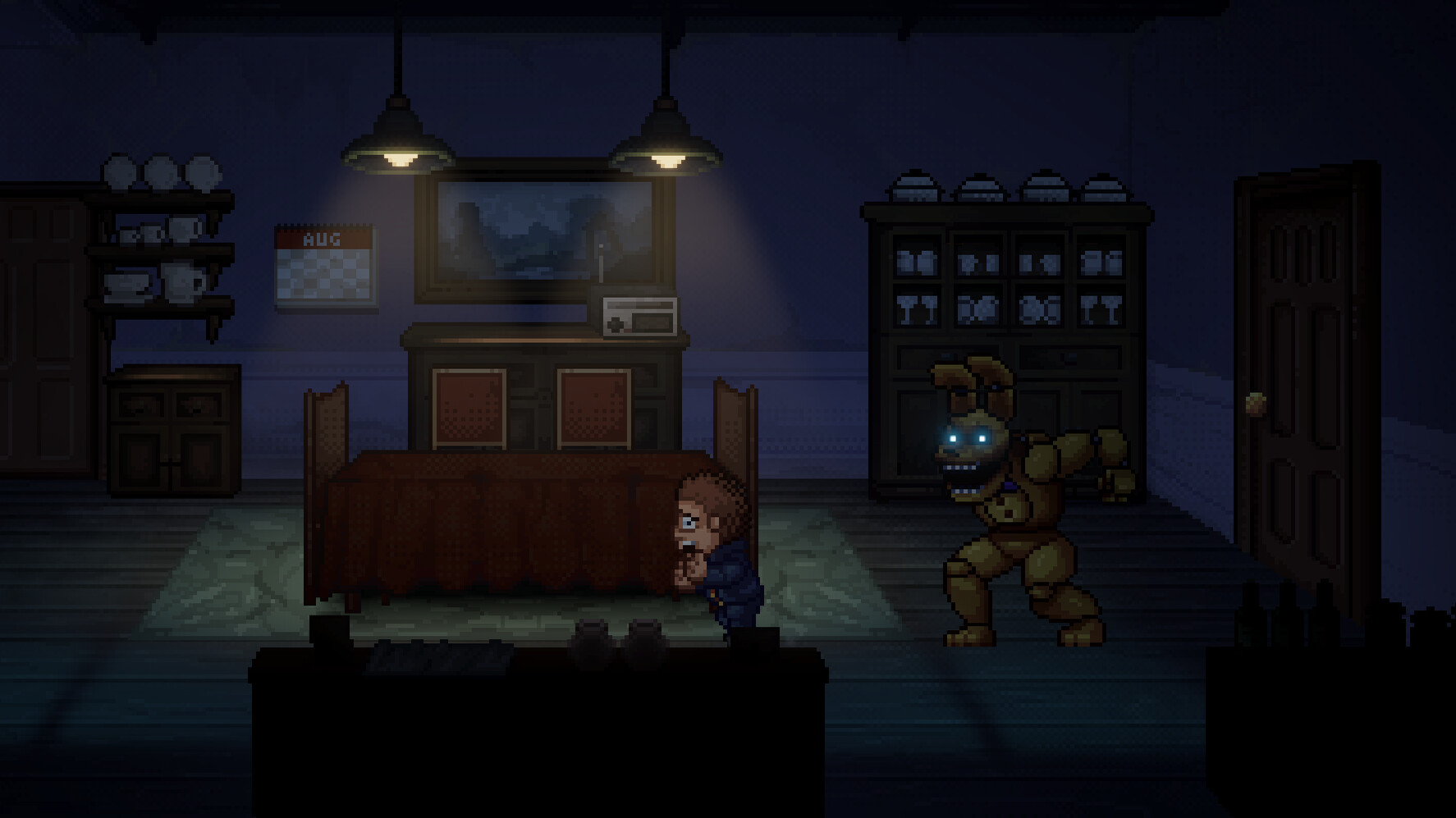
a dangerous game of hide and seek
Moving away from the traditional security office formula was always going to be an interesting decision, particularly when so much of the original game’s identity came from monitoring cameras, managing electricity and desperately hoping the clock would reach 6 AM before Freddy decided to pay you a visit. Thankfully, Into the Pit demonstrates that the series can embrace a completely different style of gameplay without losing the tension, mystery and survival mechanics that fans have come to appreciate.
Instead of remaining in one location, you’re able to explore a variety of environments, including Oswald’s home, Jeff’s Pizza and Freddy Fazbear’s Pizzeria, searching for useful objects, interacting with characters and completing objectives that gradually move the story forward. The combination of 2D exploration and point-and-click-inspired interactions works surprisingly well, encouraging you to investigate your surroundings carefully rather than simply rushing towards the next destination.
However, there’s one rather significant problem with this otherwise enjoyable adventure, and that problem happens to be a large yellow rabbit with absolutely no understanding of personal boundaries.
One of the game’s most important mechanics revolves around sound, as running through corridors, interacting with certain objects or moving equipment can attract unwanted attention and reveal your location. This means that even relatively straightforward tasks require a little planning, particularly when you’re exploring an area where the Yellow Rabbit could appear at almost any moment.
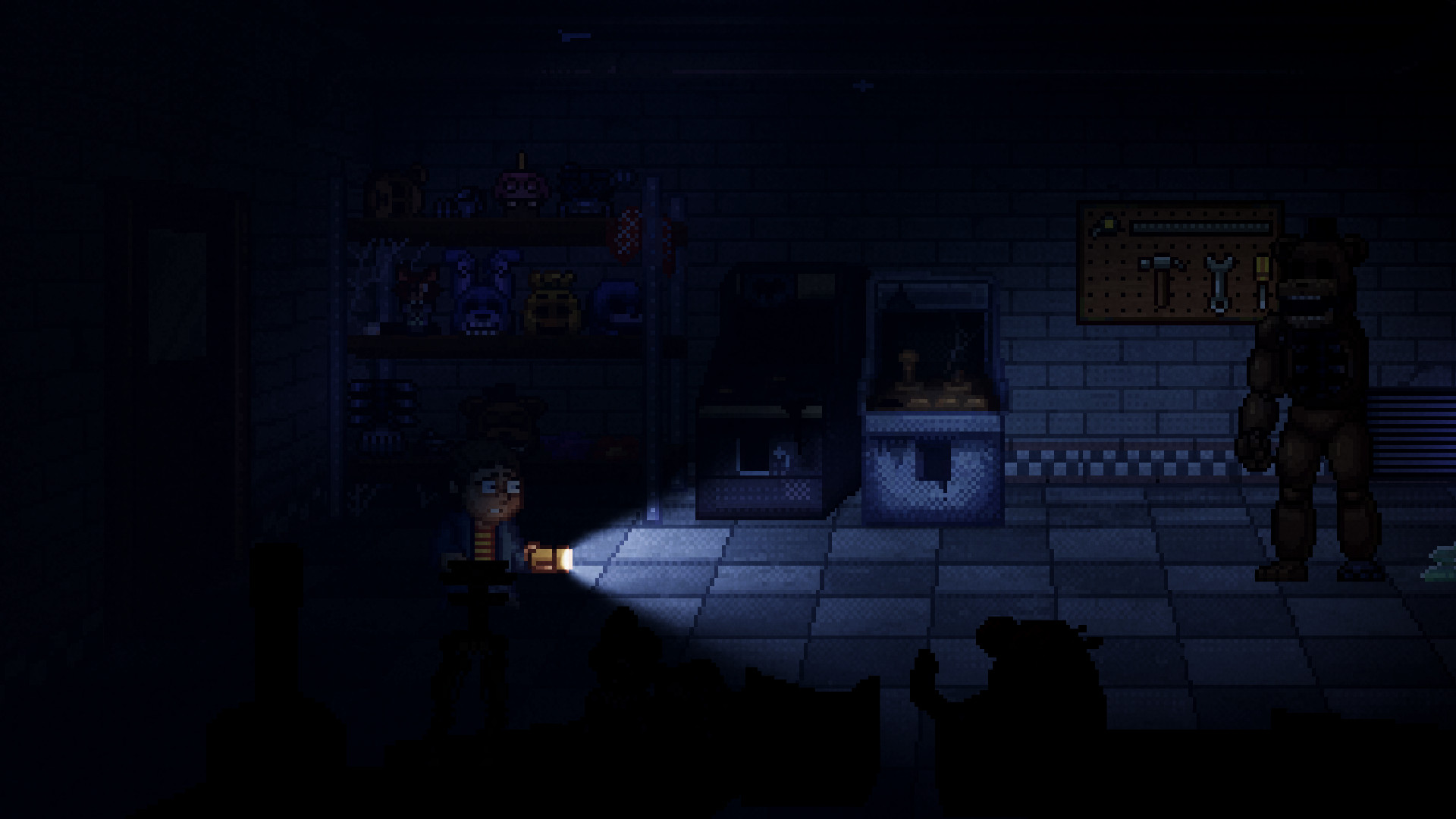
A small sound meter helps indicate how much noise Oswald is creating, giving players a useful way to judge whether their movements are likely to attract attention, while the flashlight provides additional visibility in darker environments. However, because the flashlight relies on batteries, it’s another resource that requires a degree of management, particularly when you’re exploring unfamiliar locations and aren’t entirely sure what might be waiting in the next room.
I appreciated how these systems encouraged me to pay attention to the environment rather than treating every objective as a simple journey from one location to another, although I’ll admit that my enthusiasm occasionally got the better of me. There were several moments when I confidently sprinted through an area, completely forgetting that making too much noise was effectively announcing my location to the very creature I was trying to avoid.
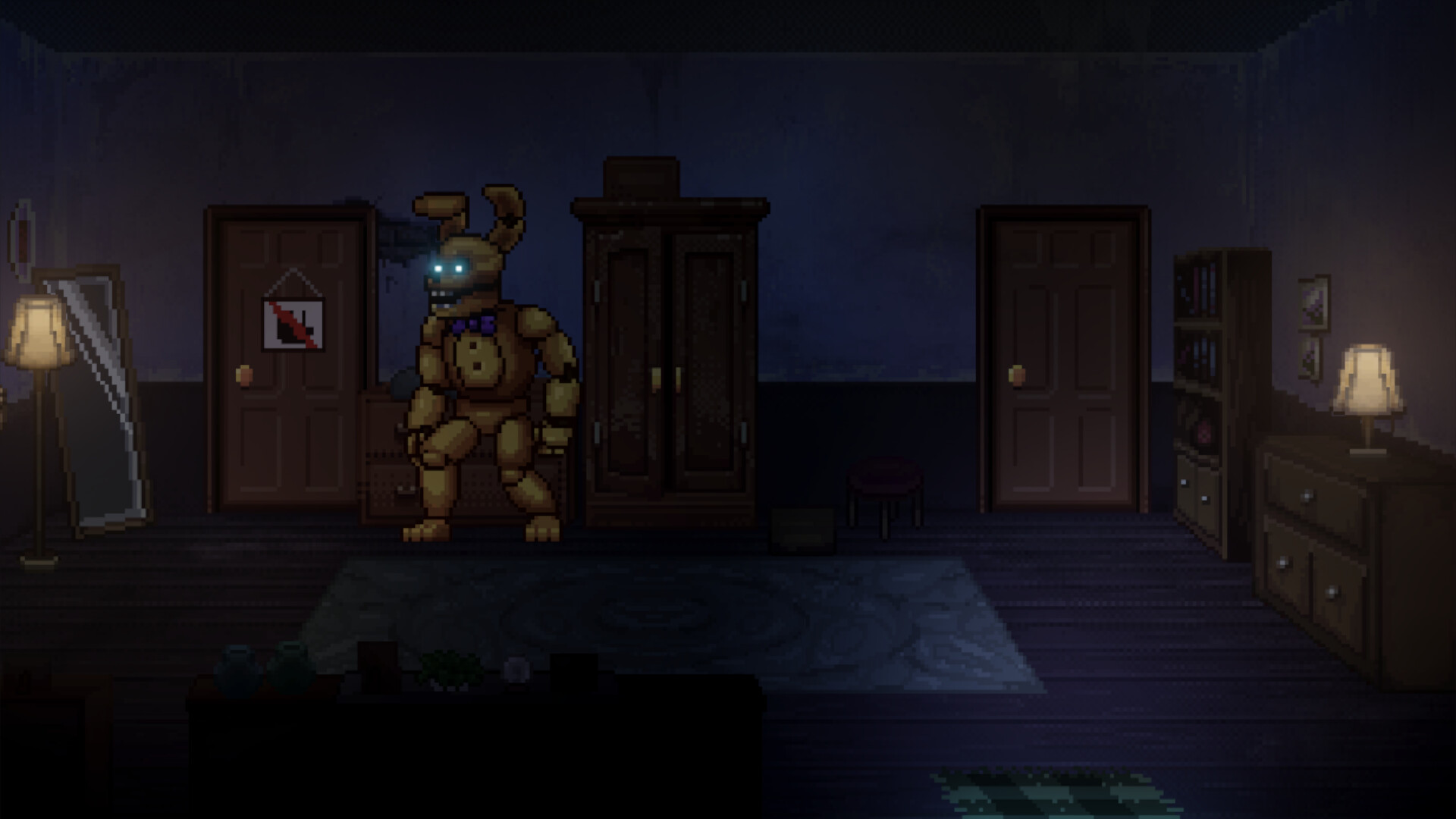
the ladder was almost my downfall
One mechanic that particularly stood out involved physically transporting larger objects instead of simply collecting them and placing everything into an inventory, which is something many adventure games would normally allow you to do without a second thought. For example, when you discover a ladder, you’re required to carry it through the environment and work out exactly where it needs to be used, adding a small but enjoyable element of strategy to what would otherwise be a relatively simple puzzle.
Of course, carrying a large metal ladder around a building isn’t exactly a quiet activity, especially when you’ve got a particularly aggressive rabbit wandering around and listening for anything that might reveal your position. I remember thinking I’d worked out exactly where I needed to go and feeling rather pleased with myself, only for the noise to attract attention and turn my carefully planned little construction project into a desperate attempt to escape.
It’s amazing how quickly your priorities can change when something with enormous teeth suddenly decides that you’re the most interesting person in the building, and I don’t think I’ve ever wanted a ladder to be quieter in my entire life. These interactions might seem relatively minor compared with some of the game’s larger mechanics, but they make ordinary objectives more engaging because you have to consider the consequences of your actions.
The developers have also included environmental distractions that can occasionally be used to your advantage, with certain objects and noisy equipment providing opportunities to draw enemies away from your intended route. I enjoyed experimenting with these because they encouraged me to think beyond simply running and hiding, allowing me to use the environment to create a safer opportunity to progress.
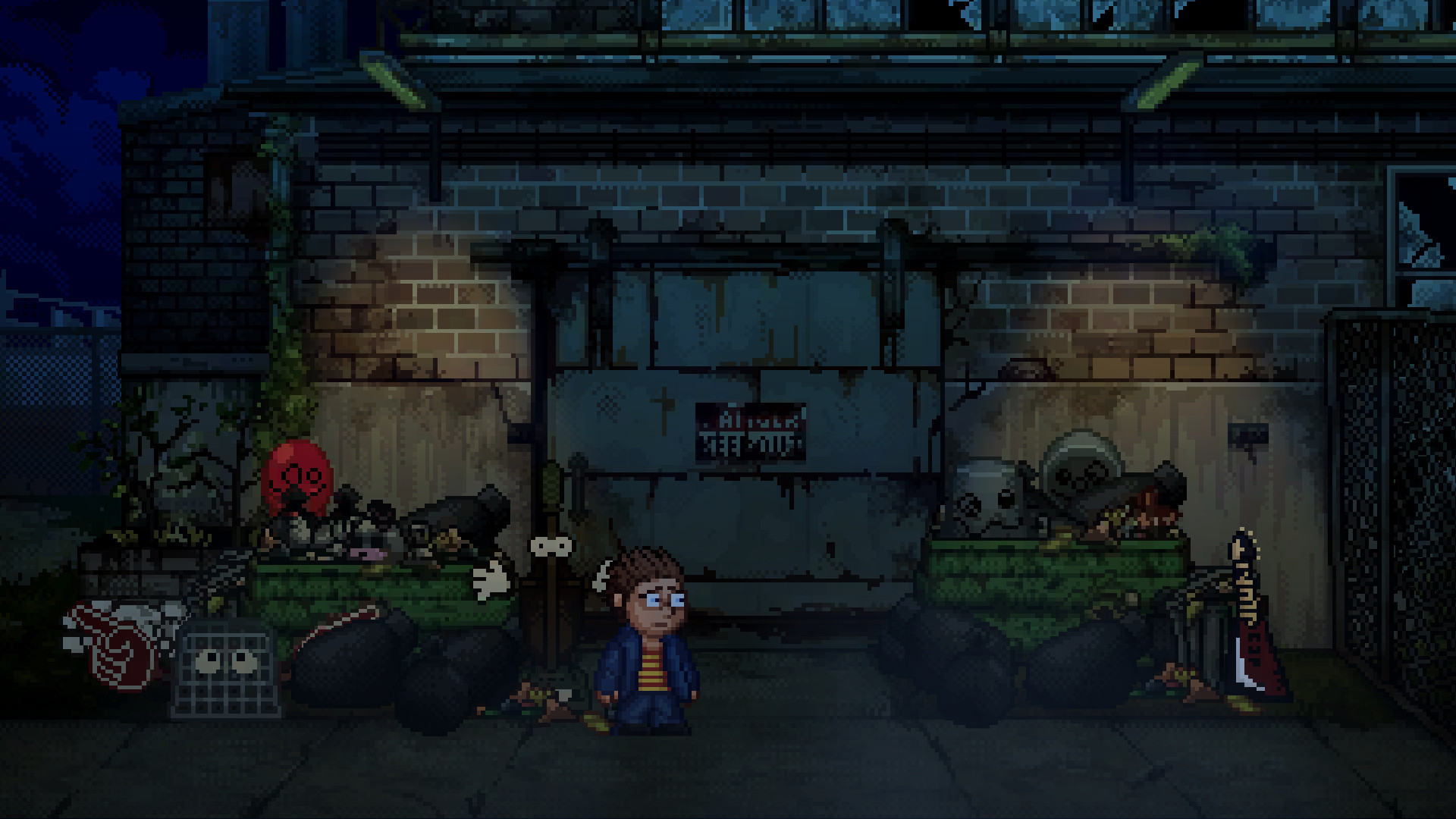
The yellow rabbit
The Yellow Rabbit is undoubtedly one of the biggest reasons the gameplay works so effectively, as its aggressive behaviour and persistent pursuit make navigating certain locations feel particularly demanding. Unlike the original games, where much of your attention was focused on monitoring the movements of animatronics through security cameras, you’re now sharing the environment with a creature that’s actively searching for you.
There were plenty of moments when I thought I’d successfully escaped, only to hear those familiar footsteps approaching again, leaving me desperately searching for somewhere to hide before the creature discovered my location. At times, I genuinely felt as though the Yellow Rabbit knew where I was going before I’d even worked it out myself, which made some of the longer exploration sequences considerably more challenging than I expected.
Fortunately, Oswald can hide in several locations, including cupboards, underneath furniture and inside certain confined spaces, although reaching one of these areas doesn’t always guarantee your safety. Some encounters introduce short interactive sequences that require you to respond to prompts, control Oswald’s breathing or complete other actions while the creature searches nearby, preventing hiding from becoming a completely passive mechanic.
I found these moments particularly engaging because the suspense comes from waiting to discover whether the creature will notice you, rather than simply relying on a sudden jump scare to create a reaction. Hearing footsteps approaching while you’re concealed inside a cupboard can be surprisingly effective, especially when you know that making the smallest mistake could send you straight back into another chase.
That said, I wouldn’t pretend that every encounter was perfectly balanced, because there were sections where repeated failures began to test my patience, particularly when I was trying to complete a puzzle while avoiding the Yellow Rabbit. Occasionally, I’d manage to solve part of an objective, navigate several rooms and finally reach the location I needed, only to get caught moments before finishing everything.
I might have given Oswald a few lectures about his questionable decision-making along the way, although considering that I was the one controlling him, perhaps some of that criticism should’ve been directed towards myself.
difficulty, secrets, and replayability
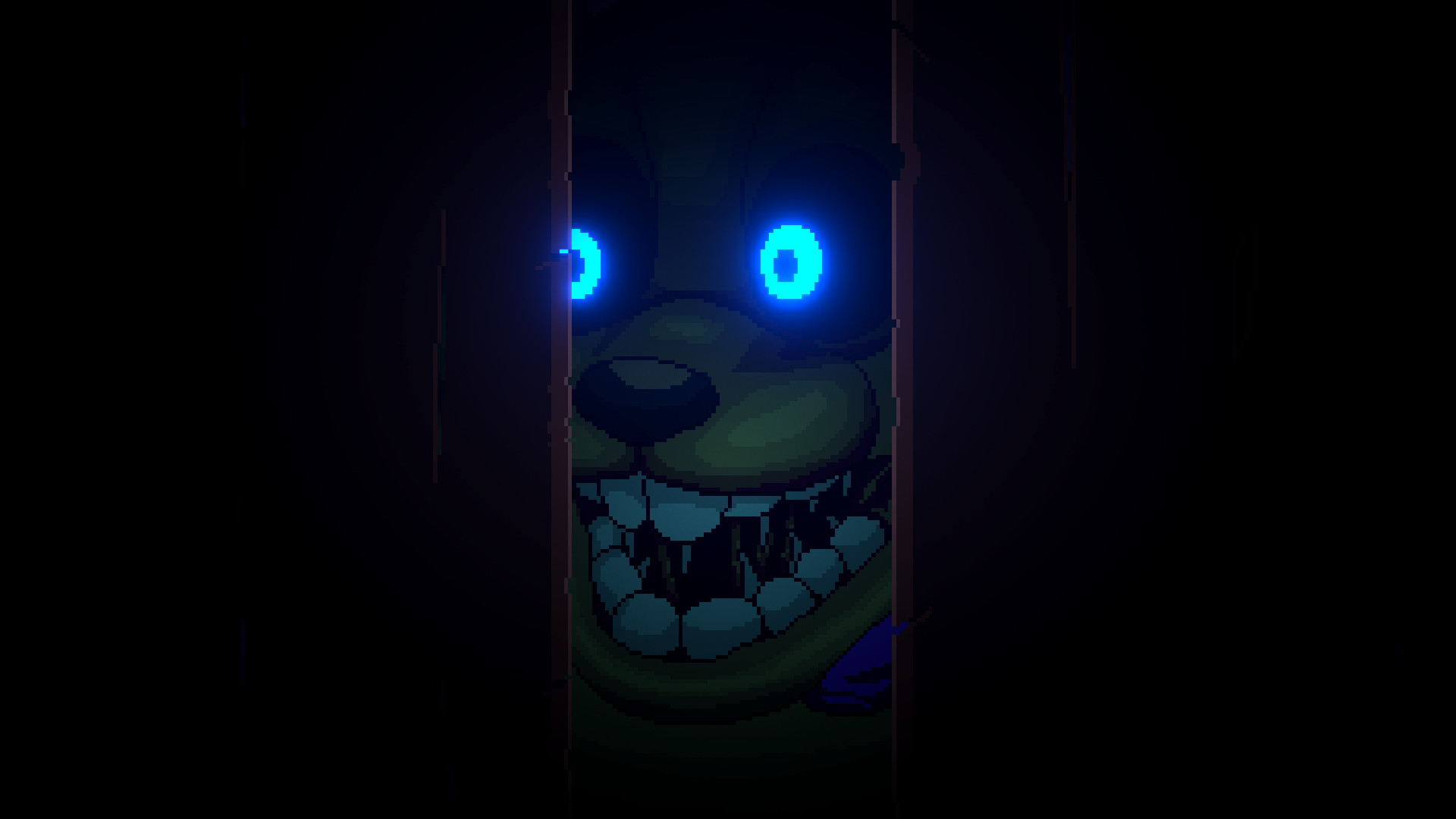
Into the Pit includes four difficulty settings: Creepy, Frightening, Terrifying and Nightmare, offering players several ways to approach the experience depending on how comfortable they are with stealth mechanics and survival horror. Creepy provides a more forgiving challenge for those primarily interested in following the story, while Frightening offers a more balanced experience before the tougher settings begin demanding considerably greater awareness and patience.
I played on the medium difficulty and found that it provided a satisfying challenge, although there were certainly moments when the Yellow Rabbit made me regret choosing anything above the easiest option. What I appreciated was that increasing the difficulty doesn’t simply make the enemies more aggressive, as higher settings can also reduce available hiding locations, limit opportunities to distract pursuers and make certain encounters much less forgiving.
The game also provides additional customisation options after completing a playthrough, allowing players to adjust aspects of the experience and experiment with different ways of increasing the challenge. I particularly like this approach because it gives returning players more reasons to revisit familiar locations while forcing them to reconsider strategies that worked perfectly well during their first attempt.
Beyond the main storyline, there are hidden mini-games, multiple endings and additional secrets waiting to be discovered, something that has always been an important part of the FNaF experience. As someone who enjoys uncovering the smaller details hidden throughout these games, I appreciated having reasons to explore locations more carefully and return to the adventure after reaching the credits.
Of course, I’m sure other fans will recognise the familiar routine of finishing a FNaF game, watching somebody explain the lore on YouTube and immediately discovering that you’ve somehow overlooked several important clues despite spending hours examining practically everything.
At that point, there’s really only one sensible thing to do, and that’s start another playthrough to find out what you’ve missed.
a pixel art love letter to five nights at freddy's
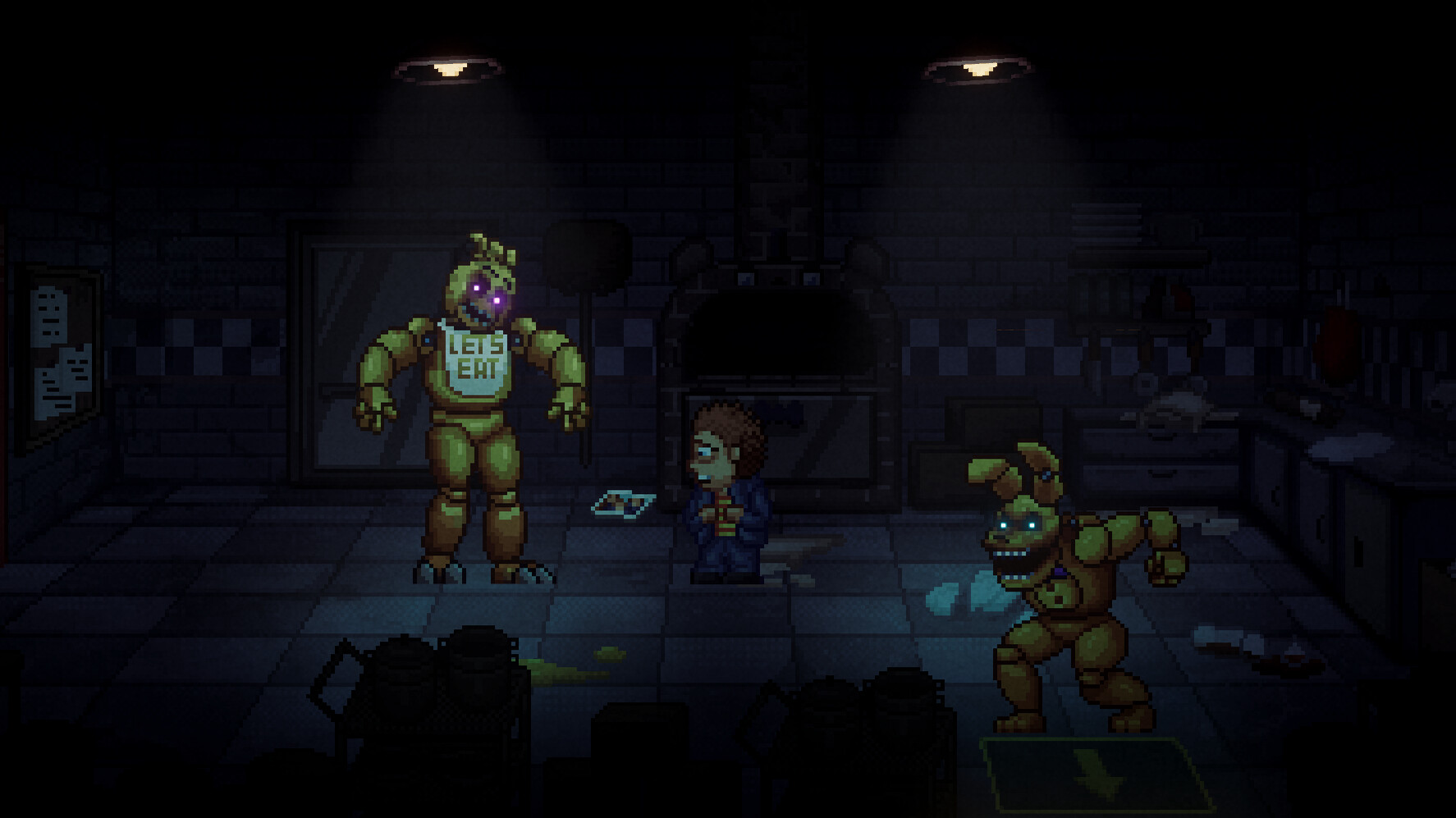
When I first saw the trailers for Into the Pit, its visual presentation immediately caught my attention because Mega Cat Studios had chosen to embrace a detailed pixel-art style rather than following the 3D approach used in games such as Security Breach and Help Wanted. As someone who has always enjoyed retro-inspired games, I was interested in seeing how this presentation would complement the darker elements of FNaF, particularly when so many memorable moments from the series have relied on carefully constructed character designs and environmental details.
Thankfully, the developers have done a wonderful job of bringing this interpretation of Freddy Fazbear’s world to life, creating environments that feel colourful, expressive and surprisingly detailed despite the limitations normally associated with pixel art. From the arcade machines and party decorations to the furniture, lighting and smaller background objects, each location feels carefully designed, encouraging you to slow down occasionally and appreciate the work that’s gone into recreating these recognisable surroundings.
Exploring Freddy Fazbear’s Pizzeria in 1985 was easily one of my favourite parts of the adventure, particularly because the restaurant feels much closer to the family entertainment centre it was originally intended to be. The bright colours, familiar decorations and lively surroundings create a convincing sense of nostalgia, which makes the darker discoveries feel even more uncomfortable once you begin understanding what happened within those walls.
The contrast with Jeff’s Pizza is equally impressive, as the present-day restaurant feels neglected, tired and almost forgotten, reflecting a business that has clearly struggled to survive after the building’s more successful years. Moving between these different periods allows the developers to tell part of the story through the environments themselves, showing how the same location can change dramatically over time without needing constant dialogue to explain everything.
I particularly enjoyed recognising certain areas when travelling between the two timelines, because even relatively small changes in decoration or layout helped reinforce the feeling that I was exploring a building with a complicated history. It’s the sort of environmental storytelling that rewards players who pay attention, and considering how much I enjoy investigating the smaller details in FNaF games, I found myself regularly stopping to examine rooms before moving on.
the character animations are funtastic
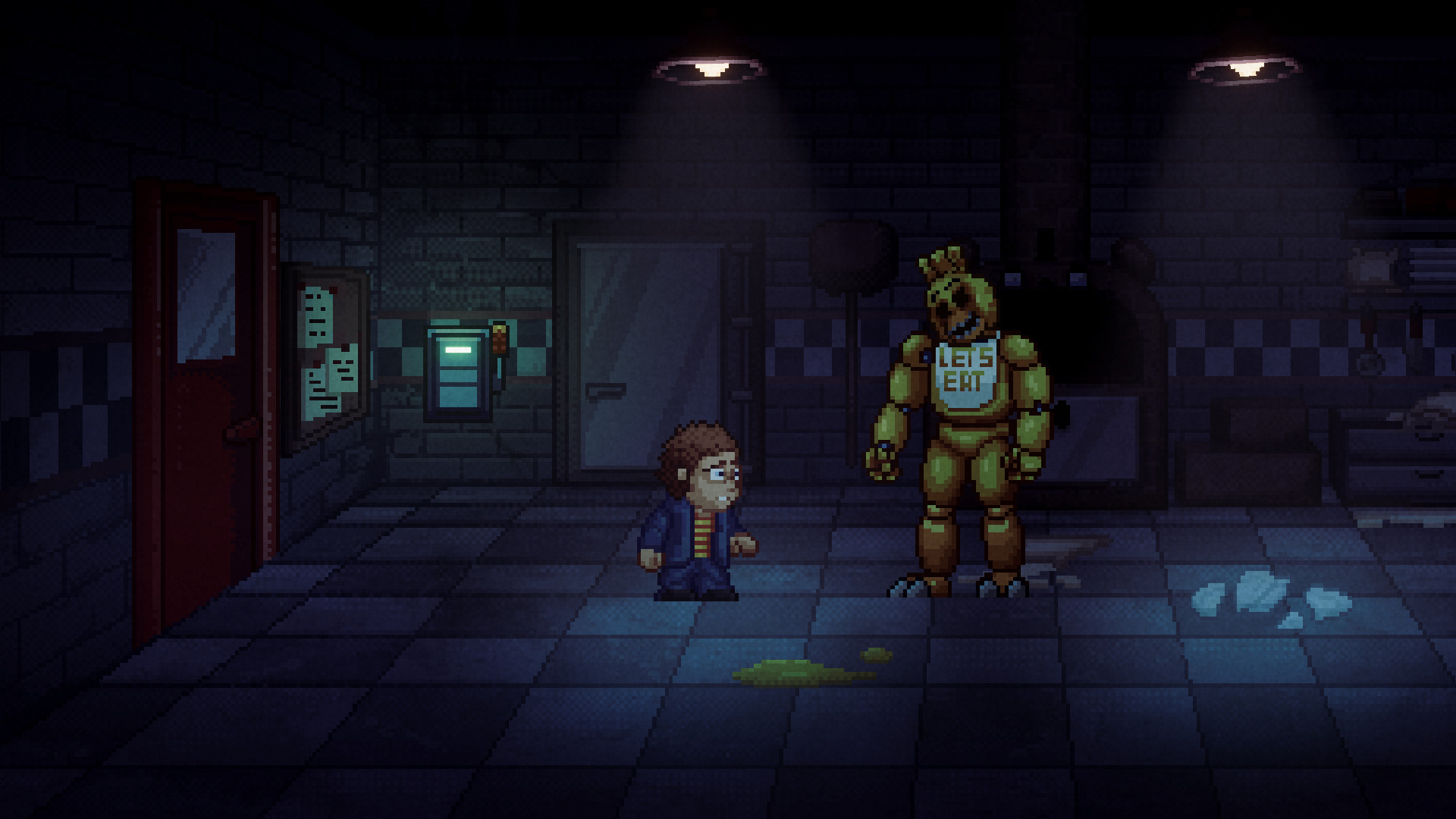
While the environments are impressive, I think the character animations deserve just as much recognition, particularly during the more demanding sequences where Oswald is attempting to escape or conceal himself from danger. His movements communicate desperation wonderfully, whether he’s sprinting through a corridor, scrambling into a hiding place or reacting to something unexpected, giving the young protagonist a surprising amount of personality without relying heavily on spoken dialogue.
However, there’s absolutely no denying that the Yellow Rabbit steals the show, with its unnatural movements, aggressive behaviour and exaggerated animations making it a memorable threat throughout the adventure. I’ve encountered plenty of disturbing animatronics during my years playing FNaF, but there’s something especially uncomfortable about watching this creature move through a colourful pixel-art environment, particularly when it suddenly charges towards Oswald.
One sequence that immediately comes to mind involves the rabbit forcing its way through a door, transforming what initially seemed like a reasonably safe situation into another desperate attempt to survive. The animation itself is brilliantly executed, although I must admit that the first time it happened, I was far too busy trying to escape to properly appreciate the developers’ craftsmanship.
Another memorable moment occurs when the Yellow Rabbit appears in a doorway and casually waves at Oswald, almost as though it’s inviting him to come closer and have a friendly conversation. Now, I’m all for meeting new people and making friends, but I think I’ll politely decline that invitation, especially when the individual offering it has spent most of the game trying to catch me.
What makes these animations so effective is how much personality they communicate through relatively simple movements, proving that characters don’t need realistic facial expressions or elaborate cinematic sequences to leave a lasting impression. The developers have managed to make the Yellow Rabbit feel both recognisable and unpredictable, while Oswald’s reactions help communicate just how dangerous the situation has become.
From a technical perspective, my experience on PC was equally positive, with the game maintaining a consistent frame rate throughout my playthrough and no significant bugs interfering with my progress. Everything ran smoothly, including during the more demanding chase sequences, which allowed me to appreciate the artwork and animations without being distracted by performance problems.
I think Mega Cat Studios has created a distinctive visual identity that respects the original series while embracing something different, demonstrating that careful artistic direction can be far more important than simply attempting to make everything look realistic.
every noise matters
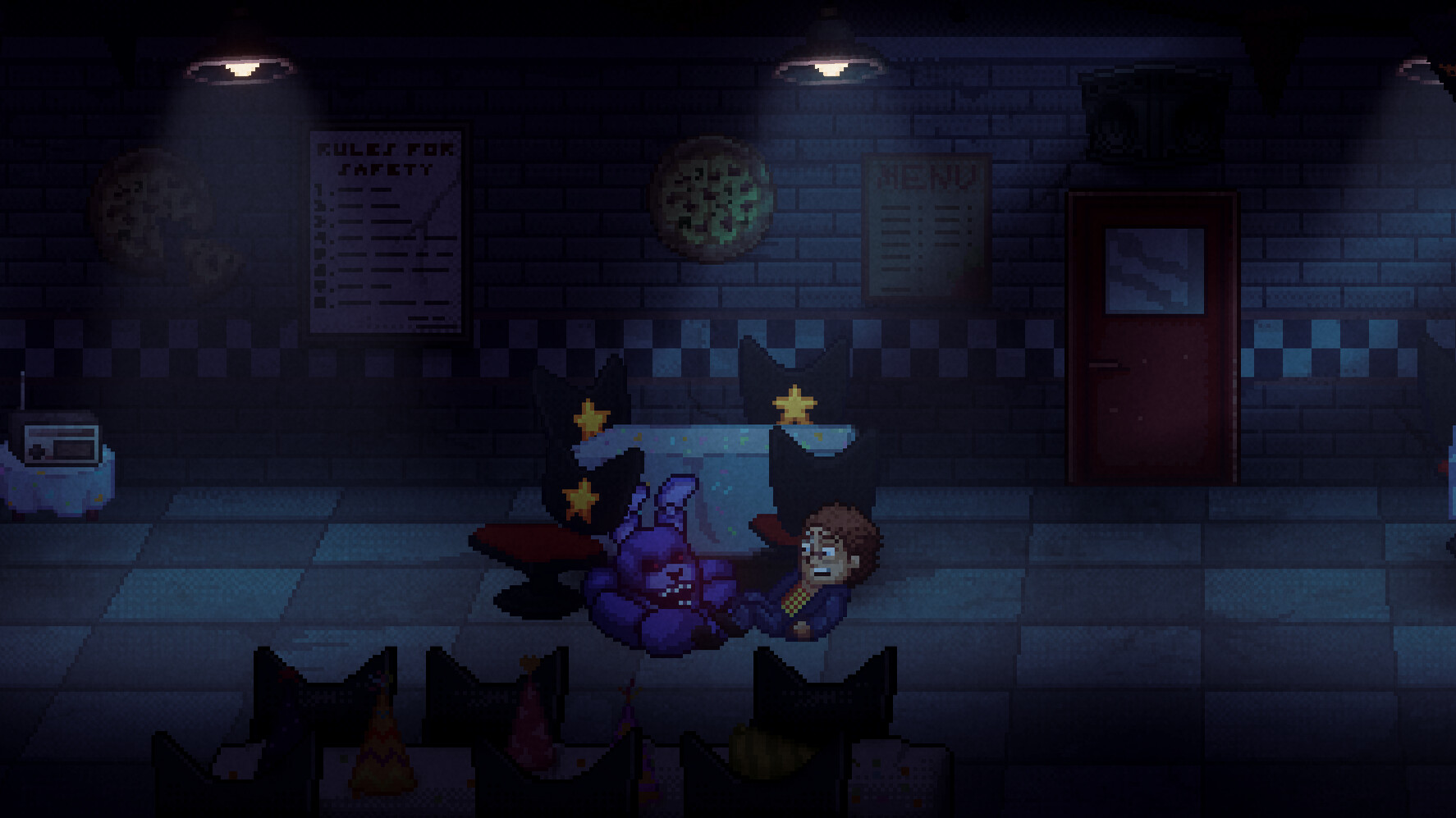
I’ve always believed that sound design is one of the most important elements of a successful horror game because even the most intimidating creature can lose its impact when the audio fails to support what’s happening on screen. A well-placed sound effect can make an ordinary corridor feel threatening, while a sudden moment of silence can leave you wondering whether something is waiting just beyond your field of vision.
Into the Pit understands this particularly well, using footsteps, mechanical noises, environmental effects and distant movements to make each location feel unpredictable, even when there isn’t anything immediately visible to worry about. What I found especially impressive was how the audio wasn’t simply included to create suspense, as sound also plays an important role in the gameplay mechanics and directly influences how you approach certain objectives.
Because Oswald’s actions can attract nearby enemies, I found myself becoming much more cautious about running through corridors or interacting with objects without first considering what might happen. There were moments when I’d stop moving entirely just to listen for the Yellow Rabbit, attempting to determine whether it was safe to continue or whether I needed to find another route.
Naturally, that careful approach didn’t always last very long, particularly whenever I convinced myself that the creature had wandered somewhere else and decided to move a little faster than I probably should have. On several occasions, an unnecessary noise was all it took to reveal my location, reminding me that perhaps stealth-based adventures require slightly more patience than I’m sometimes willing to demonstrate.
The Yellow Rabbit’s own sound effects are especially effective, with its footsteps, breathing and sudden screams providing useful warnings while also making encounters considerably more stressful. Hearing the creature approaching while you’re hiding creates a strong sense of anticipation, particularly when you’re unable to see exactly where it’s moving and have to rely on what you can hear.
What I appreciated most was how the developers allowed quieter moments to contribute to the experience rather than constantly bombarding players with loud audio cues, as sometimes the absence of a familiar sound can be just as concerning as hearing something unexpected. There were several occasions when everything became suspiciously quiet, leaving me wondering whether the rabbit had finally wandered away or was simply waiting for me to make another terrible decision.
freddy's familiar melody returns
As a longtime FNaF fan, I was delighted to hear another interpretation of Freddy Fazbear’s familiar music, particularly because the series has always had a wonderful way of turning otherwise innocent melodies into something associated with danger. One interesting piece of history is that Freddy’s iconic music-box tune originates from the Toreador March, which forms part of Georges Bizet’s opera Carmen, first performed in 1875.
The melody became especially memorable in the original Five Nights at Freddy’s, where it could be heard after the building’s electricity ran out and Freddy began approaching the player’s office. I still remember hearing that music during my earliest experiences with the series, desperately hoping the clock would reach 6 AM before the animatronic bear decided to make his appearance.
It’s rather impressive that a piece of classical music written during the nineteenth century can now make generations of gaming fans immediately think about an animatronic bear standing in a dark corridor.
Into the Pit features a charming retro-inspired interpretation of the familiar theme, which plays inside the present-day restaurant and provides a surprisingly relaxing contrast to the events surrounding Oswald. I enjoyed this arrangement so much that I eventually added it to my personal playlist, although I appreciate that listening to music associated with Freddy Fazbear’s Pizza might seem like a slightly unusual way to unwind after a long day.
The soundtrack also changes between the different periods, helping establish the individual character of each location while complementing the contrast between the lively restaurant of 1985 and the neglected building Oswald explores in the present. These musical differences might seem relatively subtle compared with some of the game’s more dramatic sequences, but I think they contribute significantly to the overall presentation.
Another welcome addition is the extras menu, which allows players to revisit various musical tracks and other unlockable content, giving fans an opportunity to appreciate some of the smaller details they might have missed during their first playthrough.
Although the game features relatively limited spoken dialogue, there’s also a nice connection to the earlier titles through the familiar Phone Guy character, who is voiced by Patrick Hickey Jr. in Into the Pit rather than Scott Cawthon, who originally provided the performance in the first game. It’s a small detail that longtime fans may find interesting, particularly considering how recognisable the original Phone Guy recordings have become over the years.
Personally, I would’ve welcomed additional voice acting during certain story sequences because I think some of the more important conversations could have benefited from a little extra personality. However, the limited dialogue never significantly affected my enjoyment, largely because the developers made such effective use of music, character noises and environmental effects to communicate what was happening.
final thoughts
Going into Five Nights at Freddy’s: Into the Pit, I had incredibly high expectations because this is a series I’ve followed for more than a decade, having experienced its various gameplay styles and spent countless hours exploring the mysteries surrounding Freddy Fazbear’s Pizza. Whenever a new instalment gets announced, there’s always that familiar feeling of excitement, particularly when the developers promise to explore a different part of the universe or introduce something we haven’t experienced before.
Thankfully, Mega Cat Studios has delivered an adventure that manages to respect the history of FNaF while establishing an identity of its own, combining an engaging story, enjoyable exploration and carefully designed survival mechanics into a memorable experience. Rather than depending entirely on familiar characters and nostalgic references, it introduces a new protagonist and allows players to explore events from a different perspective, which I found refreshing after spending so many years following the wider series.
The time-travel mechanic was undoubtedly one of my favourite additions, as being able to explore Freddy Fazbear’s Pizzeria during its earlier years was something I’d wanted to experience for quite some time. There’s a real sense of fascination that comes from seeing the restaurant filled with families and entertainment before returning to its neglected present-day counterpart, especially when you understand the darker history associated with the building.
I also appreciated how much attention the developers paid to the smaller environmental details, with familiar decorations, carefully placed objects and recognisable locations providing plenty of opportunities for observant players to discover references. As someone who loves investigating FNaF lore, I frequently found myself examining rooms more carefully than necessary, wondering whether I’d stumbled across another important connection to the wider story.
Visually, the pixel-art presentation exceeded my expectations, with beautifully designed environments and expressive character animations demonstrating just how effective this style can be when handled properly. Although I initially wondered whether a 2D game would deliver the same level of suspense as some of the more immersive titles, those concerns quickly disappeared once I experienced the Yellow Rabbit’s relentless pursuit of Oswald.
Speaking of the Yellow Rabbit, I think it deserves special recognition for being such a memorable antagonist, particularly because its movements, behaviour and sound effects work together to make every encounter feel unpredictable. I’ve dealt with plenty of troublesome animatronics over the years, but there’s something especially uncomfortable about seeing that familiar yellow figure standing in a doorway and casually waving at you as though you’re about to enjoy a pleasant afternoon together.
I don’t care how friendly that wave might appear, because after everything I’ve experienced in this game, there’s absolutely no chance I’m accepting an invitation from that rabbit.
Of course, Into the Pit isn’t completely without its problems, and there are a few areas where I think the experience could have been improved. Certain encounters can become frustrating after repeated failures, particularly when you’re trying to complete an objective while being pursued, and the inventory system occasionally interrupts the pacing when you need to check important information.
I also would’ve welcomed more voice acting during certain story moments, as I think additional performances could have made some of the conversations more memorable and helped establish stronger connections with the supporting characters. However, these criticisms never significantly affected my overall enjoyment, and I found that the strength of the storytelling, exploration and sound design more than compensated for those occasional frustrations.
The multiple endings, hidden mini-games and additional difficulty options provide plenty of reasons to return after completing the main storyline, particularly for players who enjoy discovering every secret rather than simply reaching the credits. Considering how much time I’ve spent researching the lore of previous FNaF games, I wouldn’t be surprised if I eventually found myself returning for another playthrough after discovering something interesting in a theory video.
If anything, playing Into the Pit has made me even more interested in reading the Fazbear Frights collection, especially because seeing one of those stories adapted into a full game has demonstrated how much potential exists within the wider literary universe. I’d love to see Mega Cat Studios explore another of these stories in the future, particularly if the developers can maintain the same level of creativity and attention to detail they’ve demonstrated here.
For me, the greatest compliment I can give Five Nights at Freddy’s: Into the Pit is that it reminded me exactly why I became a fan of the series all those years ago. It captures that wonderful combination of mystery, memorable characters, carefully constructed scares and hidden details that encouraged me to spend hours watching Markiplier, playing the original games and trying to understand what was happening behind the doors of Freddy Fazbear’s Pizza.
It’s not simply another FNaF game created to celebrate a recognisable name, but a thoughtful adaptation that introduces something fresh while retaining the qualities that made the series so popular in the first place.
Mega Cat Studios has delivered an excellent adventure that I would happily recommend to longtime fans and newcomers alike, particularly those who enjoy story-driven horror games with exploration, puzzles and a few unexpected surprises. Although there were moments when I became frustrated, the overall experience left me wanting more, and that’s always a positive sign when I finish reviewing a game.
As for Oswald, I think he’s earned himself a very long holiday after everything he’s experienced, preferably somewhere with sunshine, a swimming pool and absolutely no animatronics wandering around after dark. Perhaps next time his father suggests visiting a restaurant, he’ll choose somewhere with decent food, friendly staff and a ball pit that doesn’t transport people into the past.
So, fellow Five Nights at Freddy’s fans, are you brave enough to jump Into the Pit and uncover the secrets waiting beneath Freddy Fazbear’s Pizzeria?
Because after everything I’ve experienced, I think I’ll be keeping both feet firmly on the ground, and if I ever see a yellow rabbit waving at me from across a room, I’ll be heading in the opposite direction.
Positives
✅ A Fantastic Addition to FNaF – Captures everything fans love about the series while introducing fresh gameplay mechanics and an engaging story inspired by the Fazbear Frights books.
✅ Beautiful Pixel-Art Design – Detailed environments, impressive animations and a wonderful contrast between the two timelines bring Freddy Fazbear’s Pizzeria to life.
✅ The Yellow Rabbit Is Relentless – An intimidating antagonist whose unpredictable appearances, frightening animations and aggressive behaviour keep players constantly on their toes.
✅ Outstanding Sound Design – Clever audio cues, familiar melodies and environmental sounds create tension while playing an important role in survival.
✅ Plenty of Secrets to Discover – Multiple endings, hidden mini-games, difficulty settings and additional challenges provide excellent replay value.
Negatives
❌ Some Frustrating Encounters – Certain chase sequences and repeated failures can become irritating, particularly when you’re close to completing an objective.
❌ Inventory Management Could Be Better – Constantly opening menus to check items or consult the map occasionally interrupts the flow of exploration.
❌ Limited Voice Acting – While the sound design is excellent, additional voiced dialogue could have made certain story moments and characters more memorable.
❌ Occasional Trial and Error – Some objectives require repeated exploration or attempts to work out what to do next, which can slow the pacing.

Owner of Indie Critical. I’m passionate about highlighting independent voices in film, games, and culture. I focus on honest, thoughtful reviews and love helping great indie projects get the recognition they deserve. When I’m not writing or editing, I’m probably diving into the latest hidden gem or discovering the next big thing in the indie scene.
Written by

Lewis Langton