The halls of Valhalla are calling, Ragnarök is coming, and the gods have clearly decided that peace is no longer an option.
So, instead of running, hiding or accepting our fate, there’s really only one thing left to do: grab a weapon, charge straight into battle and take on the gods themselves, along with the ridiculous hordes of enemies standing in our way.
Welcome to Asgard’s Fall, a Norse-inspired survivors-like roguelike that immediately reminded me of games such as Vampire Survivors. Each run throws an increasingly chaotic number of enemies your way as you level up, strengthen your character and build a combination of abilities powerful enough to hopefully take down a god or two along the way.
I’ve played plenty of games in this genre, with Vampire Survivors still being one of my favourites, but Asgard’s Fall brings a lot more to the table than simply choosing upgrades and surviving another wave. There’s much more going on here, and it quickly became a roguelike I thoroughly enjoyed sinking time into.
But was it as good as I was expecting? Did it deliver the brutality I wanted from its Norse setting? And more importantly, was I actually strong enough to stand against the gods?
There was only one way to find out, in my debut review of Asgard’s Fall!
not the kind of game that needs a story
When it comes to the story, Asgard’s Fall doesn’t throw loads of cutscenes, lengthy conversations or complicated lore at you. Instead, it keeps things simple and lets the Norse setting do most of the talking.
You take control of a warrior beginning their own saga against Asgard, travelling through the Nine Realms while cutting down the hordes and powerful leaders standing in your way.
This isn’t a tale about trying to please the gods either. You’re here to challenge them.
Each run becomes another part of your warrior’s journey as you grow stronger, unlock new abilities and slowly build yourself into something capable of standing against the very beings who are supposed to rule these realms.
It may not have a huge narrative driving everything forward, but honestly, it doesn’t really need one. Asgard’s Fall is much more focused on letting you create your own saga through the battles you survive, the builds you put together and just how far you can make it before something finally sends you crashing towards Valhalla.
Your story is essentially written through blood, axes and a frankly unhealthy amount of dead enemies.
And for a Viking game, that feels rather fitting. Don’t you think?
visuals
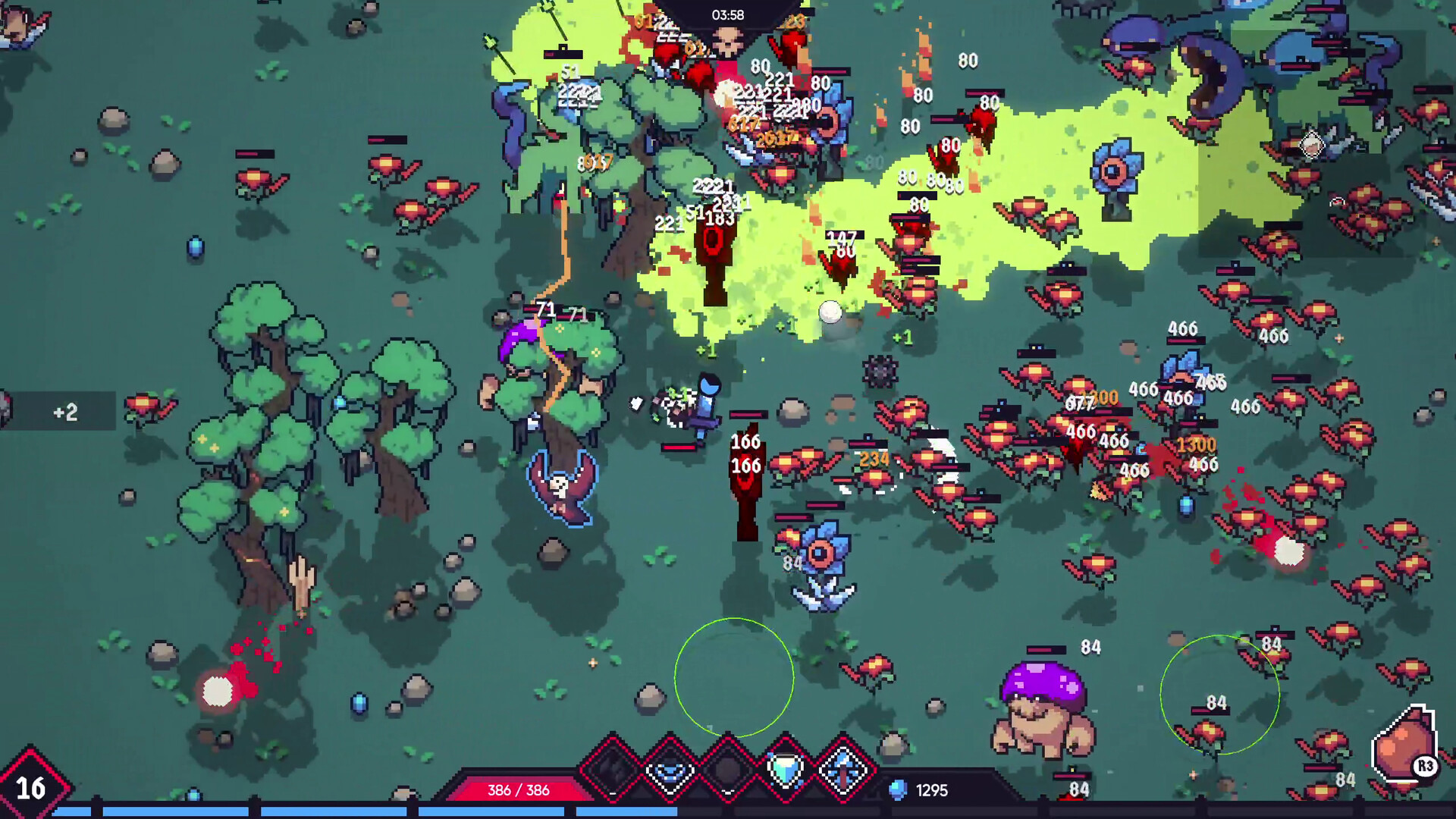
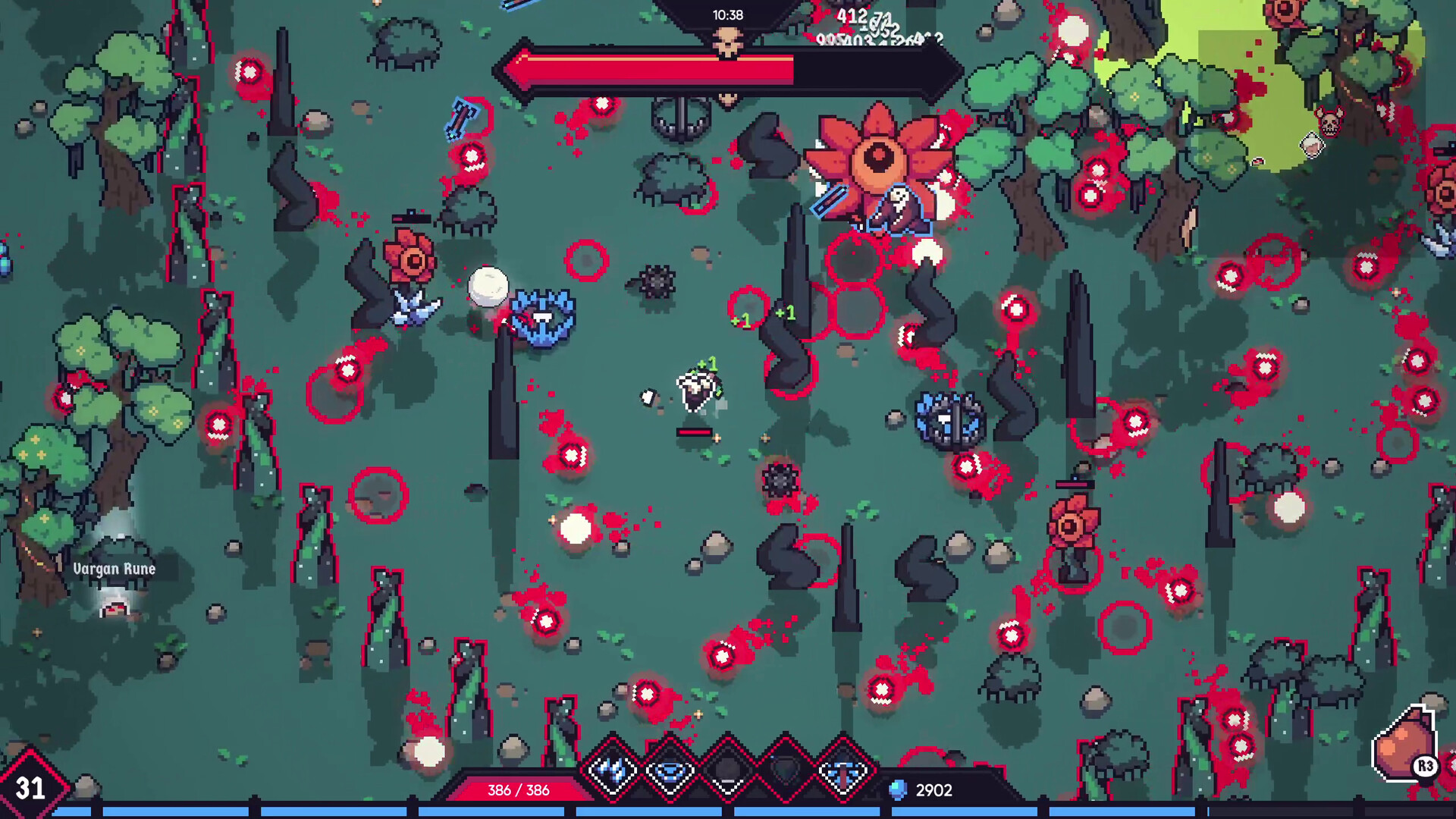
Gameplay in Asgard’s Fall will feel instantly familiar if you’ve played something like Vampire Survivors. Your character is tiny, the weapons are sometimes bigger than you are, and before long the screen is absolutely packed with enemies, effects and projectiles flying in every direction.
You move around the map, wipe out hordes of enemies and collect the points they drop to level up. Each time you gain a level, you’re given a choice of three abilities through Yggdrasil’s Gift. These can either be completely new abilities or upgrades for ones you already have.
If none of the options are doing it for you, you can reroll them using currency, although this gets more expensive the more often you do it during a run.
Each stage lasts around ten minutes before throwing you into a boss fight, so runs move at a pretty quick pace. There are ten stages in total, with four different classes available, including the Warrior and Seer.
One thing I did notice, though, is that the actual objective isn’t always made particularly clear. I defeated the boss and assumed I’d conquered the area, only to discover that apparently I hadn’t, so a little more guidance would definitely help.
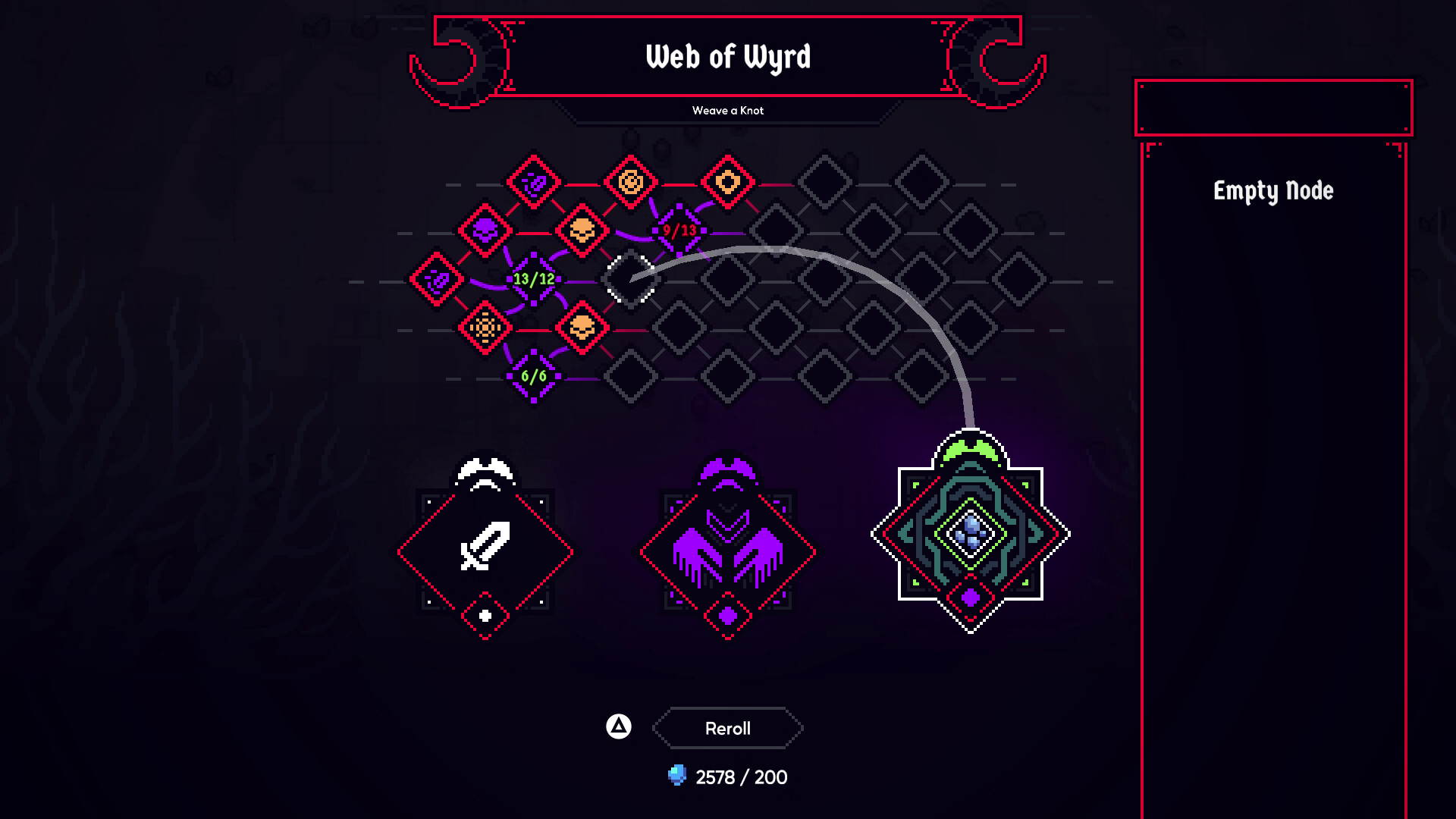
The Web of Wyrd is where things start getting a bit more interesting.
As you level up, you can choose between different types of nodes. A Knot of Power gives you an upgrade to a stat of your choice, while a Knot of Echo acts as a multiplier for connected nodes.
Then you have the Knot of Fate, which offers a much stronger upgrade, but you can’t simply drop it anywhere. You need to connect the right nodes around it and provide enough rune power before you can actually make use of it.
It adds a nice bit of planning to each run rather than simply grabbing whatever upgrade has the biggest number attached to it.
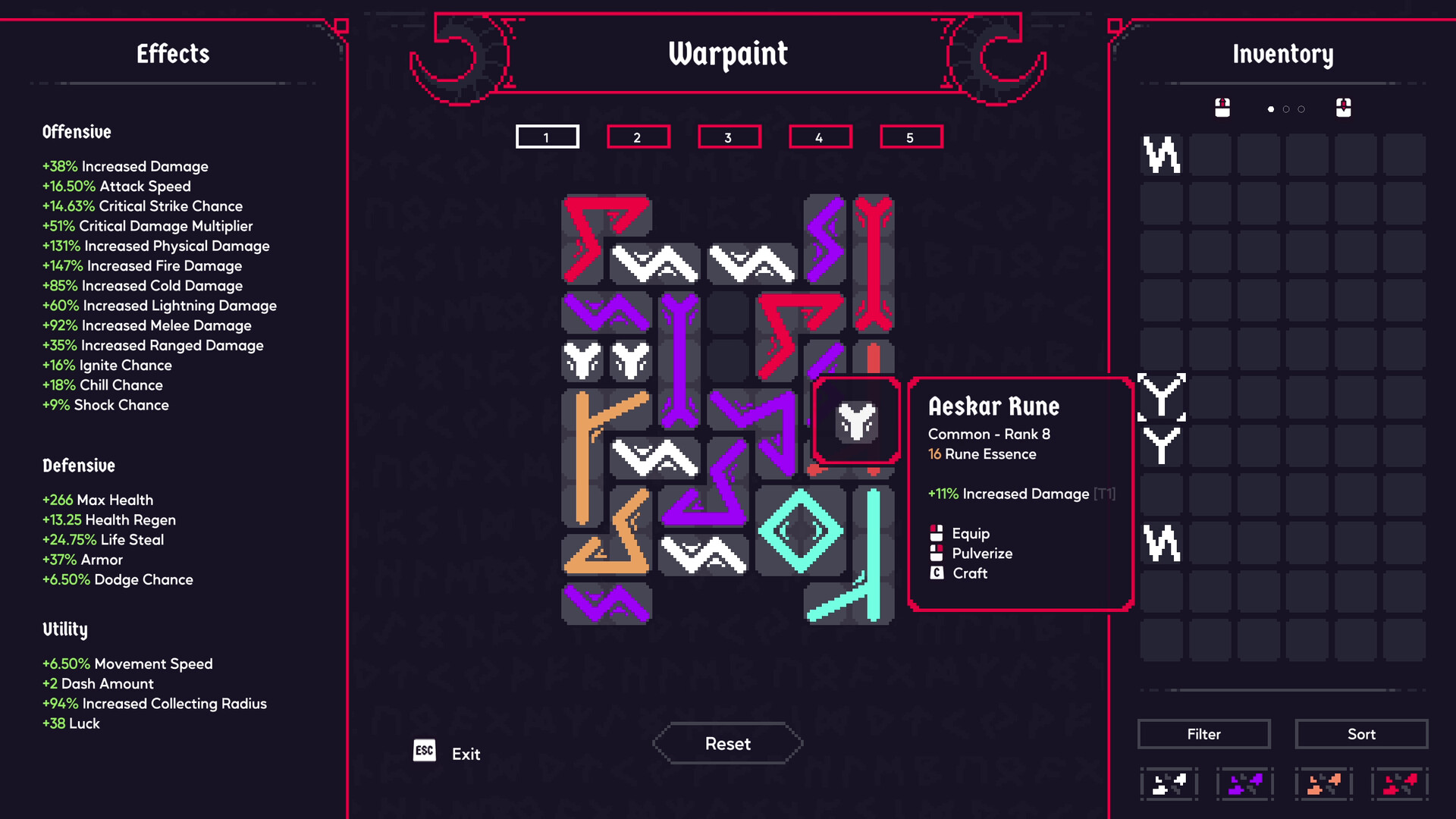
Warpaints are another major part of building your character.
Each one provides different stat boosts, and as you continue levelling up and defeating bosses, more spaces on your Warpaint grid become available.
You can also destroy unwanted Warpaints in exchange for currency, while materials collected during runs can be used to craft better versions back at the Web of Wyrd.
Defeating your first boss also starts rewarding you with runes, which tie directly into the Warpaint system and allow you to improve your builds even further.
Not everything disappears when a run ends.
The Stone of Seidr gives you permanent passive upgrades outside of your runs. You earn a point after each attempt, which can then be spent on a skill tree to slowly improve your character over time.
It gives you that familiar roguelike feeling of always making some progress, even if a particular run goes horribly wrong.
Once you complete a realm, you can also make a Blood Sacrifice to increase the difficulty. You can boost things like enemy health, damage and attack strength, but the trade-off is that your drops have a better chance of being a higher rarity.
So, if you fancy making things unnecessarily painful for yourself in exchange for shinier loot, the option is definitely there.
While running around each stage, you’ll also come across certain objects surrounded by a circle. These can give you different buffs or upgrades, so they’re always worth checking out.
Blessings can also reward you with chests, health or even an NPC who will jump into the fight and help you for a while.
Some areas have their own strange enemies too. By the second realm I was already being chased around by what can only be described as living snowballs, which wasn’t exactly what I expected from my Viking adventure.
Between runs, the bonfire acts as your main hub.
Here you can swap between characters and classes, change weapon skins, craft Warpaints and prepare yourself before heading back into another battle.
There’s also a Compendium where you can look through the weapons and abilities you’ve discovered, which is useful if you want to understand exactly what everything does before putting together another build.
For the most part, the gameplay loop works really well. It blends the familiar survivors-like formula with enough extra systems to make building your character feel more involved than simply picking an upgrade every few seconds.
My biggest gameplay complaint is the lack of vibration when you take damage. When the screen becomes as busy as it does here, it’s surprisingly easy to lose track of the fact that you’re actually being hit. Some proper controller feedback would have made a big difference.
Visuals
Visually, Asgard’s Fall has a really strong Norse-inspired aesthetic that suits the game perfectly. The environments, enemies and effects all have plenty of personality, and as you move through the different realms, there’s enough variety to stop everything from feeling too similar.
The character models themselves are quite small, especially when compared to some of the weapons you’re carrying. There were moments where the swords looked bigger than the person actually swinging them, which somehow made the whole thing even more ridiculous.
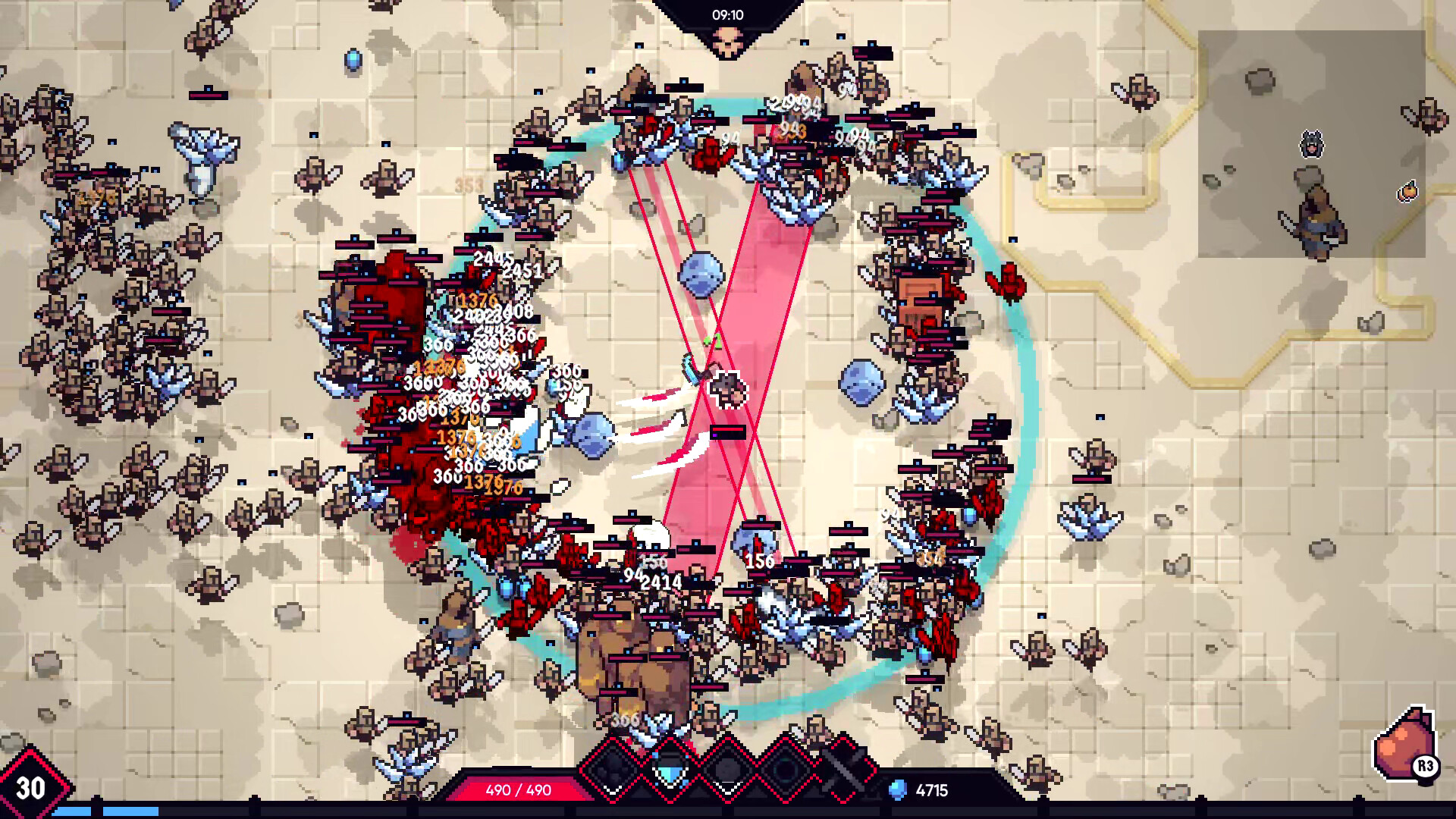
As the difficulty ramps up, though, things can get very busy on screen.
Once enemies start filling the area and your abilities are firing off in every direction, Asgard’s Fall can become visually overwhelming. There were times when so much was happening that it became difficult to keep track of where I was, what was hitting me and which attacks I should actually be avoiding.
That becomes even more noticeable when you add the lack of controller vibration into the mix, because sometimes the only real indication that you’re taking damage is watching your health drop.
Still, the chaos is also part of the appeal. Watching your build go from a basic warrior with a few attacks to something completely ridiculous is incredibly satisfying, and the overall aesthetic helps give Asgard’s Fall its own identity.
And then you reach the second realm and start getting chased around by living snowballs.
Because apparently Ragnarök wasn’t strange enough already.
audio design
When it comes to the audio in Asgard’s Fall, the music is definitely the strongest part.
The soundtrack fits the Norse-inspired aesthetic really well and gives each run that extra bit of energy as the screen slowly fills with enemies. It has that big, battle-ready feel you’d expect from a game centred around taking on hordes and eventually challenging the gods themselves.
Unfortunately, the rest of the sound design doesn’t quite hit the same level.
The biggest issue for me was the lack of variety in the enemy sounds. With so many different creatures appearing on screen, I expected each type to have more recognisable audio cues, but a lot of them start to blend together.
That becomes more noticeable when the screen gets completely chaotic because stronger enemy sounds could have helped you work out what was nearby without having to actually see it.
final thoughts
Asgard’s Fall isn’t a bad game at all. In fact, there’s quite a lot here to enjoy if you’re already a fan of survivors-like roguelikes.
The combat is satisfying, the Norse-inspired aesthetic gives it plenty of personality, and systems like the Web of Wyrd, Warpaints and permanent upgrades give you more to think about than simply surviving another wave.
That said, there is a lot of grinding involved if you want to push your way through all nine realms.
After a while, the gameplay can start to feel very rinse and repeat. You enter a stage, kill huge groups of enemies, level up, improve your build, take down the boss and then do it all again. The different realms, classes and upgrades help break things up, but the core loop never really changes that much.
For me, this is definitely a game that works better in shorter sessions. I enjoyed jumping in, doing a few runs, making some progress and then coming back later rather than trying to grind through everything in one go.
There’s still something satisfying about watching your character go from a tiny warrior surrounded by enemies to an absolute powerhouse capable of wiping out half the screen at once.
Asgard’s Fall might not completely reinvent the survivors-like formula, but it adds enough of its own ideas to make the journey through the Nine Realms worth checking out.
Just be prepared to do a lot of killing along the way.
But please take into account this is early pre-release and a lot of these issues will be fixed, but I look forward to seeing what Soulpotion has in store in future updates!
A key for Asgard’s Fall was provided for review purposes.
Positives
✅ Strong Norse Aesthetic – The game has a really appealing Viking-inspired look that gives each realm plenty of character.
✅ Fun Build Variety – Choosing new abilities, upgrading existing ones and combining different stats makes experimenting with builds enjoyable.
✅ Plenty to Grind For – With nine realms, multiple classes, Warpaints, runes and permanent upgrades, there’s a lot to work towards.
✅ Good Soundtrack – The music fits the Norse setting well and keeps the energy going during more chaotic runs.
✅ Risk and Reward – Blood Sacrifices let you increase the difficulty in exchange for better rarity drops, giving experienced players more of a challenge.
Negatives
❌ Repetitive Gameplay Loop – After a while, the kill, level up, defeat the boss and repeat structure can start to feel very rinse and repeat.
❌ Heavy Grind – Working your way through all nine realms takes a lot of time and repeated runs.
❌ Visually Overwhelming – When enemies and abilities fill the screen, it can become difficult to see exactly what is happening.
❌ Weak Damage Feedback – The lack of controller vibration makes it surprisingly easy to miss when you’re taking damage.
❌ Limited Enemy Audio – Enemy sounds could use more variety to help different creatures stand out during busy fights.
I’m passionate about gaming, creating content, and building a community people can enjoy being part of. As a UK-based variety streamer, I love discovering new games, sharing different experiences, and bringing people together through streams. When I’m not live, I’m probably checking out something new to play, planning future content, or finding the next game to get stuck into.
Written by

Cresco Spero
@IndieCresco

Edited by

Lewis Langton