Few things in gaming beat the feeling of booting up a classic 16-bit cartridge and watching a studio reinvent its own formula across a few short years.
Developed and published by Red Art Games, Joe & Mac Retro Collection is a classic action-platformer bundle that unites three prehistoric Super Nintendo titles originally crafted by Data East between 1991 and 1995.
By packing Joe & Mac: Caveman Ninja, Congo’s Caper, and Joe & Mac 2: Lost in the Tropics onto a single disc, the release invites players back to a colourful Stone Age bursting with oversized dinosaurs, rival Neanderthals, and club-swinging chaos.
Alongside both Western localisations and uncensored Japanese editions, the bundle arrives with modern quality-of-life upgrades tailored for current hardware.
Yet, while nostalgia always packs a punch, I went into this trio wondering whether these thirty-year-old adventures genuinely hold up today, or if their appeal rests entirely on fond memories.
story
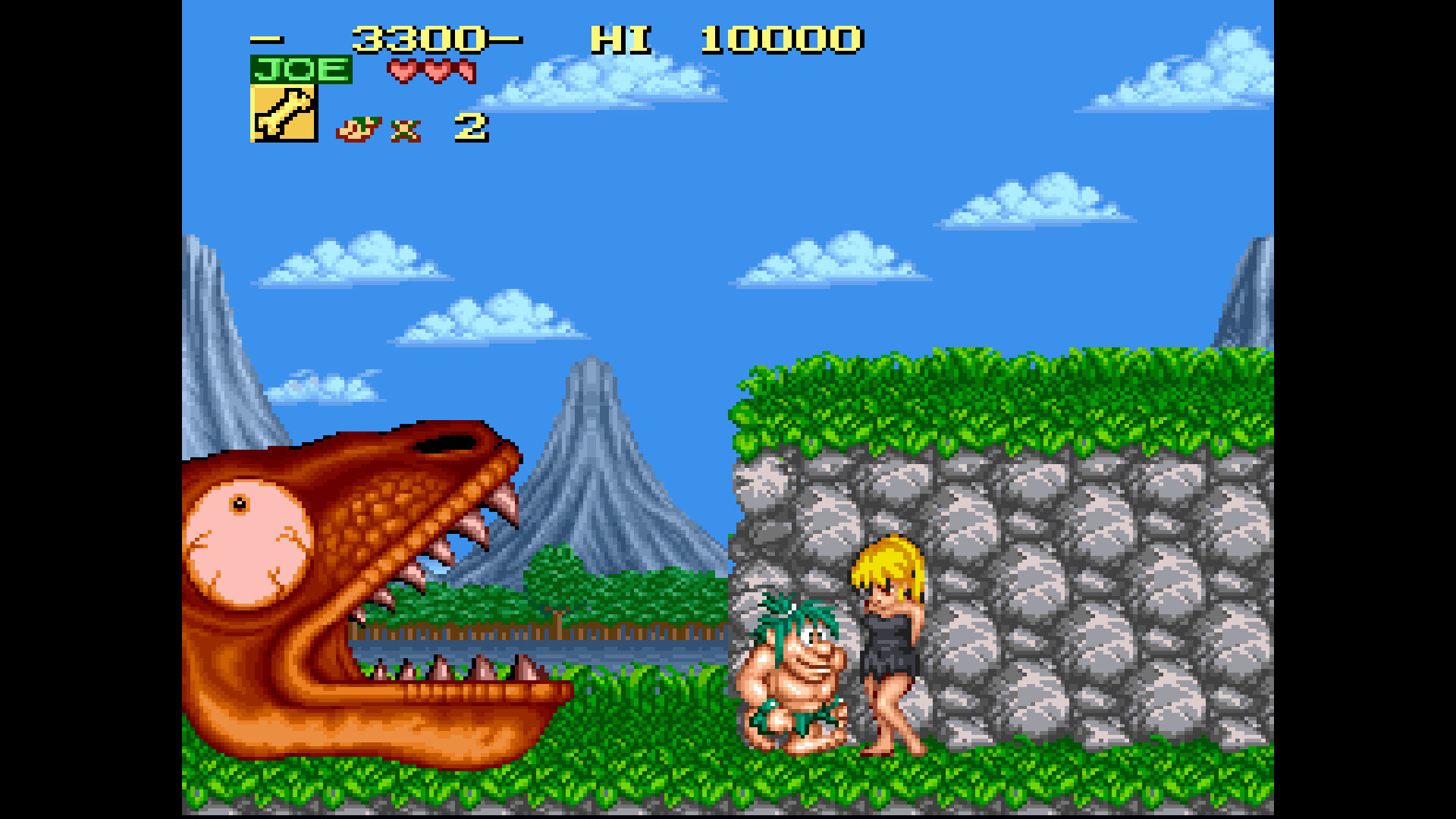
Because Joe & Mac Retro Collection spans three separate releases, the storytelling reads less like an interconnected saga and more like a string of gloriously goofy Saturday-morning cartoon episodes.
In Joe & Mac: Caveman Ninja, the setup could hardly be more straightforward: a gang of brutish Neanderthals storms a peaceful village and makes off with the local women, prompting green-haired Joe and blue-haired Mac to grab their stone clubs and launch a rescue mission.
What really hooked me as a retro fan, however, is the inclusion of the original Japanese Tatakae Genshijin versions alongside the Western builds.
Booting up the uncensored Japanese ROMs restores original opening scenes and dialogue quirks that were scrubbed out for overseas audiences in the early nineties, offering a neat slice of gaming history even when the slapstick humour leans decidedly juvenile.
Congo’s Caper, originally billed as a direct sequel in Japan before being rebranded as a spin-off in the West, hands the spotlight to Congo, a mischievous half-human, half-monkey boy.
After a mystical jewel grants him special abilities and a demonic villain kidnaps his girlfriend Congette, Congo must bound across thirty-five stages to bring her home.
It is a paper-thin excuse to send players leaping over jungle vines and bubbling volcanoes, with virtually zero character growth beyond expressive sprite animations.
By the time you reach Joe & Mac 2: Lost in the Tropics, Data East clearly wanted to tell a slightly richer tale.
When a wicked tribe pinches the village chief’s royal crown, Joe and Mac volunteer to track down the seven rainbow stones needed to restore order.
This sequel introduces a central Tiki Village hub bustling with eccentric locals. You can collect stone wheel currency to decorate your cave, buy gifts, woo a Stone Age partner, and eventually settle down to start a family.
Personally, I found this oddball mashup of caveman comedy and light life-simulation utterly charming.
None of these games will ever be mistaken for narrative masterpieces, yet their unapologetic absurdity kept a grin on my face between boss battles.
gaMEPLAY
Working through all three games in order reveals just how quickly Data East sharpened its platforming craft.
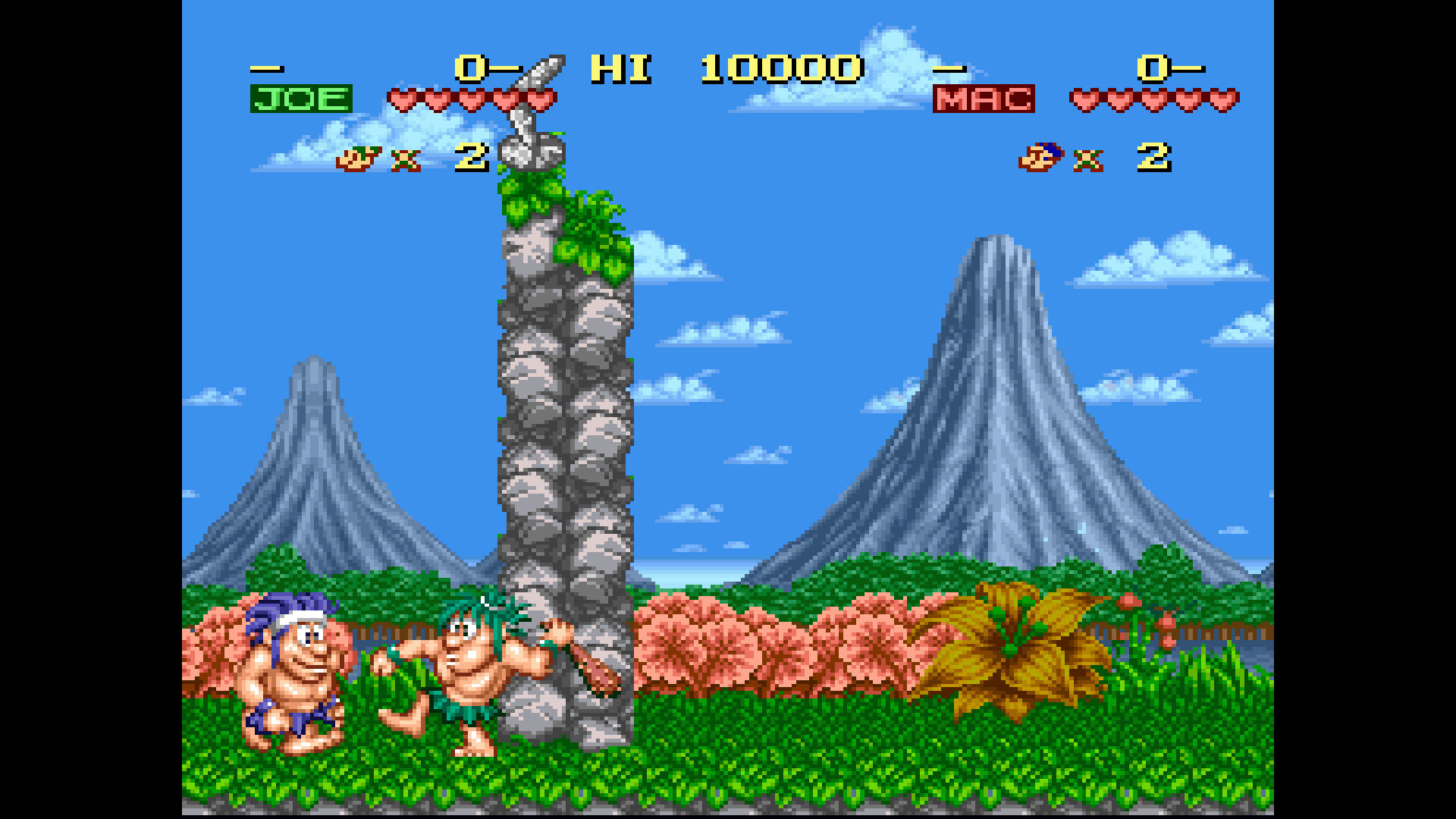
Joe & Mac: Caveman Ninja delivers pure, old-school arcade run-and-gun action. You dash from left to right across twelve compact stages, flinging stone axes, boomerangs, and fireballs at prehistoric pests while clearing bottomless chasms.
The control scheme sticks to the basics, offering a standard hop, a higher somersault jump, and a chargeable weapon throw.
While undeniably entertaining in short bursts, especially in local two-player co-op where my partner and I constantly scrambled to snatch health-restoring meat drops first, the original entry definitely shows its age.
Hitboxes occasionally feel overly strict, and the lack of mid-air steering caused more than a few cheap plunges into pits during my playthrough.
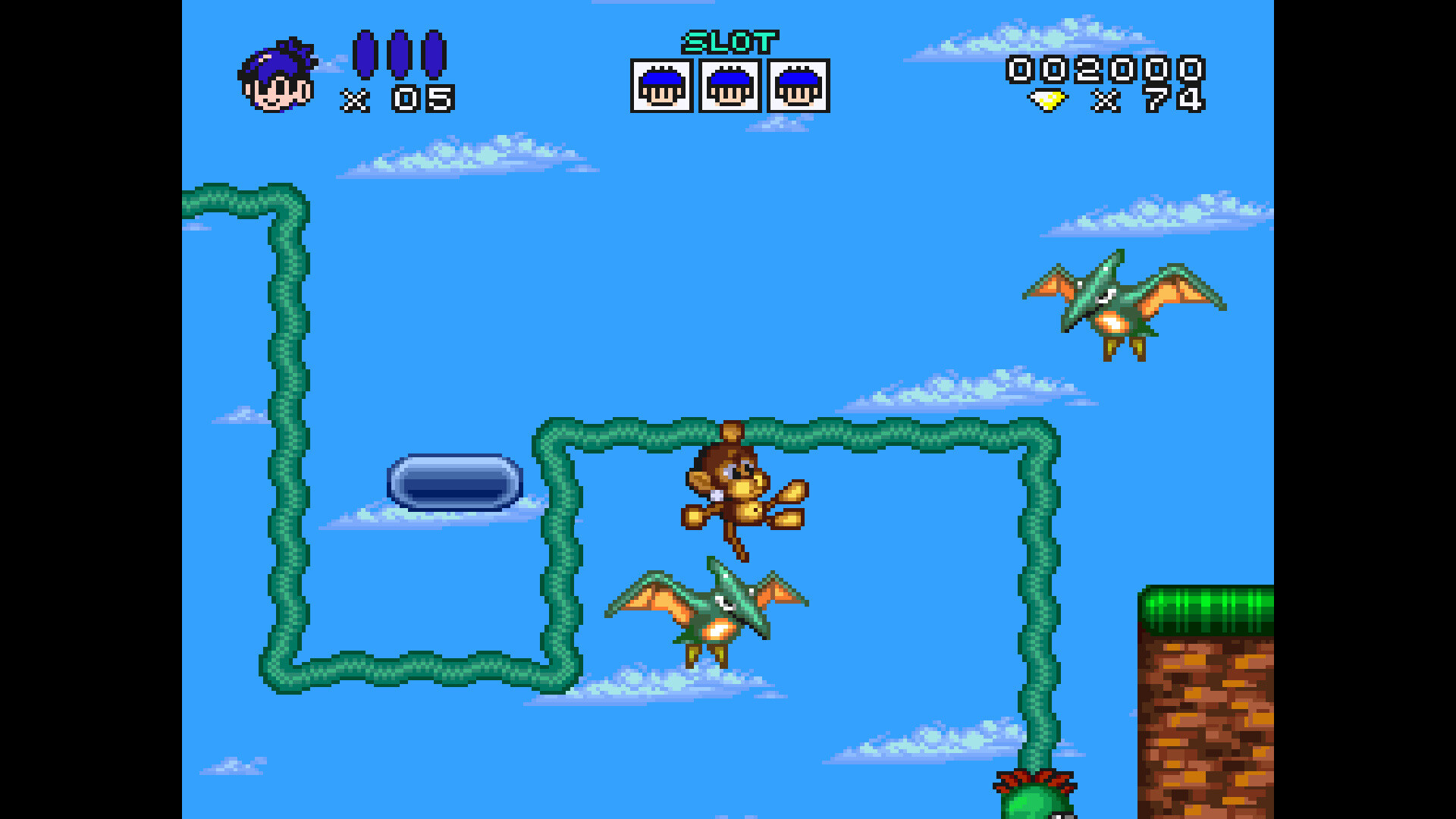
Jumping into Congo’s Caper immediately feels like playing a sleeker, far more responsive platformer. Congo moves with wonderful agility, capable of rolling beneath hazards, bouncing off enemy heads, and gathering red rubies to morph into a superpowered hero form.
Across its thirty-five brisk levels, the momentum rarely stalls, reminding me of the best 16-bit mascot platformers of the era.
I had a blast experimenting with the transformation mechanics, which turn tricky vertical climbs into thrilling bursts of speed.
Joe & Mac 2: Lost in the Tropics shifts gears by adding an overhead world map, branching level paths, and light role-playing touches.
Rather than simply sprinting toward the exit sign, you comb stages for hidden currency, buy gear upgrades in town shops, and tackle side mini-games.
The combat feels noticeably weightier and tighter than in the first entry, making showdowns against towering tyrannosaurs and armoured stegosaurs far more rewarding.
Best of all, Red Art Games has wrapped these classics in sensible modern conveniences. The real-time rewind button and instant save states completely strip away the quarter-munching frustration of nineties design.
Whenever a mistimed leap sent me tumbling into molten lava, tapping rewind let me fix my mistake without replaying an entire stage from scratch.
For veterans craving a proper test of endurance, the exclusive Boss Rush mode disables those safety nets, throwing you straight into back-to-back clashes with bosses from all three games against a ticking clock.
Performance stayed rock-solid throughout my time with the collection, with zero noticeable input lag or frame stutters, though the relatively short length of each campaign means you can comfortably wrap up the entire package over a single lazy weekend.
VISUALS
Visually, Clean Up Earth knows how to deliver a great before-and-after payoff. Every time I loaded into a new stage, I was greeted by bleak, smog-choked scenery, murky water, and depressing mountains of junk.
Yet the very second my Terra Cleaner swept over a patch of dirt, the world snapped back to life. Lush green grass sprouted underfoot, wildflowers bloomed along riverbanks, dark ponds turned crystal clear, and birds swooped back in to reclaim their home.
The art style goes for a bright, slightly cartoonish look that feels warm and welcoming rather than gritty or overly realistic.
Whether I was tidying up sun-soaked beaches, rugged mountain valleys, or secretive desert bases, watching an entire map shift from a lifeless dump into a thriving paradise never got old.
That instant visual feedback is easily the strongest reward the game offers.
Look a little closer, though, and the presentation starts to show its budget roots. Character models and animations feel noticeably stiff, and the four categories of rubbish look virtually identical whether you are cleaning up a tropical island or a snowy ridge.
I also noticed plenty of visual pop-in and occasional frame-rate hiccups whenever crowded multiplayer lobbies triggered dozens of environmental transformations at once.
The big picture looks lovely, even if the finer details lack polish.

audio
The audio across Joe & Mac Retro Collection is pure, unfiltered nostalgia that burrows straight into your brain.
Driven by the Super Nintendo’s unmistakable sound chip, the soundtracks for all three titles serve up energetic synth grooves and bouncy tribal percussion that suit the playful prehistoric setting down to the ground.
From the driving, adventurous beats of the opening jungle levels in Caveman Ninja to the breezy, upbeat village tunes in Lost in the Tropics, the music keeps the pace brisk from start to finish.
Sound effects are equally crisp and cartoonish. Every whack of a stone club lands with a meaty thud, foes let out ridiculous yelps when squashed, and chomping down on giant hunks of dinosaur meat triggers a comical crunch that instantly took me back to playing on a living room rug in the nineties.
There is no proper voice acting beyond the occasional compressed grunt or vocal sample typical of 16-bit hardware, yet those punchy audio cues tell you everything you need to know during frantic platforming segments.
One of my personal favourite touches on the main menu is the dedicated jukebox player, which lets you queue up and enjoy the complete musical scores from all three games whenever you like.
Audio emulation sounds clean and accurate throughout, steering clear of the static or pitch warping that sometimes ruins cheaper retro re-releases.
Although a handful of shorter stage tracks in the first game can grow slightly repetitive if you get bogged down on a tough jump, the audio package remains one of the compilation’s biggest triumphs.

final thoughts
Joe & Mac Retro Collection is a thoughtfully curated time capsule that celebrates an endearing, slightly eccentric corner of 16-bit gaming history.
By bundling Caveman Ninja, Congo’s Caper, and Lost in the Tropics, alongside their uncensored Japanese editions, Red Art Games has put together a release that feels cohesive, respectful, and genuinely joyful to play.
Adding rewind controls, save states, tasteful display filters, and a rich archival gallery ensures that these thirty-year-old platformers feel inviting rather than punishing.
Of course, the bundle does come with a few caveats. Anyone expecting intricate, modern platforming physics will likely find the original Caveman Ninja a touch stiff and repetitive today, and the combined runtime across all three adventures is fairly modest.
Because these are faithful emulations rather than ground-up remakes, every minor quirk of early nineties level design remains right where Data East left it.
Even so, I had a terrific time clubbing dinosaurs, comparing regional versions, and pushing my reflexes in the new Boss Rush mode.
Whether you grew up renting these cartridges for weekend sleepovers or simply appreciate colourful 16-bit platformers brimming with charm, Joe & Mac Retro Collection is an easy recommendation that delivers plenty of retro fun.
Joe & Mac Retro Collection is a charming, faithfully preserved bundle that pairs three distinct 16-bit platformers with smart modern features and impressive archival extras. While the opening entry shows a few rough mechanical edges, the variety across the trilogy and the care put into the presentation make this a thoroughly entertaining trip back to the Stone Age.
I’d like to extend a huge thank you to the developers and publishers for giving me the opportunity to experience and review Joe & Mac: Retro Collection. It’s been an absolute pleasure getting stuck into another great game!
And, of course, a massive thank you to all of you for taking the time to read my review. Your continued support means a great deal to me and everyone here at IndieCritical. We hope to see you again for the next one!
A code for Joe & Mac: Retro Collection was provided for review purposes.
Positives
✅ Strong Variety Across Three Titles: Bundling Caveman Ninja, Congo’s Caper, and Lost in the Tropics showcases a clear evolution from simple arcade action to agile mascot platforming and light RPG mechanics.
✅ Uncensored Japanese Editions: Including the original Tatakae Genshijin ROMs restores cut opening scenes and dialogue quirks alongside the standard Western localisations.
✅ Thoughtful Modern Conveniences: Real-time rewind, instant save states, and a dedicated Boss Rush mode make the classic difficulty accessible without sacrificing challenge.
✅ Rich Archival Extras: The digital museum features rotatable 3D scans of boxes, cartridges, manuals, and original concept sketches, paired with a full soundtrack jukebox.
✅ Vibrant Presentation & Smooth Emulation: Colourful 16-bit pixel art, punchy SNES audio, custom screen borders, and a tasteful CRT filter run with zero noticeable input lag.
Negatives
❌ Dated Mechanics in the First Entry: The original Caveman Ninja suffers from strict hitboxes, stiff mid-air control, and occasionally repetitive stage loops.
❌ Modest Overall Runtime: Each individual campaign is fairly brief, meaning dedicated players can finish the entire compilation over a single weekend.
❌ Pure Emulation Over Remakes: Because these are faithful ports rather than modernised remakes, all the minor quirks of early nineties level design remain intact.

I am a New Jersey-based game reviewer, future behavioral therapist, and lifelong gamer with a deep appreciation for the human stories behind interactive worlds. With a professional background rooted in youth advocacy and mental health studies, I bring an empathetic, people-first lens to game criticism, exploring how mechanics, atmosphere, and narrative resonate with players. Whether diving into retro-inspired RPGs or hidden indie gems, I love sharing honest critiques and fostering positive spaces for everyone.
Written by

Kitty
@IndieKitty