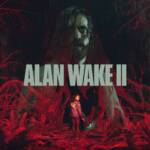
When you think about developers that know how to tell an incredibly good story, Remedy Entertainment is definitely one that comes to mind. You had the dark neo-noir streets of New York in Max Payne, one of my personal favourites, to the strange and mysterious world of Control, Remedy has always had a way of creating games that pull you into their worlds and make you want to uncover every little detail.
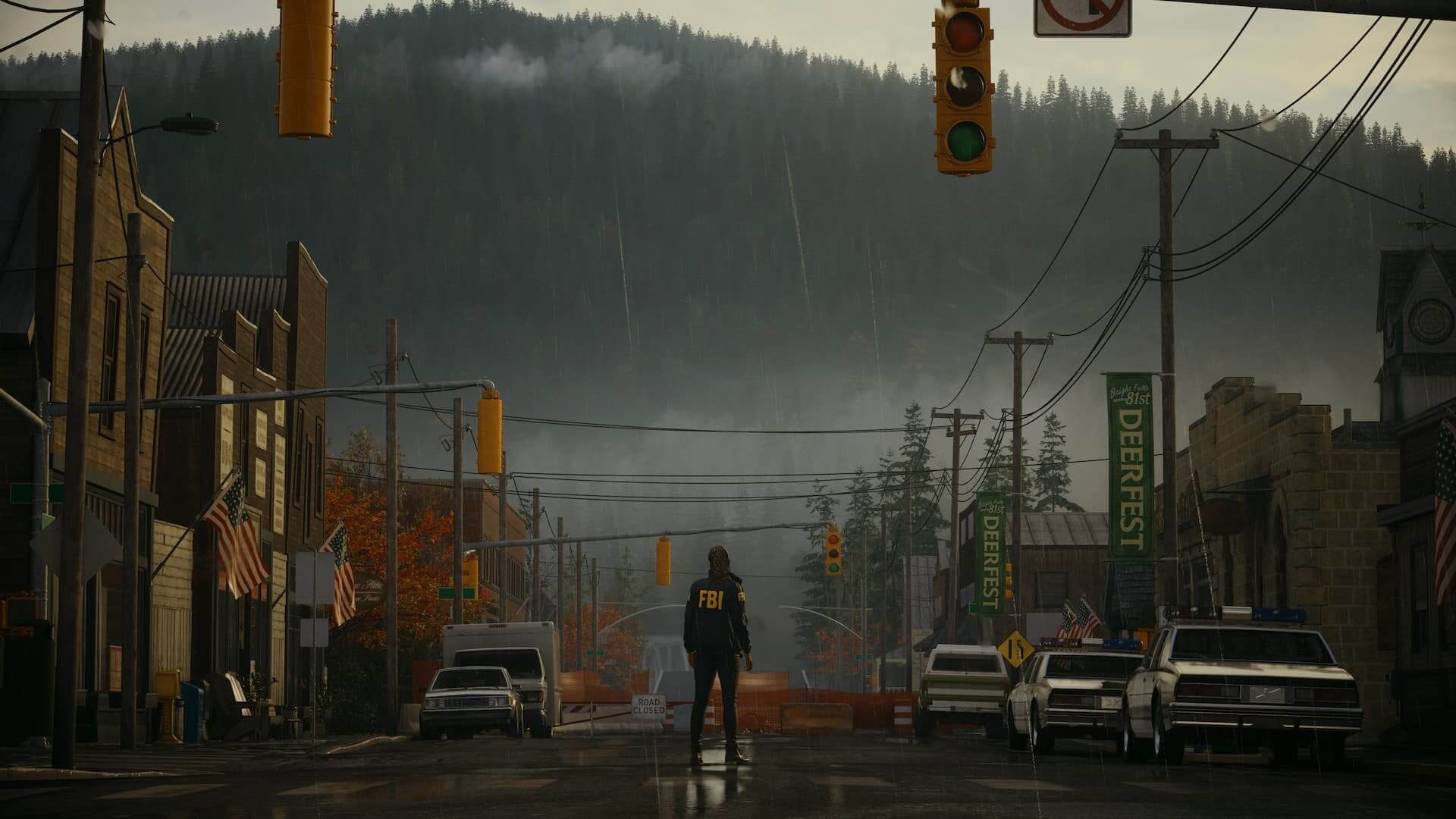
Now, after all these years, we’re heading back to Bright Falls.
Alan Wake 2 takes us back into the darkness, picking up 13 years after the events of the first game and throwing us into a story filled with mystery, horror and some seriously strange moments.
I’ve been waiting a long time to see where Remedy would take Alan’s story next, and after finally getting the chance to step back into the darkness, I can safely say this isn’t the same Alan Wake experience we had before.
So, grab your flashlight, keep an eye on the shadows and whatever you do, don’t get too comfortable.
Because we’re heading back to Bright Falls.
Are you scared of the dark?
hello darkness my old friend
13 years after the events of the original game, following the mysterious disappearance of writer Alan Wake and his continued attempts to escape the Dark Place. But rather than simply picking up where the first game left off, Remedy throws us straight into another mystery.
The game opens with a naked, bald man stumbling through a dark forest, completely confused about where he is and desperately trying to escape whatever is hunting him. It’s an incredibly strange introduction, but this is Remedy we’re talking about.
Things are about to get much worse. That opening sequence ends in a brutal murder at the hands of a mysterious group known as the Cult of the Tree, setting the stage for the investigation that follows.
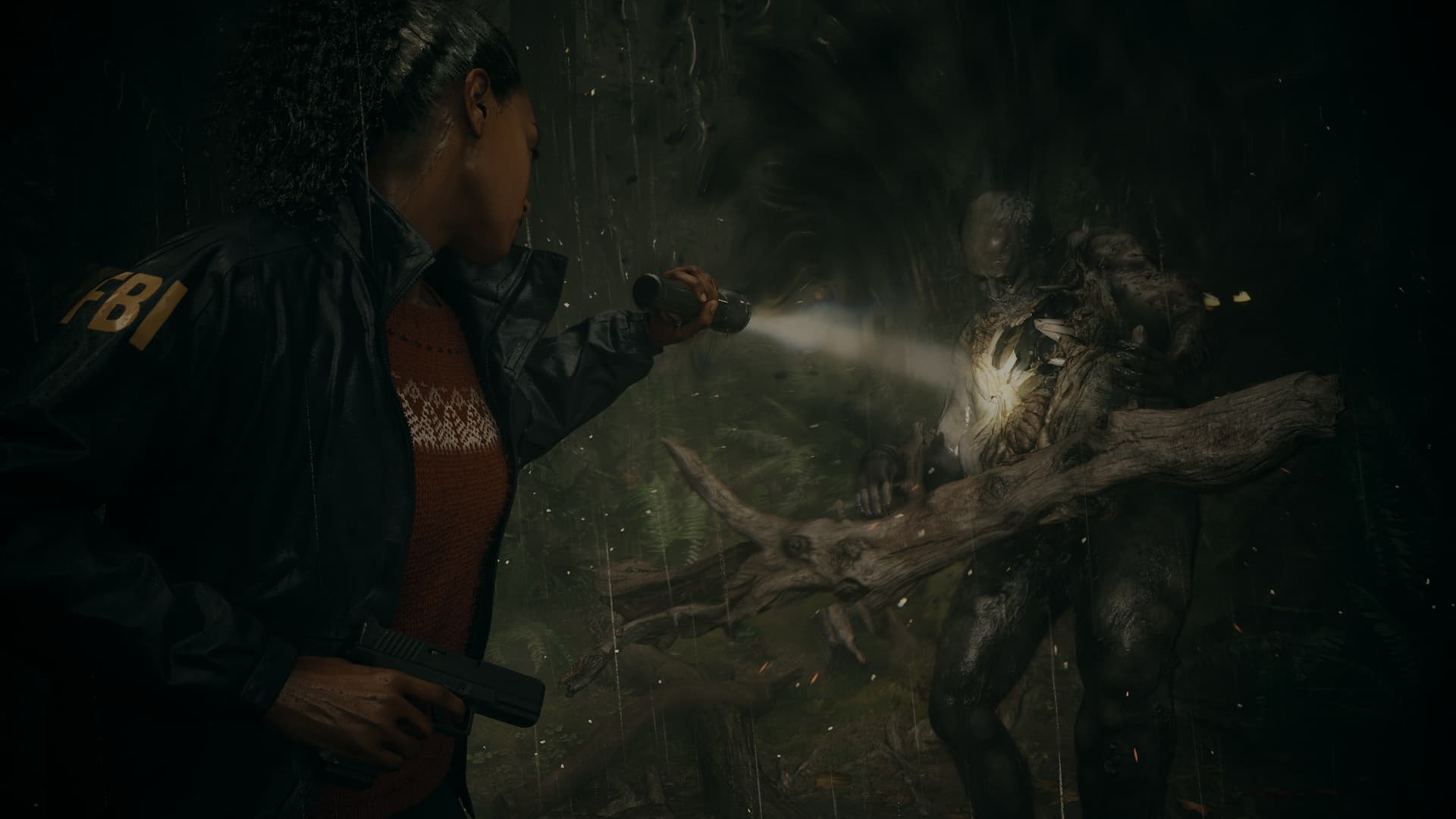
This is where we’re introduced to one of Alan Wake 2’s two main protagonists, FBI agent Saga Anderson.
Saga and her partner, Alex Casey, arrive in Bright Falls to investigate the murder, but what initially looks like a straightforward case quickly spirals into something far more sinister. Pages from a horror story are appearing. People are being murdered. The Cult of the Tree is operating in the shadows. And somehow, a fictional story appears to be becoming reality.
Saga’s investigation takes her through Bright Falls, Cauldron Lake and Watery as she attempts to understand exactly what is happening. What makes her story particularly interesting is how Remedy gradually turns her from an FBI investigator simply following a case into someone who is personally caught up in the nightmare.
Then there’s Alan.
Still trapped within the Dark Place, Alan is desperately trying to find a way out of his nightmare prison. His weapon isn’t simply a gun or a flashlight this time. It’s his writing. Alan is attempting to rewrite reality itself, using his crime novel and the world around him to create a path towards freedom.
And this is where Alan Wake 2 becomes something completely different. For the first time, we’re able to experience two interconnected stories from two completely different perspectives. Saga’s journey feels more grounded in investigation, crime and survival horror, while Alan’s chapters throw you into a surreal nightmare where reality itself seems to have stopped following the rules.
After reaching a certain point in the game, you’re given the freedom to decide which character’s story you want to continue with first. That freedom makes the experience feel far more personal because you aren’t simply being dragged from one chapter to another. You’re deciding which part of this increasingly bizarre puzzle you want to uncover next. The two stories eventually begin to intertwine in some incredibly clever ways.
And then there’s the Dark Place.
The first Alan Wake had a darkness to it that gave me serious Stranger Things vibes. There was something almost familiar about it, particularly with the Dark Place feeling like Remedy’s own version of the Upside Down. Alan Wake 2 takes that concept and pushes it much further.
This time, I genuinely didn’t know what I was going to encounter around the next corner. The horror is unpredictable.
The game can suddenly throw something at you when you’re least expecting it, and some of the horror flashes are deliberately designed to catch you completely off guard. One second you’re walking through an apparently normal environment and the next you’re wondering whether you should have brought a change of underwear.
The game understands that sometimes the anticipation of something happening is more frightening than the thing itself. And Alan Wake 2 uses that incredibly well.
It also embraces the idea of psychological horror in a way that makes you question what is real, what has been written and what is being manipulated by the Dark Place. For Alan, there is only one way out.
He needs to write himself out.
It’s a simple concept on paper, but Remedy turns it into something much more complicated as the story progresses. Alan Wake 2 feels like a game where the story isn’t simply something you’re watching unfold. The story is the gameplay.
The world changes because of it. Characters change because of it. And sometimes, even the environment itself changes because of what is being written. Remedy has created a genuinely gripping psychological horror experience here, and for me, the story is one of the strongest aspects of the entire game.
It’s dark, unpredictable, strange and at times completely insane.
But somehow, it all works.
i've come to talk to you again
Alan Wake 2 takes the foundations of the original game and completely changes the way they work within a survival horror experience. The flashlight is still one of your most important tools, but this isn’t the same action-focused experience as the first game.
Resources matter.
Ammo matters.
Batteries matter.
And wasting either can leave you in a very uncomfortable situation!
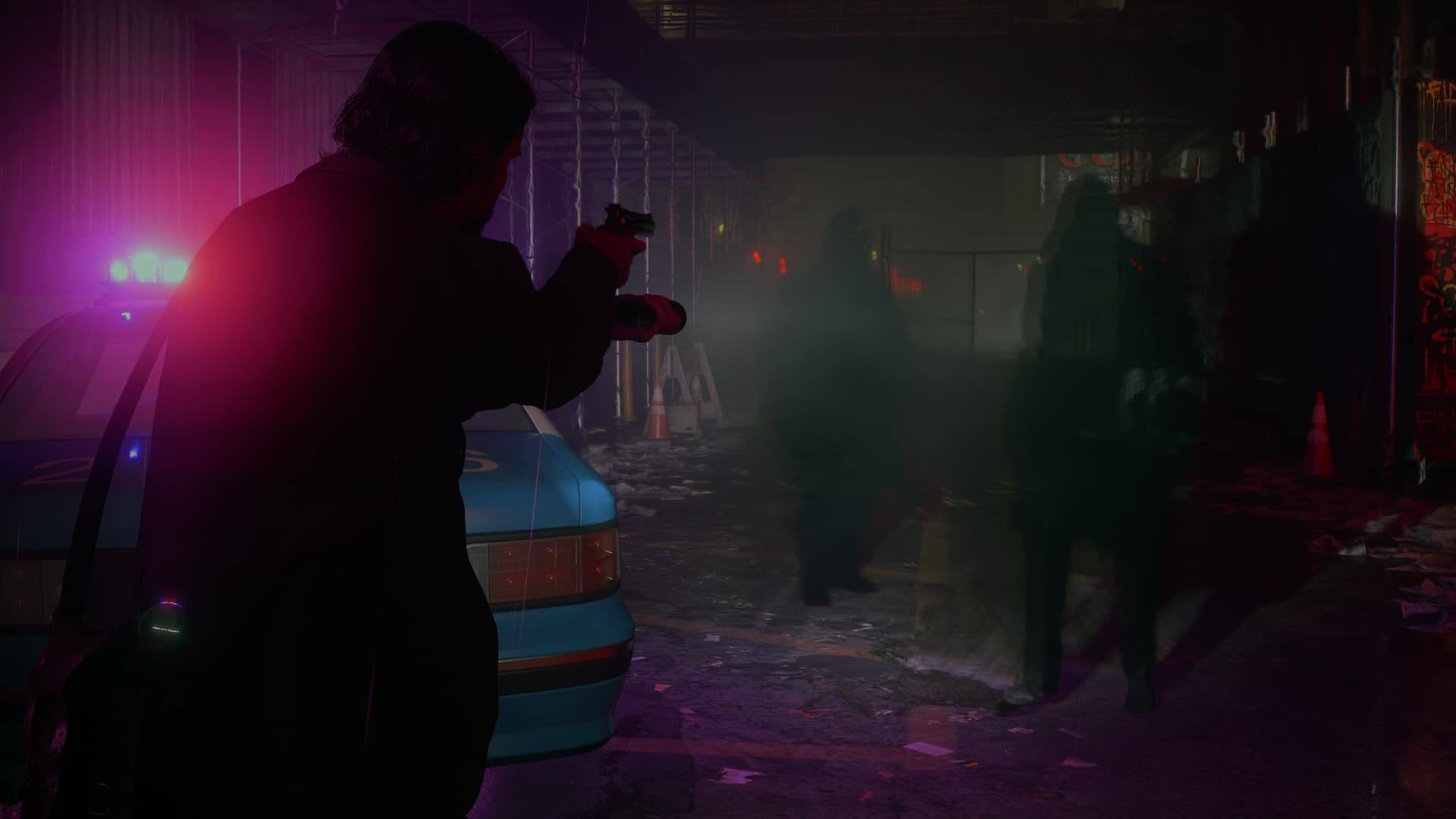
The basic combat loop remains familiar. Use the flashlight to weaken the darkness surrounding an enemy, expose them, then use your weapon to put them down.
Simple, right?
Well, not always.
Enemies are considerably more dangerous this time around, and combat can quickly become chaotic when you’re dealing with multiple enemies at once. The game constantly encourages you to think before you shoot because ammunition isn’t something you can simply throw away without consequences. That creates a completely different rhythm.
You’re no longer running into every encounter looking for an excuse to empty a magazine. Now you’re looking for an opportunity to survive. And sometimes the best option is simply to run!
One of my favourite aspects of Alan Wake 2 is how much tension the environments create. There are moments where everything becomes suspiciously quiet. And when Alan Wake 2 becomes quiet, I immediately start thinking:
“Yeah… something’s about to happen.”
Safe Havens and sources of light provide brief moments where you can breathe, reorganise your inventory and prepare yourself for whatever comes next. But outside those safe areas, you’re never entirely comfortable. That feeling of being watched is one of the things the game does incredibly well.
You can be walking through a forest, investigating a building or exploring a dark street and constantly find yourself looking over your shoulder because you don’t know whether something is about to appear. It’s almost like the game is playing with you. And honestly, sometimes it feels like the game knows exactly when you’re starting to relax.
Then BAM! Something happens.
The horror isn’t just coming from the enemies themselves. It’s coming from the uncertainty. Now we get into Saga’s Investigation Playing as Saga introduces another major part of the experience. Saga isn’t simply running around shooting Taken. She’s an FBI agent trying to solve a case. And Remedy actually makes that part of the gameplay. You will uncover clues, meet new characters and put the pieces together to uncover the truth.
The Mind Place acts as Saga’s mental space, where she can organise evidence, review information, profile characters and connect clues together. It’s essentially a physical representation of her thought process.
Instead of opening a traditional menu and scrolling through a list of objectives, you’re stepping into Saga’s mind and piecing together the investigation yourself.
The Case Board allows you to connect information and track different aspects of the investigation, while profiling characters can reveal additional information and help Saga understand the people involved. It makes you feel much more like a detective.
Who needs Scooby and the gang when you’ve got Saga? The game still gives you direction when you need it, but it doesn’t completely solve everything for you. No hand holding unfortunately.
You still need to pay attention. You still need to look around. And sometimes you need to stop and actually think about what the game has shown you. That makes the investigation feel rewarding rather than simply being another checklist of objectives.
Alan’s gameplay is where things become seriously weird. While Saga has the Mind Place, Alan has the Writer’s Room. This is where Alan can manipulate the story he’s writing and change elements of the world around him. Rather than simply moving from one objective to another, you’re able to experiment with different story elements to alter the environment and create new paths through the Dark Place.
It feels like Remedy has taken the idea of writing a story and turned it into an actual gameplay mechanic. You’re not simply reading Alan’s story. You’re helping him write it. The Dark Place itself follows its own dream-like logic, which makes exploring Alan’s sections feel completely different from Saga’s investigation.
You’ll also encounter Echoes, where positioning yourself correctly can reveal hidden pieces of information and advance the story. These moments can feel like you’re solving a visual puzzle, trying to line up the right perspective to uncover something that was hidden in plain sight. It’s clever, creative and unmistakably Remedy.
Alan Wake 2 also gives you plenty of reasons to explore. The world isn’t simply there to look pretty. There are hidden rooms, supplies, collectibles, puzzles and other secrets scattered throughout the environments. Some of the puzzles can be surprisingly challenging, particularly when you’ve missed a clue or haven’t found the information needed to solve them.
It creates that classic feeling of putting together a giant jigsaw puzzle. You might find one piece of information early on and not understand its importance until much later. Then suddenly everything clicks. That’s one of the reasons I enjoyed exploring rather than simply rushing through the main story.
There are also upgrade systems for both characters.
Alan can discover Words of Power hidden throughout the Dark Place. These allow him to unlock different upgrades that can alter aspects of his abilities. Saga has her own progression system, with upgrades tied to the resources and discoveries she makes throughout her investigation.
Neither character feels identical, and that’s important.
Saga feels like an investigator trying to survive an increasingly impossible situation. Alan feels like a writer attempting to manipulate a nightmare using nothing but his imagination and whatever scraps of reality he can control. That distinction gives both sides of the campaign their own identity.
One piece of advice, though:
Don’t enter the Mind Place or Writer’s Room while you’re standing somewhere dangerous. These aren’t your traditional pause menus. The world outside doesn’t politely stop while you’re inside your character’s head.
The enemies will not walk by and be like “Don’t worry we can wait”, they will not wait. Trust me.
You do not want to be calmly organising your thoughts while something outside is preparing to rip your face off.
i dont want to be alone in the darkness
Remedy Entertainment has always had a talent for creating atmospheric worlds, but with Alan Wake 2, they’ve taken that to another level.
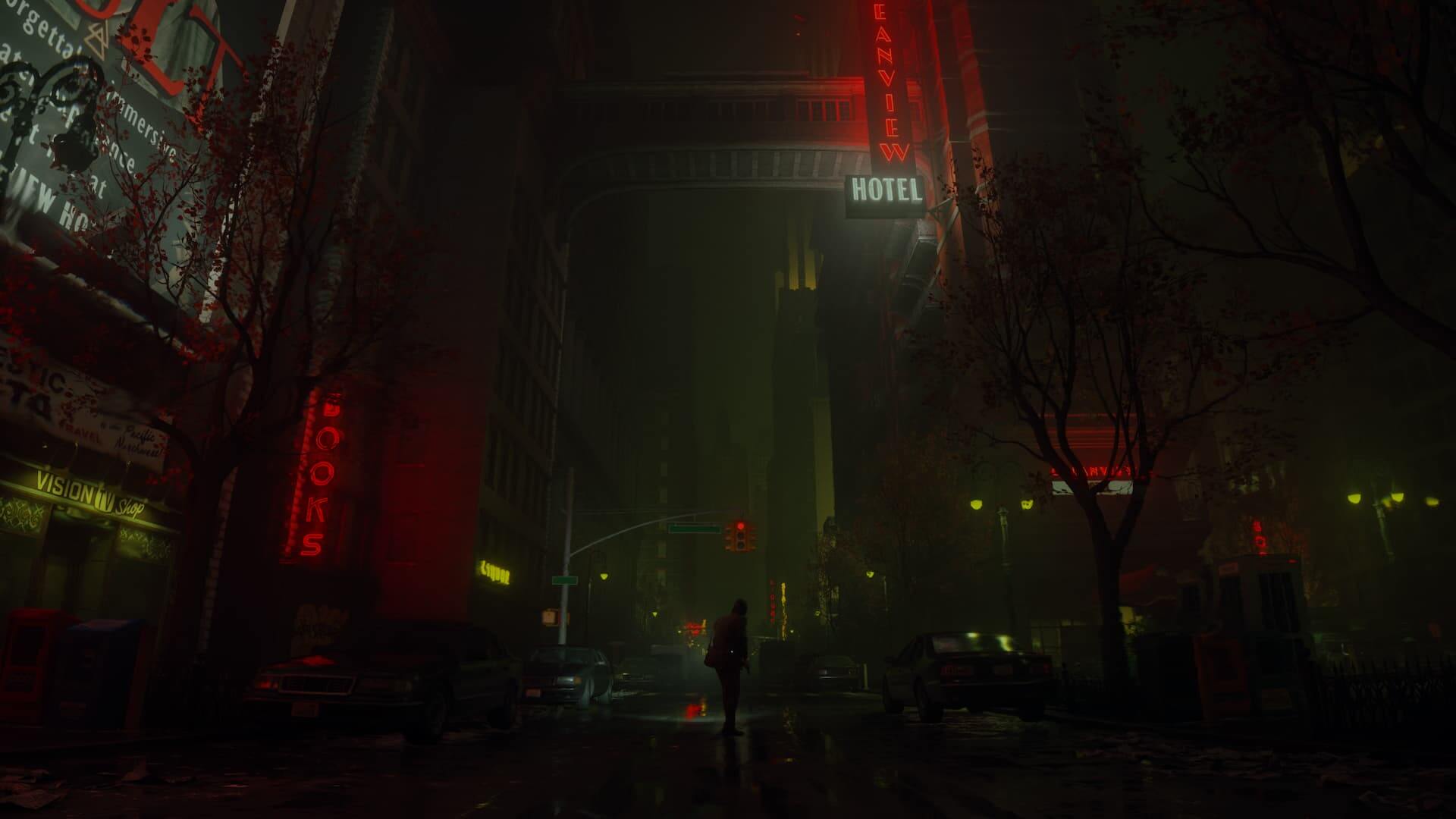
From the dark forests surrounding Cauldron Lake to the streets of Bright Falls and the twisted version of New York found within the Dark Place, every location feels completely different, yet they all have that unmistakable Remedy style. Nothing feels like it’s there just to fill the map. The environments are designed to make you look around, explore and, more importantly, wonder what the hell could be hiding around the next corner.
The lighting is easily one of my favourite parts of the game.
Light isn’t just there to make the environments look pretty or add to the ray tracing. It’s part of the gameplay, the atmosphere and even the storytelling. You’re constantly moving between darkness and light, and that contrast makes the darker areas feel even more threatening. A simple street lamp or a safe source of light can suddenly feel like the safest place in the world because you know what’s waiting for you once you step back into the shadows.
The Dark Place takes this even further, with Remedy completely throwing normal reality out of the window. The environments can feel dreamlike, distorted and almost impossible to understand, which fits perfectly with the psychological horror the game is trying to create.
Then you have the way Alan Wake 2 mixes traditional in-game cinematics with live action footage. There were moments where I genuinely forgot I was playing a video game and felt like I was watching a horror series instead. The transitions between the game and live-action are incredibly well done, and they help blur that already thin line between reality and fiction.
The performances deserve a massive amount of credit here too.
The cast aren’t simply standing around delivering dialogue to move the story along. They actually sell the bizarre world Remedy has created. Whether you’re following Saga’s investigation, watching Alan try to escape the Dark Place or seeing some of the completely batshit situations Remedy throws at you, the performances make everything feel believable within a world that absolutely should not make sense.
And then there’s the sound design.
The soundtrack is haunting, atmospheric and perfectly suited to the game’s tone. Petri Alanko’s score knows when to build tension and, just as importantly, when to pull back and let the silence do the work. Sometimes it’s the lack of music that makes a scene uncomfortable. You’re walking through the darkness, listening to your surroundings, waiting for something to happen, and that silence starts getting louder than any soundtrack ever could.
Then Remedy decided to completely throw the rulebook out of the window with “We Sing.” An entire musical sequence. In my horror game. And somehow, it works.
The performance from the Old Gods of Asgard became one of the most memorable moments in the entire game for me. It’s fantastic, it’s completely unexpected, and it’s exactly the sort of thing that makes Alan Wake 2 feel different from almost anything else I’ve ever played.
Only Remedy could make me sit there thinking:
“I’m playing a psychological horror game… what? Why am I watching a musical?”
And you know what? I loved every second of it. My favourite level by far! When the visuals, performances, sound design and music all come together, Alan Wake 2 stops feeling like you’re simply playing through a horror game and starts feeling like you’re experiencing a strange, fucked-up television series that you somehow get to control.
And honestly, I wouldn’t have it any other way.
good night good luck
Alan Wake 2 was a game I had been waiting a very long time for. I’ve been a fan of Remedy Entertainment for years, so finally getting the chance to return to the world of Alan Wake felt special. But there was something else about this game that made the experience even more personal for me.
Growing up, I remember watching my late brother Darren playing through the first two Max Payne games. Seeing Sam Lake return to the screen as Alex Casey, alongside all those little connections to Remedy’s history, felt like taking a trip back through those memories. Alex Casey’s character was basically Max Payne!
There’s something strangely fitting about that. Remedy has always been a studio that isn’t afraid to experiment. They don’t simply make straightforward games.
They create worlds. They create stories. And sometimes they completely blur the line between the two. Alan Wake 2 is probably one of the best examples of that.
I loved the investigation. I loved the survival horror mechanics. I loved the Dark Place. I loved the strange puzzles. I loved the live-action sequences. I loved the huge musical number.
Most importantly, I loved how unpredictable the entire experience felt.
There were moments where I thought I understood exactly what was happening, only for Remedy to pull the rug out from underneath me and send me somewhere completely different.That’s what made the journey so memorable.
Alan Wake 2 isn’t simply about surviving monsters in the darkness. It’s about surviving a story that doesn’t want to play by the rules. And somehow, Remedy manages to make that story feel like both a game and a movie without sacrificing what makes either medium special.
If you’re a fan of Resident Evil, Max Payne, psychological horror or just genuinely strange storytelling, Alan Wake 2 deserves your attention. This is a game that isn’t afraid to take risks, and those risks are exactly what make it stand out.
Remedy Entertainment has once again proven that when it comes to narrative-driven games, they know how to pull you into a world and make you forget about everything outside it. So grab your flashlight. Check your ammunition. Watch the shadows.
And whatever you do…
Don’t trust the story.
A key for Alan Wake 2 was provided for review purposes.
Positives
✅ An incredible psychological horror story – that constantly keeps you guessing and knows exactly when to throw something unexpected at you.
✅ Saga and Alan offer two very different experiences – with their separate stories, mechanics and environments giving the game plenty of variety.
✅ Fantastic atmosphere and world design – from the forests and streets of Bright Falls to the twisted reality of the Dark Place.
✅ The Mind Place and Writer’s Room are brilliant additions – making investigation, storytelling and progression feel like part of the world rather than standard menus.
✅ Excellent performances – with the cast bringing Remedy’s strange, unsettling and sometimes completely fucking bonkers story to life.
✅ The combination of gameplay and live-action footage – works incredibly well creating moments that genuinely feel more like you’re watching a horror series than playing a game.
✅ The soundtrack and sound design are outstanding – building tension through both music and carefully placed silence.
✅ “We Sing” is one of the most memorable sequences I’ve experienced in a game –proving Remedy isn’t afraid to do something completely different.
✅ Plenty of exploration and secrets – rewarding players who take their time rather than simply following the objective marker.
✅ Combat feels tense and purposeful – with limited resources making every encounter feel more dangerous.
Negatives
❌ Some puzzles can be frustrating – particularly when the solution isn’t immediately obvious and you’re left searching the environment for that one missing clue.
❌ The inventory space can become frustrating – especially when you’re trying to manage weapons, ammunition, healing items and other resources while exploring.
❌ Backtracking can become a bit of a chore, particularly when you’re returning to previously visited areas to find collectibles, resources or optional content.
❌ The pacing isn’t always consistent, with some sections moving at an incredible pace before slowing down considerably during certain investigative moments.
Co-owner of Indie Critical. I’m passionate about highlighting independent voices in film, games, and culture. I focus on honest, thoughtful reviews and love helping great indie projects get the recognition they deserve. When I’m not writing or editing, I’m probably diving into the latest hidden gem or discovering the next big thing in the indie scene.
Written by

Lewis Langton