Whenever life gets a bit hectic, I find myself gravitating towards games that let me shut off my brain and impose a little order on a messy world.
Developed and published by Magic Pockets, Clean Up Earth scratches that exact itch. Available on PC, PlayStation 5, Xbox Series X/S, and Nintendo Switch 2, this cosy simulation hands you a high-tech vacuum and asks you to heal a heavily polluted planet.
As you clear away heaps of rubbish, lifeless grey dirt immediately transforms back into vibrant greenery and attracts returning wildlife.
What initially sold me on the game, though, is its real-world heart. By taking part in large community clean-up sessions, players actually unlock real-life micro-donations for established environmental charities without spending an extra penny.
Between the promise of a stress-free evening routine, cooperative lobbies for up to twenty-five people, and mysterious locations to tidy up, I was eager to dive in.
Still, once the novelty of vacuuming my first beach wore off, I had to ask myself whether the game has the polish and staying power to keep me hooked long-term.

story
If you are coming into Clean Up Earth hoping for a gripping, character-driven drama, you will want to adjust your expectations right away. Instead of heavy dialogue or cinematic cutscenes, the game leans on quiet environmental storytelling and a dash of light-hearted mystery.
You play as a silent eco-restoration worker travelling across more than twenty-three neglected locations, from serene coastal bays and snowy peaks to playful, conspiracy-inspired spots like Area 51 and the Bermuda Triangle.
The overarching message is simple, hopeful, and refreshingly free of doom-and-gloom lecturing.
As I worked my way through decades of piled-up junk, I began uncovering strange relics, cryptic markings, and forgotten remnants of older civilisations buried underneath the grime.
Clearing certain areas also triggers “quantum memories”, which project ghostly holograms showing how these places looked in their prime before humans left them to rot.
If you pick up the expanded Ultimate Edition, things get slightly livelier thanks to a mysterious dark force blocking off zones and bands of pesky pirates you have to chase away from protected areas.
Personally, I enjoyed the little burst of curiosity whenever my vacuum unearthed an odd artefact in the Nevada desert.
That said, the narrative quickly takes a back seat once you settle into your cleaning groove. Without memorable characters to bounce off, the lore feels more like a nice excuse to visit cool locations rather than a plot that genuinely pulls you forward.
gaMEPLAY
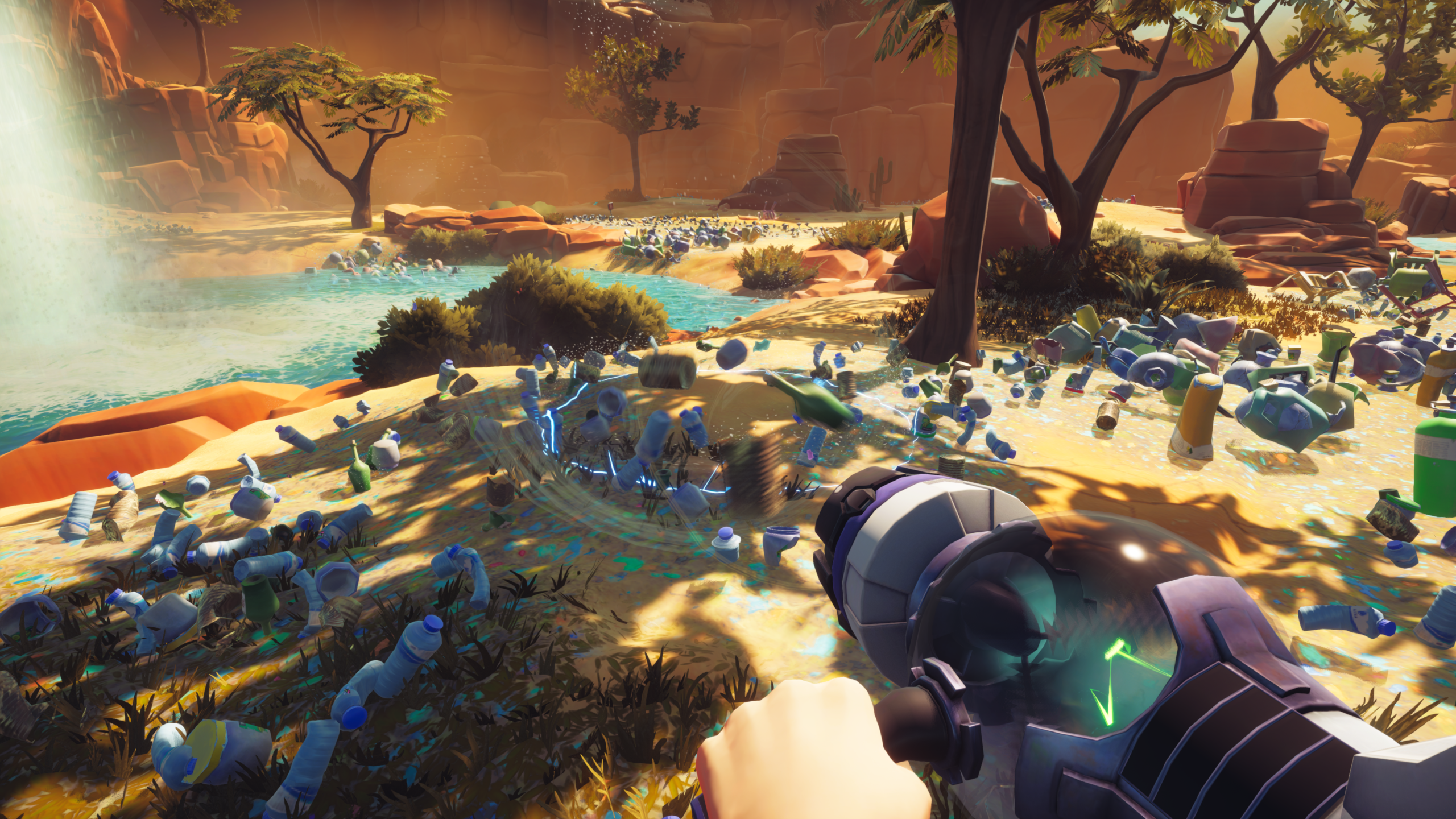
At its core, Clean Up Earth runs on a loop that is immediately easy to grasp: vacuum, recycle, and rebuild.
Your main piece of kit is the Terra Cleaner, an upgradeable vacuum that uses four colour-coded attachments to deal with different types of mess. One nozzle sucks up everyday litter like cans and wrappers; another breaks down bulky scrap metal and shipping containers, a third digs up buried waste from the soil, and a fourth safely contains hazardous toxic spills.
Everything you collect gets processed inside a portable lab, turning raw rubbish into coins and practical building supplies like wooden planks, ropes, and nails.
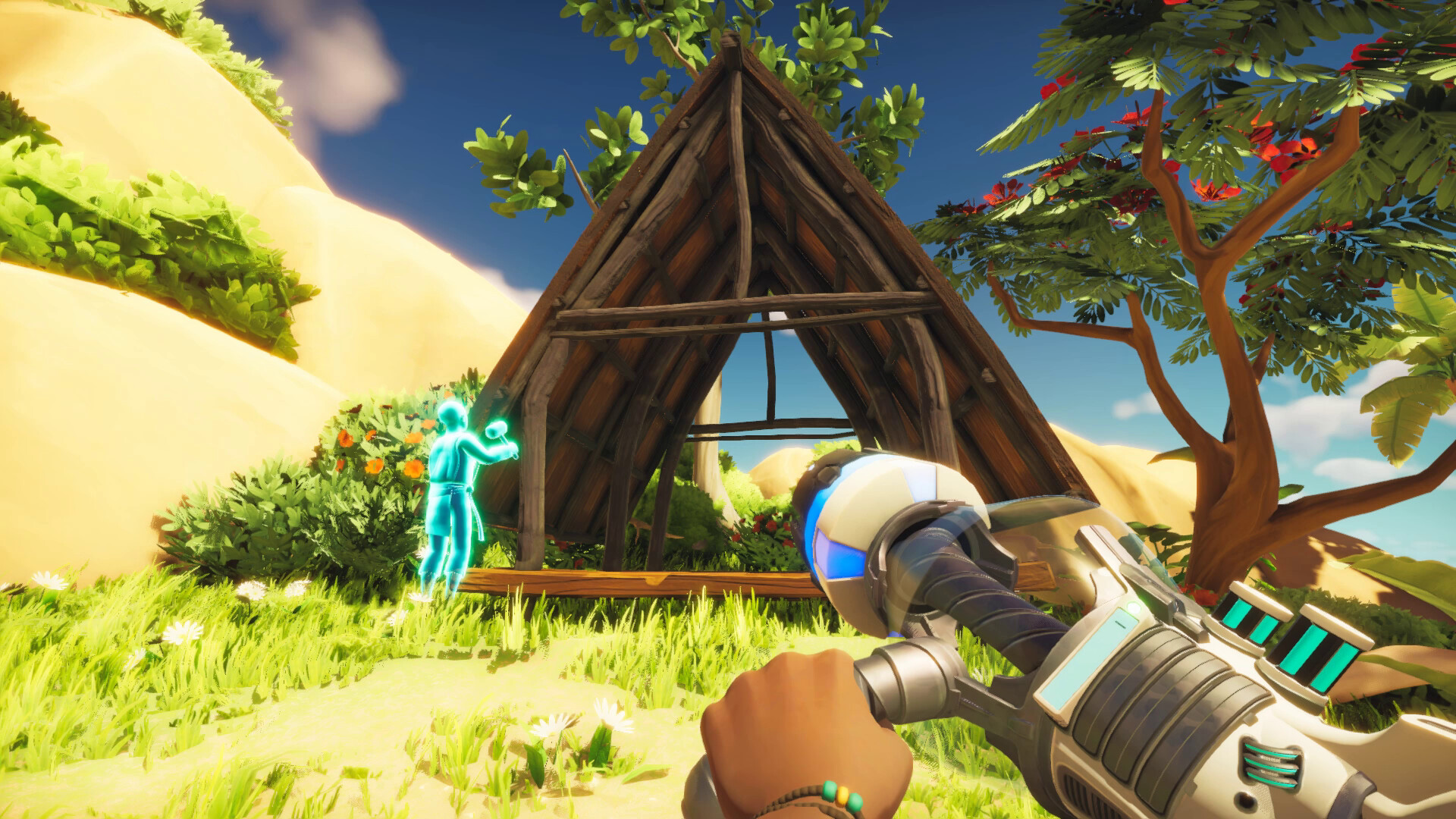
You then use those materials to fix broken bridges, raise ladders, and patch up pathways to reach new parts of the map.
One clever twist I really liked early on is that every new stage resets your attachments. Instead of breezing through with all your tools, you have to treat each level like a mini puzzle, hunting down the right nozzles on high ledges or behind locked gates.
Handy extras, like a proximity radar that beeps near stray litter and a tiny robot drone, also help when you are chasing that elusive final 1% of a map.
Unfortunately, the magic starts to fade once you reach the halfway mark. Later stages feel less like fresh challenges and more like bloated versions of the levels you have already beaten.
Worse, the upgrade economy hits some frustrating speed bumps. Several maps feature massive piles of debris that require expensive late-game upgrades or temporary, rentable power-boosters to clear, forcing you to replay older stages just to grind coins.
My little robot drone also tested my patience regularly, getting distracted by local wildlife or snagging itself on bushes instead of actually helping me clean.
Jumping into multiplayer breathes a lot of life back into the routine. Teaming up with friends in eight-player co-op or joining chaotic, twenty-five-player community lobbies turns overwhelming wastelands into lively, collaborative clean-up parties.
Watching dozens of people swarm a filthy coastline while knowing our collective progress helps real-world charities is genuinely uplifting.
Sadly, technical rough spots frequently sour the mood. I ran into glitches where bits of rubbish clipped underneath the ground, making 100% completion impossible, and a few levels let you accidentally spend crafted materials on the wrong bridge first, effectively soft-locking your progress.
On consoles, the lack of a reliable autosave combined with occasional crashes can also wipe out an hour of hard work in a heartbeat.
VISUALS
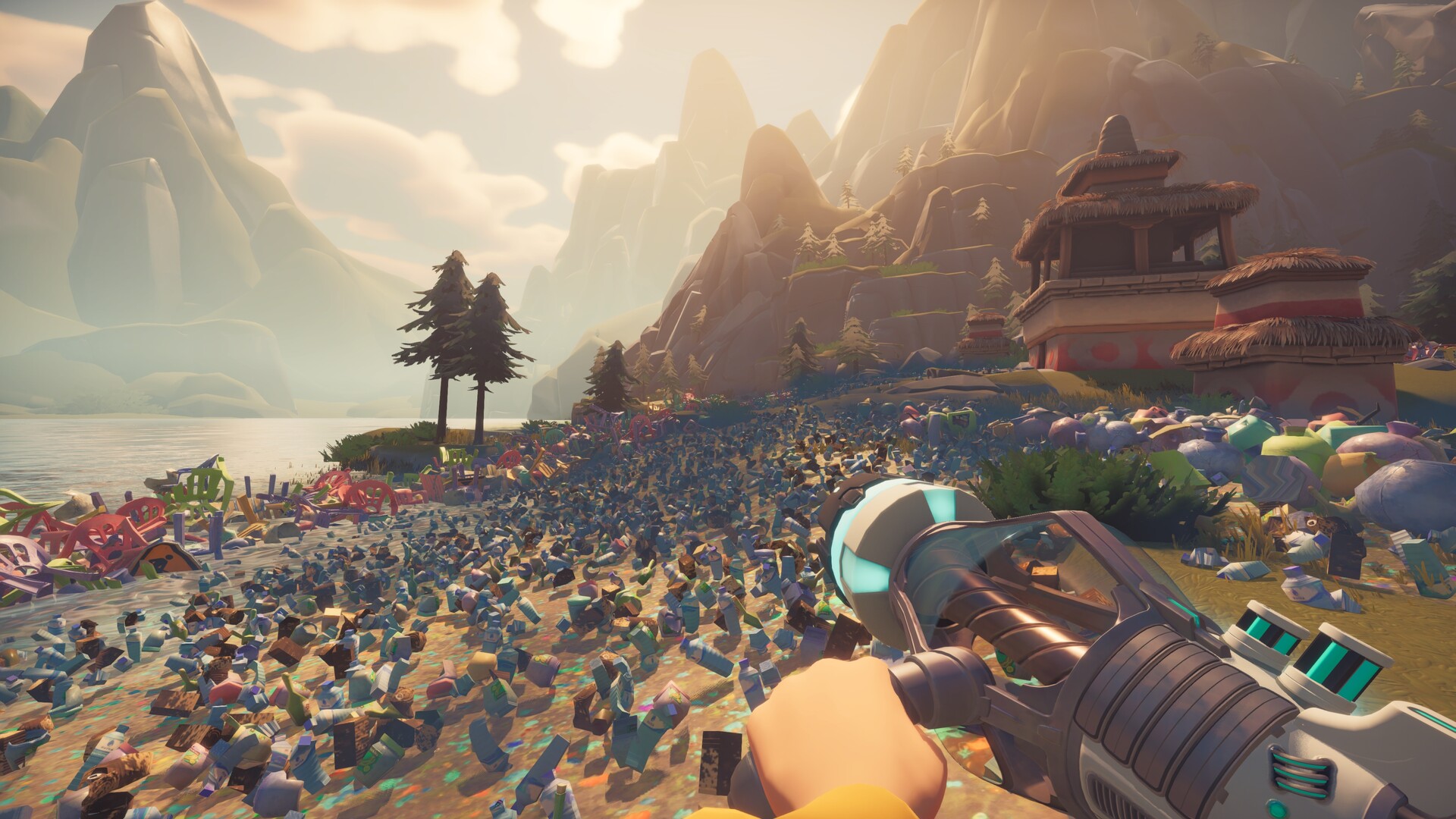
Visually, Clean Up Earth knows how to deliver a great before-and-after payoff. Every time I loaded into a new stage, I was greeted by bleak, smog-choked scenery, murky water, and depressing mountains of junk.
Yet the very second my Terra Cleaner swept over a patch of dirt, the world snapped back to life. Lush green grass sprouted underfoot, wildflowers bloomed along riverbanks, dark ponds turned crystal clear, and birds swooped back in to reclaim their home.
The art style goes for a bright, slightly cartoonish look that feels warm and welcoming rather than gritty or overly realistic.
Whether I was tidying up sun-soaked beaches, rugged mountain valleys, or secretive desert bases, watching an entire map shift from a lifeless dump into a thriving paradise never got old.
That instant visual feedback is easily the strongest reward the game offers.
Look a little closer, though, and the presentation starts to show its budget roots. Character models and animations feel noticeably stiff, and the four categories of rubbish look virtually identical whether you are cleaning up a tropical island or a snowy ridge.
I also noticed plenty of visual pop-in and occasional frame-rate hiccups whenever crowded multiplayer lobbies triggered dozens of environmental transformations at once.
The big picture looks lovely, even if the finer details lack polish.
audio
In a slow-paced, cosy game, good audio can make the difference between relaxing and nodding off, and Clean Up Earth only gets half of the equation right.
On the bright side, the environmental sound design is genuinely lovely. As you clear away pollution, the eerie silence of a wasteland gradually fills with soft breezes, rustling leaves, lapping water, and cheerful birdsong.
Hearing nature wake back up around you feels just as rewarding as seeing the grass grow.
For most of your playtime, however, the loudest thing in your ears is the steady hum of the Terra Cleaner. The soft whoosh and pop of rubbish vanishing into your nozzle has a pleasant, ASMR-style charm during a quick thirty-minute session, though that constant mechanical buzz can start to feel a bit grating if you play for hours on end.
Where the audio really trips over itself is the background music. Instead of giving you a soothing, continuous soundtrack while you work, the game ties its music to a collectible cassette radio.
Annoyingly, this radio burns through its battery life in no time and requires constant recharging or in-game cash to keep playing.
As a result, I spent most of my playthrough working in near silence.
With minimal voice acting and a soundtrack locked behind a frustrating battery mechanic, the audio feels like a missed opportunity.
final thoughts
Clean Up Earth is impossible to dislike on principle alone. Its heart is completely in the right place, and there is something genuinely special about winding down at the end of a long day with a game that turns your digital chores into real-world environmental support.
Vacuuming up pollution and watching nature bounce back in real time is soothing, intuitive, and wonderfully satisfying in short bursts.
Judged strictly as a game, however, Magic Pockets’ creation struggles to hold up over a full playthrough. Playing solo, the repetitive loop loses its spark once unfair upgrade costs force you to grind old levels for cash.
Throw in a clumsy drone companion, an irritating battery limit on the music, and serious bugs like soft-locks and missing autosaves, and the whole package often feels like an early-access build that needed a few more months in the oven.
If you want a peaceful, non-violent game to play alongside friends or younger family members, and you love the idea of gaming for a good cause, Clean Up Earth has plenty of wholesome charm to offer.
Dedicated fans of solo cleaning simulators, though, might find themselves wishing the developers had tidied up the mechanics just a bit more.
Clean Up Earth pairs a deeply satisfying visual restoration loop with an inspiring real-world charitable mission. While repetitive late-game grinding, awkward resource balancing, and frustrating technical bugs keep it from reaching its full potential, its relaxing pace and cooperative spirit still make it a decent, feel-good diversion.
I’d like to extend a huge thank you to the developers and publishers for giving me the opportunity to experience and review Clean Up Earth. It’s been an absolute pleasure getting stuck into another great game!
And, of course, a massive thank you to all of you for taking the time to read my review. Your continued support means a great deal to me and everyone here at IndieCritical. We hope to see you again for the next one!
A code for Clean Up Earth was provided for review purposes.
Positives
✅ Real-World Charitable Impact: Participating in community clean-up sessions unlocks genuine micro-donations for established environmental charities without extra cost to players.
✅ Satisfying Visual Transformations: Polluted, smog-choked wastelands immediately bloom with green grass, wildflowers, clear water, and returning wildlife as you clean
✅ Clever Early-Stage Puzzle Design: Resetting your four vacuum attachments at the start of each map turns finding the right tools into fun mini-exploration puzzles.
✅ Lively Multiplayer Modes: Support for eight-player co-op and massive twenty-five-player community lobbies makes large clean-up jobs feel social and uplifting.
✅ Relaxing Environmental Audio: Restored areas gradually fill with soothing natural sounds like lapping waves, rustling leaves, and birdsong.
Negatives
❌ Repetitive Late-Game Grinding: Imbalanced upgrade costs and massive debris structures eventually force you to replay earlier levels just to farm coins.
❌ Frustrating Technical Bugs: Rubbish can clip beneath terrain to block 100% completion, and spending building materials in the wrong order can soft-lock your progress.
❌ Unreliable Console Saves: Occasional crashes paired with the lack of a dependable autosave system on consoles can erase significant progress.
❌ Unhelpful Drone Companion: The small robot drone frequently gets distracted by wildlife or stuck on scenery instead of collecting stray litter.
❌ Annoying Music Battery Mechanic: Background music is tied to an in-game cassette radio that drains quickly and requires constant recharging or currency to keep playing.
.

I am a New Jersey-based game reviewer, future behavioral therapist, and lifelong gamer with a deep appreciation for the human stories behind interactive worlds. With a professional background rooted in youth advocacy and mental health studies, I bring an empathetic, people-first lens to game criticism, exploring how mechanics, atmosphere, and narrative resonate with players. Whether diving into retro-inspired RPGs or hidden indie gems, I love sharing honest critiques and fostering positive spaces for everyone.
Written by

Kitty
@IndieKitty