Nothing beats the simple joy of reaching out in virtual reality, gripping a heavy stone dial, and feeling that satisfying little click when an ancient lock finally gives way.
Built by VRKiwi and JetDogs and published by VRKiwi, Sunstone of Time is a solo narrative VR escape room game centred entirely around that kind of tactile curiosity.
Available on PlayStation VR2, Meta Quest headsets, and PC VR through Steam, it drops you straight into the colourful, ritual-heavy world of the Aztecs for a time-bending mystery.
You’re looking at around six to eight hours of steady, brain-teasing deduction across six distinct chapters.
While its physical puzzle boxes absolutely nail what makes VR fun, I jumped in wondering whether the narrative and presentation could match its clever mechanics, or if its smaller indie roots would start to show.
Story
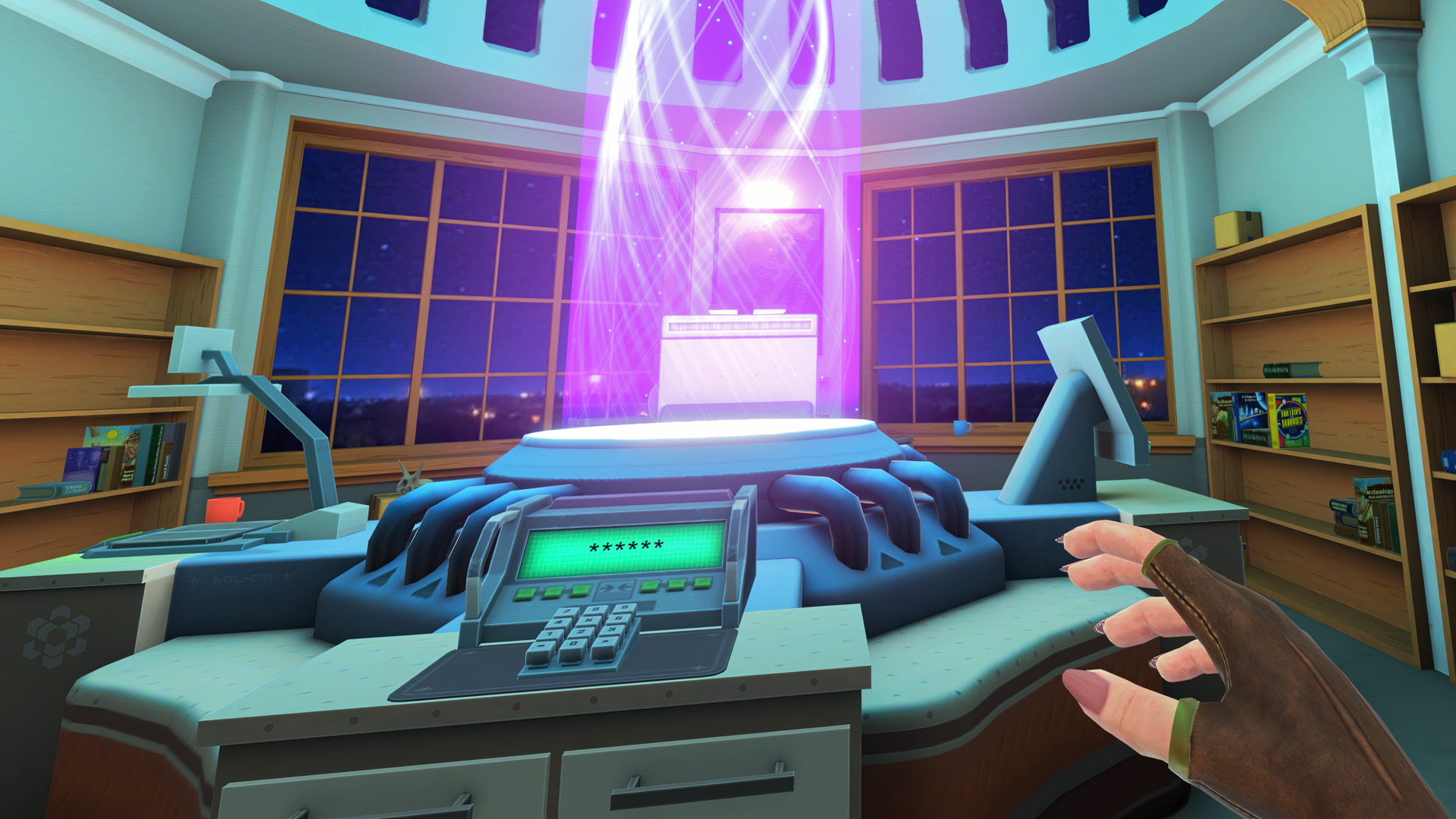
Everything starts in the modern day inside a sterile university lab, where you play as a bright young researcher inspecting a strange Aztec artefact.
Just as you’d expect from any classic time-travel setup, the experiment goes off the rails fast. A sudden rupture in time knocks you out cold and drops you hundreds of years into the past, right in the heart of ancient Tenochtitlan.
At first, your only goal is staying alive and finding a ticket back to your own era. Before long, though, you uncover a much bigger crisis: a power-hungry High Priest is tampering with the timeline, leaving you to crash his final ritual before history unravels for good.
As you work your way through six distinct environments, moving from your modern lab into shadowy ritual chambers, a holding cell blending ancient stonework with futuristic tech, a hidden sanctuary, a cross-era observatory, and the massive Templo Mayor, you aren’t totally on your own.
Early on, you pick up an unusual bracelet that buzzes and talks, acting like a wrist-mounted companion while you hunt down missing relics.
You also cross paths with spiritual guides, everyday locals, and major Aztec deities like Huitzilopochtli and Tezcatlipoca, who watch your progress through magic mirrors and drop cryptic hints.
Mashing up Aztec mythology with sci-fi time travel sounds like an awesome hook, and slowly piecing together the lore behind the sunstone keeps things moving along nicely.
In practice, though, the plot never really sinks its claws into you. The setup gives you a solid enough reason to move from one locked chamber to the next, yet the pacing feels a bit thin, and the cast lacks the depth needed to make you genuinely care about what happens to them.
Without giving away any late-game spoilers, the final showdown with the High Priest plays out pretty predictably.
I loved soaking up the historical details tucked into the shrines and scrolls, yet I always found myself way more excited to crack the next mechanical lock than to listen to characters explain why it mattered.
Gameplay
For me, Sunstone of Time lives and dies by its escape room design, and thankfully, this is where the developers really shine.
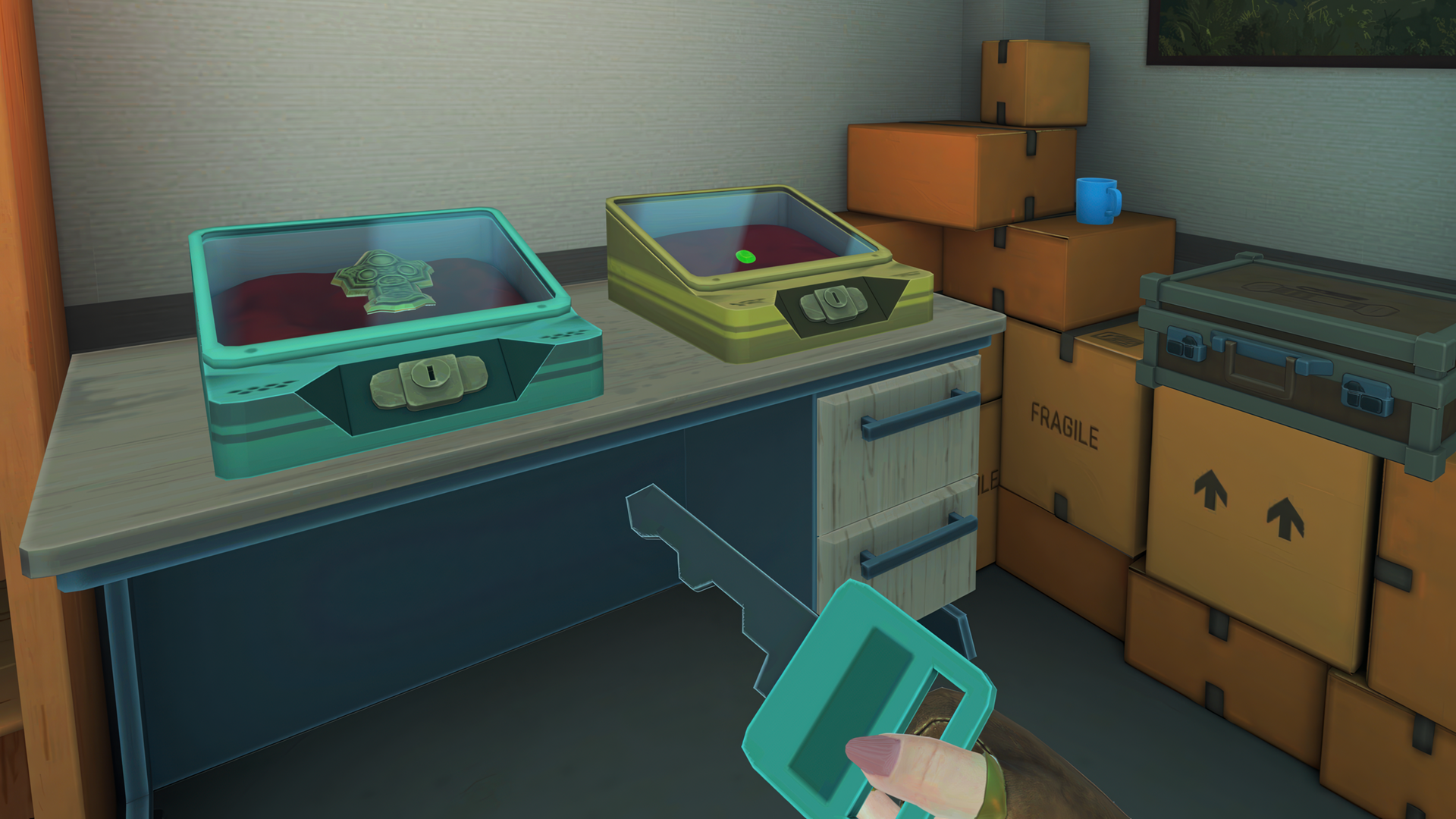
Instead of hiding actions behind boring menus or simple button taps, the game insists you manipulate objects directly with your hands.
Every stage works like a self-contained puzzle box built for room-scale play, though it adapts effortlessly whether you prefer standing or sitting.
With a busy schedule that often leaves me playing VR in short bursts from the sofa after a long day, I really appreciated how cleanly the seated height calibration scales the room around you.
Because you move at a calm, unhurried pace, it’s also super gentle on the stomach, making it an easy pick if you usually struggle with VR motion sickness.
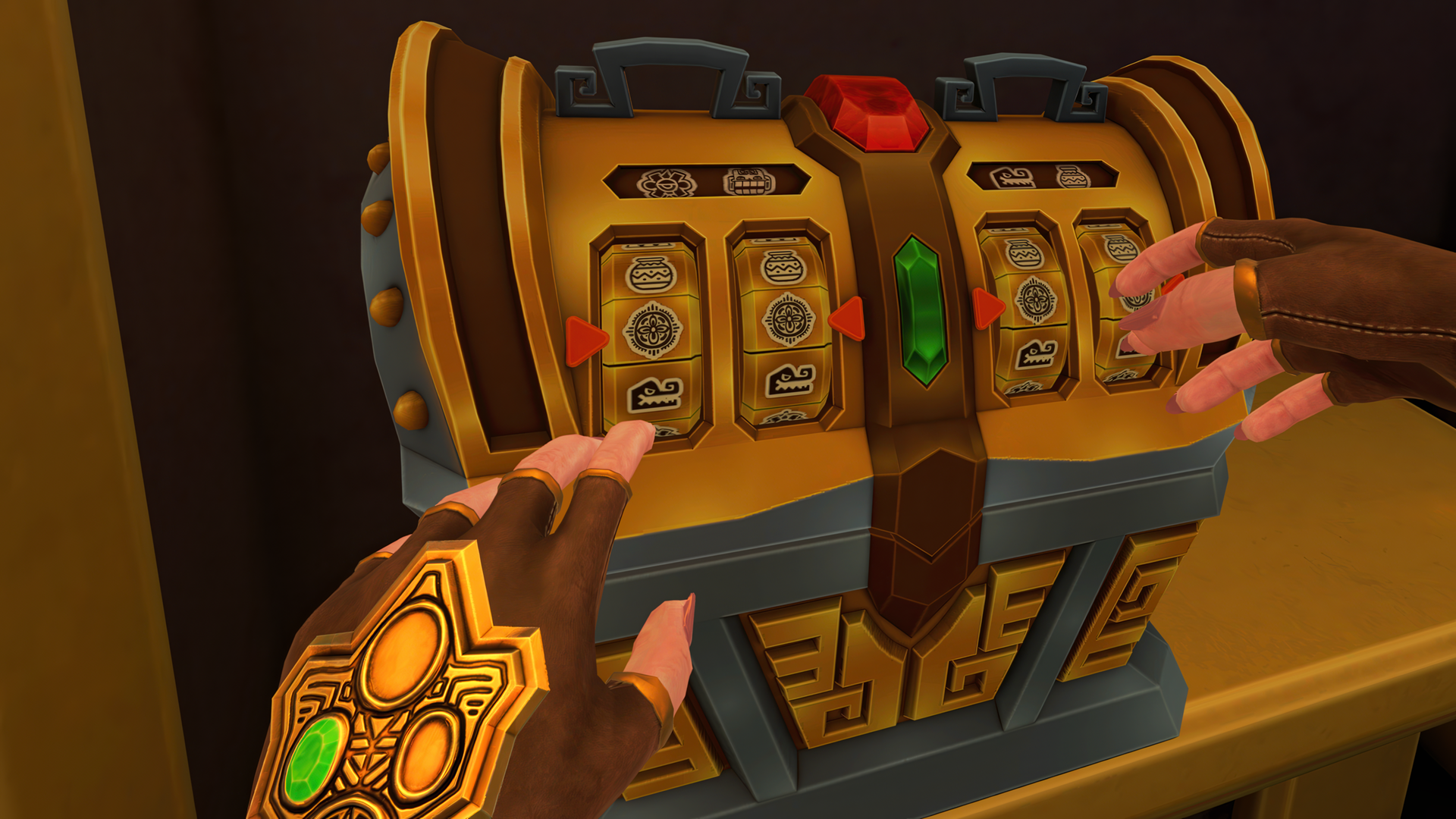
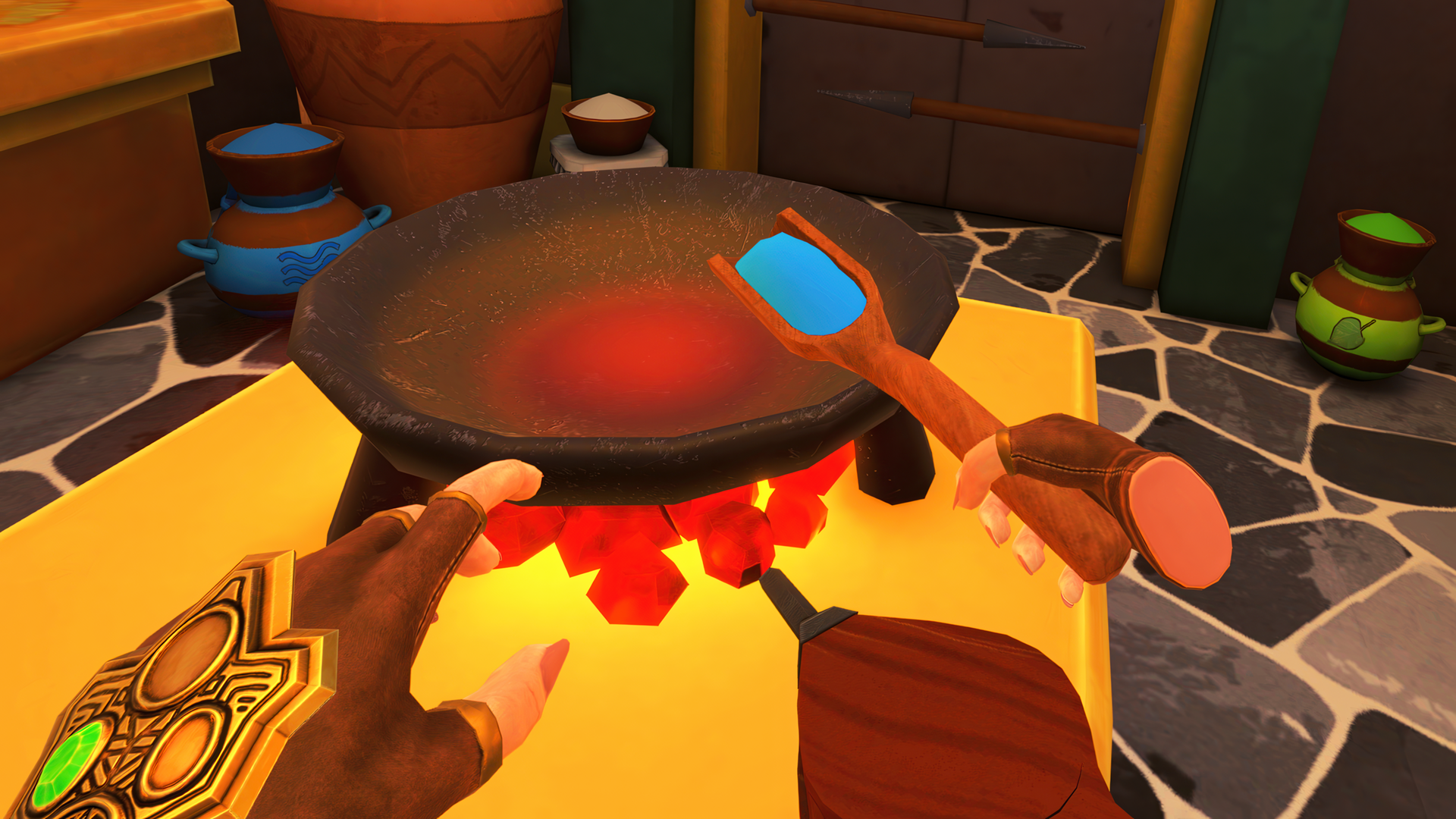
The sheer variety of puzzles keeps your hands busy from start to finish. One minute, you’re grinding and mixing colourful powders in a ceremonial mortar using clues painted on nearby walls; the next, you’re translating glyphs with a handheld cipher wheel to pop open a locked chest.
Other rooms have you piecing together shattered codices, lining up star charts to reveal secret compartments, and guiding gemstones through tricky vertical labyrinths.
Physically cranking massive stone wheels or nudging tiny gears into alignment gives you a sense of immersion that flat-screen puzzle games just can’t touch.
Best of all, the game trusts your brain enough not to hold your hand. It leaves you to work out solutions on your own by inspecting wall carvings, scattered notes, and little environmental clues.
More than once during my seven-hour playthrough, I stood in the middle of a temple totally stumped, only to get that awesome rush when two seemingly random symbols finally clicked together in my head.
Even so, the puzzles stick pretty closely to familiar escape room conventions rather than reinventing the wheel.
Performance was mostly rock-solid, aside from a minor physics hiccup where crystals briefly floated in mid-air while I was moving them, plus a single crash that’s since been patched out.
Once you unlock the final door and roll credits, though, there aren’t any bonus modes or hidden collectibles to bring you back, so it’s strictly a one-and-done trip.
Visuals
Visually, Sunstone of Time feels like a bit of a mixed bag, clearly showing the trade-offs of an indie studio budget.
On the technical side, the game runs super smoothly, hitting a crisp, native 120Hz on PlayStation VR2 with zero noticeable frame drops, stuttering, or distracting pop-in.
That rock-solid stability makes a huge difference when you’re spending an hour straight squinting at intricate wall carvings.
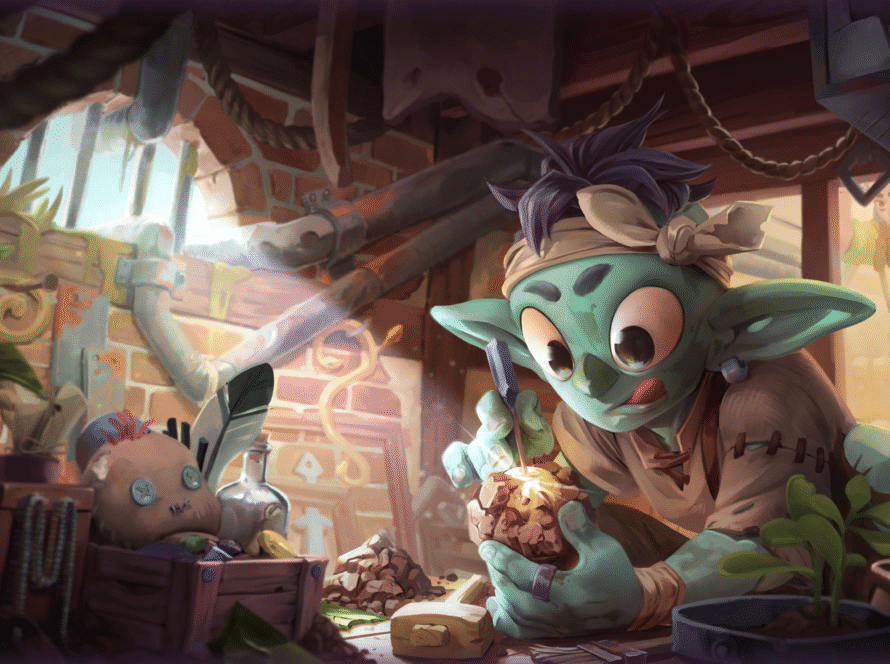
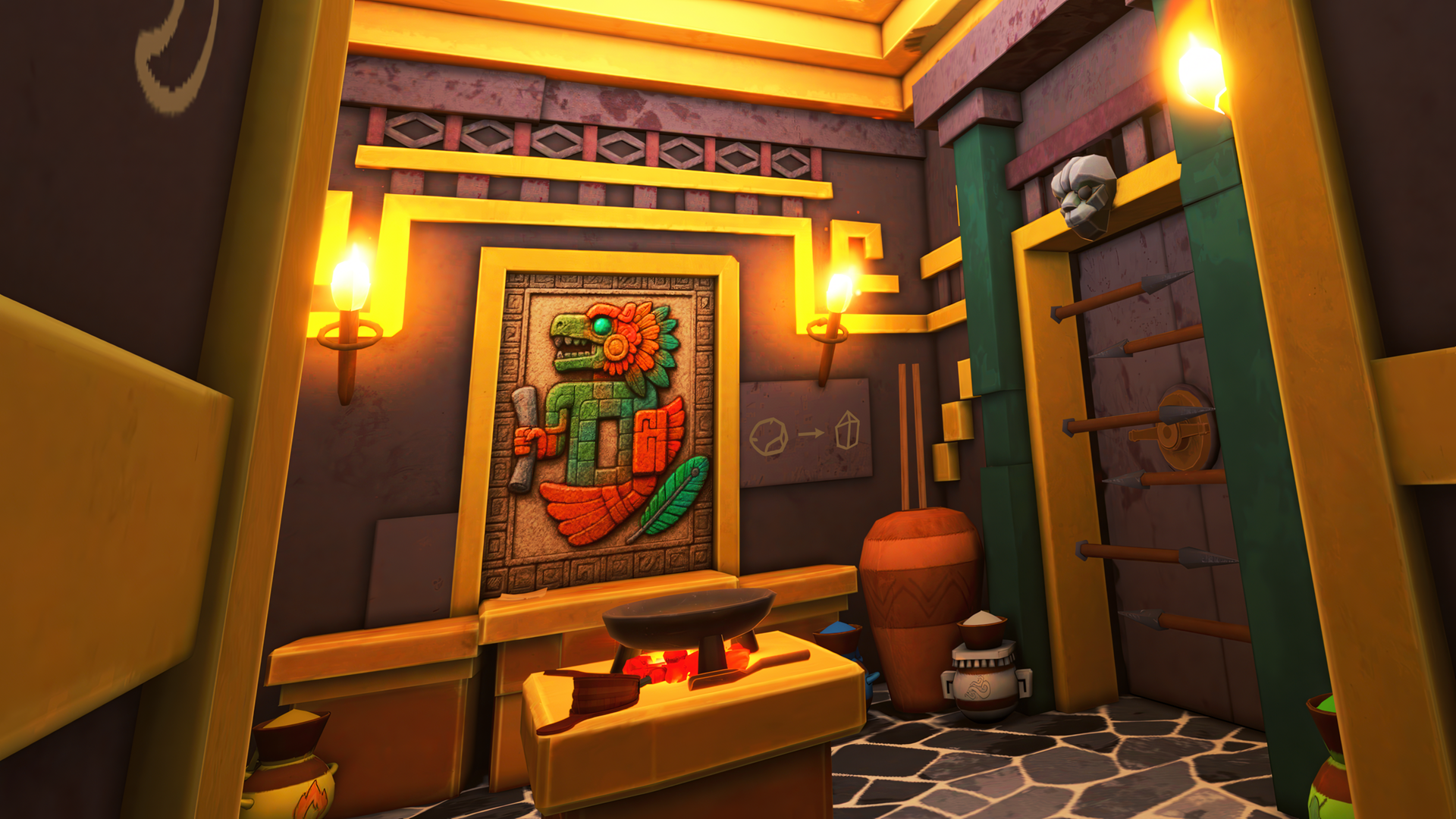
Art-wise, the Aztec settings are vibrant and full of charm, lit by warm torchlight and packed with detailed stonework and ceremonial props.
Jumping between clinical modern lab gear and the sun-soaked architecture of Tenochtitlan gives the game a memorable look.
Still, if you’re coming straight from big-budget VR showstoppers like Red Matter 2, the textures and lighting here are going to feel noticeably modest.
Up close, some surfaces look a bit flat, the visual variety across the six chapters feels slightly limited, and the lighting misses out on the dramatic, shifting shadows that could have made the temples feel truly alive.
It’s also worth noting that the studio used generative AI for some promotional art and minor background prop textures, keeping their human artists focused on the main set pieces, character models, and animations.
While the big puzzle contraptions look sharp enough, human characters and their animations feel pretty stiff, occasionally snapping you out of the historical vibe.
sounds
Sound design in a puzzle game walks a tricky tightrope: it needs to set the mood without driving you crazy while you spend twenty minutes staring at a stubborn lock.
Thankfully, Sunstone of Time plays its ambient audio cool. Instead of blasting you with non-stop orchestral music, the soundtrack regularly steps back so environmental effects can do the heavy lifting.
The soft crackle of burning torches, the low hum of mysterious energy beams, and the gritty scrape of heavy stone slabs grinding apart give you great feedback that makes every physical interaction feel weighty.
When music does fade in during big discoveries or finished rituals, it fits the theme nicely, even if none of the tunes stick in your head once you take the headset off.
Where the audio really trips up is in its voice acting. While the dialogue is mixed cleanly and easy to follow, backed by clear, well-placed subtitles, the performances themselves are a real mixed bag.
According to the studio’s disclosure, generative AI was used to help create the English voiceover, and you can definitely hear it in the flat delivery and awkward emotional shifts.
Your own character wears thin pretty quickly over a multi-hour session, reading lines with a stiff rhythm that undercuts the tension of being stranded centuries in the past.
It’s a bit of a shame, because warmer, livelier voice work could have easily carried the script through its slower spots.
final thoughts
Sunstone of Time is your classic indie VR puzzler: it gets the core mechanics spot on, even while its story and polish show a few rough edges.
VRKiwi and JetDogs have put together an absorbing, laid-back escape room adventure that clearly gets why solving physical puzzles in VR feels so good.
Turning ancient dials, decoding Aztec symbols, and mixing alchemical powders with your own hands delivers plenty of satisfying lightbulb moments across its six-to-eight-hour runtime.
At the same time, it’s hard to miss where the smaller budget shows. The graphics favour smooth performance over jaw-dropping detail, the storyline struggles to stick with you, and the AI-assisted English voice acting regularly pulls you out of the moment.
There’s also basically zero reason to replay the campaign once you’ve cracked every secret.
Even so, priced fairly as an indie release, it gives you plenty of bang for your buck.
If you’re into methodical VR escape rooms, or just want a relaxed, motion-sickness-free puzzle game you can chip away at comfortably from your sofa, Sunstone of Time is an easy one to recommend.
I’d like to extend a huge thank you to the developers and publishers for giving me the opportunity to experience and review Sunstone of Time.
It’s been an absolute pleasure getting stuck into another great game!
A massive thank you to all of you for taking the time to read my review. Your continued support means a great deal to me and everyone here at IndieCritical. We hope to see you again for the next one!
A code for Sunstone of Time was provided for review purposes.
Positives
✅ Satisfying Hands-On Mechanics: Grabbing dials, grinding powders, and piecing together codices feels responsive, intuitive, and genuinely tactile.
✅ Smartly Paced Puzzles: Challenges hit a great sweet spot between letting you figure things out yourself and giving you awesome lightbulb moments without feeling unfair.
✅ Comfortable & Couch-Friendly: Smooth frame rates and solid seated height calibration make it super easy to play in short bursts with virtually no motion sickness.
✅ Strong Indie Value: Gives you roughly six to eight hours of handcrafted escape room problem-solving at a wallet-friendly price.
Negatives
❌ Modest Roguelite Progression: Permanent Bioboost upgrades and mid-run augments offer small statistical nudges rather than transformative, run-defining synergies.
❌ Repetitive Rooms & Limited Enemy Variety: A limited pool of standard creatures and recurring room layouts causes runs to blend together after a few attempts.
❌ Scarce Early-Game Healing: Relying on combat pickups to charge your stim shot makes early solo runs feel overly punishing during chaotic lockdowns.
❌ Uneven Dialogue & Voice Acting: Tonal whiplash between grim sci-fi horror and campy quips, paired with stiff human voice performances, undercuts the narrative tension.
❌ Minor Visual & Control Quirks: Heavy shadows can occasionally obscure floor hazards mid-firefight, while reload animations interrupting jumps and strict hitboxes cause a few cheap deaths.

I am a New Jersey-based game reviewer, future behavioral therapist, and lifelong gamer with a deep appreciation for the human stories behind interactive worlds. With a professional background rooted in youth advocacy and mental health studies, I bring an empathetic, people-first lens to game criticism, exploring how mechanics, atmosphere, and narrative resonate with players. Whether diving into retro-inspired RPGs or hidden indie gems, I love sharing honest critiques and fostering positive spaces for everyone.
Written by

Kitty
@IndieKitty